Sie sind bereits eingeloggt. Klicken Sie auf 2. tolino select Abo, um fortzufahren.
Bitte loggen Sie sich zunächst in Ihr Kundenkonto ein oder registrieren Sie sich bei bücher.de, um das eBook-Abo tolino select nutzen zu können.
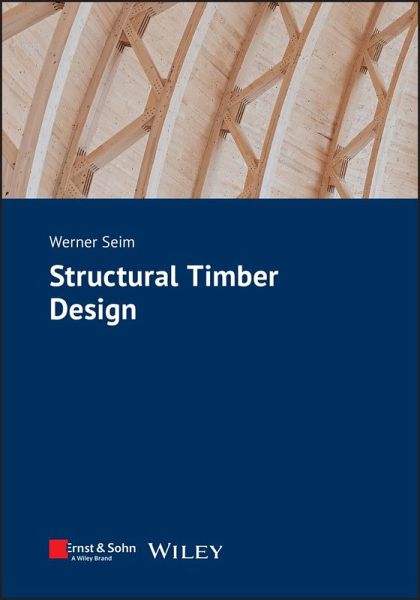
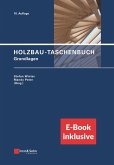
Der Holzbau ist seit einigen Jahren einer der innovativsten Bereiche des Bauwesens. Die Geschwindigkeit, mit der neue Produkte in die Praxis eingeführt werden, ist im Vergleich zu anderen Baustoffen fast atemberaubend. So gewinnt der Holzbau im Gewerbe- und Hallenbau, aber auch im mehrgeschossigen Wohn- und Bürobau kontinuierlich an Marktanteil. Dieses Buch vermittelt wesentliche Kenntnisse und Fertigkeiten, die für den Entwurf, die Bemessung und die Konstruktion von Holzkonstruktionen für typische Bauwerke erforderlich sind. Besonderes Augenmerk wird auf die spezifischen Eigenschaften von…mehr
Der Holzbau ist seit einigen Jahren einer der innovativsten Bereiche des Bauwesens. Die Geschwindigkeit, mit der neue Produkte in die Praxis eingeführt werden, ist im Vergleich zu anderen Baustoffen fast atemberaubend. So gewinnt der Holzbau im Gewerbe- und Hallenbau, aber auch im mehrgeschossigen Wohn- und Bürobau kontinuierlich an Marktanteil. Dieses Buch vermittelt wesentliche Kenntnisse und Fertigkeiten, die für den Entwurf, die Bemessung und die Konstruktion von Holzkonstruktionen für typische Bauwerke erforderlich sind. Besonderes Augenmerk wird auf die spezifischen Eigenschaften von Holz und Holzwerkstoffen im Vergleich zu anderen Baustoffen gelegt. Dies betrifft die zahlreichen Vorteile, wie z. B. das vergleichsweise geringe Gewicht, die gute Verarbeitbarkeit des Hochleistungswerkstoffs und die große Vielfalt an Montagetechniken, aber auch die Herausforderungen, die sich aus der Materialanisotropie und aus der Anfälligkeit für natürliche Schädlinge ergeben. In jedem Kapitel werden zunächst die wesentlichen Phänomene erläutert und erst danach in Zusammenhang mit Regelwerken gebracht. Damit soll das Grundverständnis für die Zusammenhänge und Abhängigkeiten im Holzbau unterstützt werden, das die wesentliche Grundlage für kreative Ingenieurarbeit ist.
Dieser Download kann aus rechtlichen Gründen nur mit Rechnungsadresse in D ausgeliefert werden.
Die Herstellerinformationen sind derzeit nicht verfügbar.
Autorenporträt
Werner Seim is a professor for Timber Engineering and Building Rehabilitation at the University of Kassel, Germany, and also an engineer with more than 35 years of experience in design and assessment of timber structures. He holds a Civil Engineering Degree from the University of Stuttgart, received his PhD in 1994 at the Karlsruhe Institute for Technology KIT and conducted postdoctoral studies 1998 at the University of California UCSD, San Diego. His research is focussed on bracing systems for high-rise buildings, timber-concrete-composites and re-use of structures. He is member of several national and international scientific committees. He was invited as a Visiting Professor to UBC Vancouver, EPF Lausanne and FCBA Bordeaux. His commitment to teaching was rewarded in 2020 with the Hessian State Prize.
Inhaltsangabe
PREFACE LIST OF ABBREVIATIONS 1 TIMBER AS A STRUCTURAL MATERIAL 1.1 Building with timber - advantages and challenges 1.2 Mechanical properties of solid timber 1.2.1 Influence of the fibre direction 1.2.2 Strength values of solid timber 1.2.3 Deformation properties of solid timber 1.2.4 Influence of load duration and humidity 1.3 Wood based products 1.3.1 Solid structural timber and glued solid timber 1.3.2 Glued laminated timber 1.3.3 Cross laminated timber 1.4 Wood based materials 1.4.1 Laminated veneer lumber 1.4.2 Plywood 1.4.3 OSB 1.4.4 Particle boards 1.4.5 Fibreboards 2 STRUCTURAL DESIGN OF BEAM-TYPE MEMBERS 2.1 Basics of structural design 2.1.1 Action combinations 2.1.2 Modification factors and deformations factors 2.2 Bending 2.3 Shear 2.4 Torsion and rolling shear 2.5 Buckling 2.5.1 Lateral bending buckling - kc method 2.5.2 Lateral torsional buckling - km method 2.5.3 Torsional flexural buckling 2.5.4 Calculation according to Second Order Theory 2.6 Tension and bending 2.7 Serviceability limit state 2.7.1 Deformations 2.7.2 Vibrations 3 STRESSES PERPENDICULAR TO THE GRAIN 3.1 Introduction 3.2 Compression 3.2.1 Compression perpendicular to the grain 3.2.2 Compression stresses at an angle to the grain 3.3 Tension perpendicular to grain 3.3.1 General 3.3.2 Notches 3.3.3 Tension loaded connections perpendicular to grain 3.3.4 Holes in glulam beams 4 DOWEL-TYPE CONNECTIONS 4.1 General 4.2 Connections with dowel-type fasteners 4.2.1 Overview 4.2.2 Deformation behaviour 4.2.3 Basics of the calculation of shear loaded connections 4.2.4 Shear loaded timber-timber connections 4.2.5 Shear loaded timber-timber connections - simplified calculation 4.2.6 Shear loaded steel-timber connections 4.2.7 Shear loaded steel-timber connections - simplified calculation 4.3 Dowels and Bolts 4.4 Nails and staples 4.4.1 Definitions 4.4.2 Construction rules for connections with nails 4.4.3 Construction rules for staples 4.4.4 Load bearing capacity 4.5 Connections with screws 4.5.1 General 4.5.2 Conceptual design of screwed connections 4.5.3 Load bearing capacity 4.5.4 Application examples and execution 4.6 Block shear 4.7 Reinforcement of doweled connections 4.8 Connections with Cross-laminated timber (CLT) 5 OTHER TYPES OF CONNECTIONS 5.1 Shear connectors 5.1.1 Mechanism 5.1.2 Connector types and construction rules 5.1.3 Load bearing capacity 5.2 Carpentry joints 5.2.1 Introduction 5.2.2 Halving joints 5.2.3 Step joints 5.2.4 Mortise and tenon 5.2.5 Wooden nails 5.2.6 Deformations - slip moduli 5.3 Hinged and moment resistant connections 5.3.1 Structural detailing and calculation modelling 5.3.2 Principle of intersection 5.3.3 Rules for detailing 5.4 Adhesive bonded connections 5.4.1 Introduction 5.4.2 Adhesive bonding of structural elements 5.4.3 Connections, local reinforcement and repair 5.5 Reinforcement against tension forces perpendicular to the grain 5.5.1 Notches 5.5.2 Connections perpendicular to grain 5.5.3 Openings 6 STRUCTURAL ELEMENTS - BEAM TYPE MEMBERS 6.1 Glulam beams 6.1.1 Bending stresses 6.1.2 Tension stresses perpendicular to the grain 6.2 Trusses 6.3 Composite elements 6.3.1 Beams, slab and roof elements 6.3.2 Timber-concrete composites (TCC) 6.3.3 Columns 6.4 Bracing - Design and detailing 6.4.1 Introduction 6.4.2 Roof structures 6.4.3 Beams and columns 6.5 Modelling of beam type elements 7 STRUCTURAL ELEMENTS - PLANE 7.1 Light frame elements 7.1.1 Introduction 7.1.2 Wall elements 7.1.3 Slab elements - diaphragms 7.1.4 Connections and anchoring 7.2 Cross laminated timber (CLT) 7.2.1 Production, load bearing characteristics, and strength 7.2.2 Plates 7.2.3 Wall panels 7.2.4 Deta
PREFACE LIST OF ABBREVIATIONS 1 TIMBER AS A STRUCTURAL MATERIAL 1.1 Building with timber - advantages and challenges 1.2 Mechanical properties of solid timber 1.2.1 Influence of the fibre direction 1.2.2 Strength values of solid timber 1.2.3 Deformation properties of solid timber 1.2.4 Influence of load duration and humidity 1.3 Wood based products 1.3.1 Solid structural timber and glued solid timber 1.3.2 Glued laminated timber 1.3.3 Cross laminated timber 1.4 Wood based materials 1.4.1 Laminated veneer lumber 1.4.2 Plywood 1.4.3 OSB 1.4.4 Particle boards 1.4.5 Fibreboards 2 STRUCTURAL DESIGN OF BEAM-TYPE MEMBERS 2.1 Basics of structural design 2.1.1 Action combinations 2.1.2 Modification factors and deformations factors 2.2 Bending 2.3 Shear 2.4 Torsion and rolling shear 2.5 Buckling 2.5.1 Lateral bending buckling - kc method 2.5.2 Lateral torsional buckling - km method 2.5.3 Torsional flexural buckling 2.5.4 Calculation according to Second Order Theory 2.6 Tension and bending 2.7 Serviceability limit state 2.7.1 Deformations 2.7.2 Vibrations 3 STRESSES PERPENDICULAR TO THE GRAIN 3.1 Introduction 3.2 Compression 3.2.1 Compression perpendicular to the grain 3.2.2 Compression stresses at an angle to the grain 3.3 Tension perpendicular to grain 3.3.1 General 3.3.2 Notches 3.3.3 Tension loaded connections perpendicular to grain 3.3.4 Holes in glulam beams 4 DOWEL-TYPE CONNECTIONS 4.1 General 4.2 Connections with dowel-type fasteners 4.2.1 Overview 4.2.2 Deformation behaviour 4.2.3 Basics of the calculation of shear loaded connections 4.2.4 Shear loaded timber-timber connections 4.2.5 Shear loaded timber-timber connections - simplified calculation 4.2.6 Shear loaded steel-timber connections 4.2.7 Shear loaded steel-timber connections - simplified calculation 4.3 Dowels and Bolts 4.4 Nails and staples 4.4.1 Definitions 4.4.2 Construction rules for connections with nails 4.4.3 Construction rules for staples 4.4.4 Load bearing capacity 4.5 Connections with screws 4.5.1 General 4.5.2 Conceptual design of screwed connections 4.5.3 Load bearing capacity 4.5.4 Application examples and execution 4.6 Block shear 4.7 Reinforcement of doweled connections 4.8 Connections with Cross-laminated timber (CLT) 5 OTHER TYPES OF CONNECTIONS 5.1 Shear connectors 5.1.1 Mechanism 5.1.2 Connector types and construction rules 5.1.3 Load bearing capacity 5.2 Carpentry joints 5.2.1 Introduction 5.2.2 Halving joints 5.2.3 Step joints 5.2.4 Mortise and tenon 5.2.5 Wooden nails 5.2.6 Deformations - slip moduli 5.3 Hinged and moment resistant connections 5.3.1 Structural detailing and calculation modelling 5.3.2 Principle of intersection 5.3.3 Rules for detailing 5.4 Adhesive bonded connections 5.4.1 Introduction 5.4.2 Adhesive bonding of structural elements 5.4.3 Connections, local reinforcement and repair 5.5 Reinforcement against tension forces perpendicular to the grain 5.5.1 Notches 5.5.2 Connections perpendicular to grain 5.5.3 Openings 6 STRUCTURAL ELEMENTS - BEAM TYPE MEMBERS 6.1 Glulam beams 6.1.1 Bending stresses 6.1.2 Tension stresses perpendicular to the grain 6.2 Trusses 6.3 Composite elements 6.3.1 Beams, slab and roof elements 6.3.2 Timber-concrete composites (TCC) 6.3.3 Columns 6.4 Bracing - Design and detailing 6.4.1 Introduction 6.4.2 Roof structures 6.4.3 Beams and columns 6.5 Modelling of beam type elements 7 STRUCTURAL ELEMENTS - PLANE 7.1 Light frame elements 7.1.1 Introduction 7.1.2 Wall elements 7.1.3 Slab elements - diaphragms 7.1.4 Connections and anchoring 7.2 Cross laminated timber (CLT) 7.2.1 Production, load bearing characteristics, and strength 7.2.2 Plates 7.2.3 Wall panels 7.2.4 Deta
Es gelten unsere Allgemeinen Geschäftsbedingungen: www.buecher.de/agb
Impressum
www.buecher.de ist ein Internetauftritt der buecher.de internetstores GmbH
Geschäftsführung: Monica Sawhney | Roland Kölbl | Günter Hilger
Sitz der Gesellschaft: Batheyer Straße 115 - 117, 58099 Hagen
Postanschrift: Bürgermeister-Wegele-Str. 12, 86167 Augsburg
Amtsgericht Hagen HRB 13257
Steuernummer: 321/5800/1497
USt-IdNr: DE450055826