45,95 €
45,95 €
inkl. MwSt.
Sofort per Download lieferbar

23 °P sammeln
45,95 €
Als Download kaufen
45,95 €
inkl. MwSt.
Sofort per Download lieferbar
23 °P sammeln
Jetzt verschenken
Alle Infos zum eBook verschenken
45,95 €
inkl. MwSt.
Sofort per Download lieferbar
Alle Infos zum eBook verschenken
23 °P sammeln

Andere Kunden interessierten sich auch für
") Myth and Reality: Studies on the Templars and Hospitallers, Medieval Narratives, and the Trial of the Templars (eBook, PDF)42,95 €
Myth and Reality: Studies on the Templars and Hospitallers, Medieval Narratives, and the Trial of the Templars (eBook, PDF)42,95 €") Omnia disce - Medieval Studies in Memory of Leonard Boyle, O.P. (eBook, PDF)42,95 €
Omnia disce - Medieval Studies in Memory of Leonard Boyle, O.P. (eBook, PDF)42,95 €") Studies on Medieval Liturgical and Legal Manuscripts from Spain and Southern Italy (eBook, PDF)33,95 €
Studies on Medieval Liturgical and Legal Manuscripts from Spain and Southern Italy (eBook, PDF)33,95 €") Studies in the Ecclesiastical and Social History of Toulouse in the Age of the Cathars (eBook, PDF)42,95 €
Studies in the Ecclesiastical and Social History of Toulouse in the Age of the Cathars (eBook, PDF)42,95 €") Studies in the Medieval History of the Yemen and South Arabia (eBook, PDF)52,95 €
Studies in the Medieval History of the Yemen and South Arabia (eBook, PDF)52,95 €") Studies on Late Medieval Gdansk (eBook, PDF)42,95 €
Studies on Late Medieval Gdansk (eBook, PDF)42,95 €") Studies in Scholasticism (eBook, PDF)157,95 €
Studies in Scholasticism (eBook, PDF)157,95 €
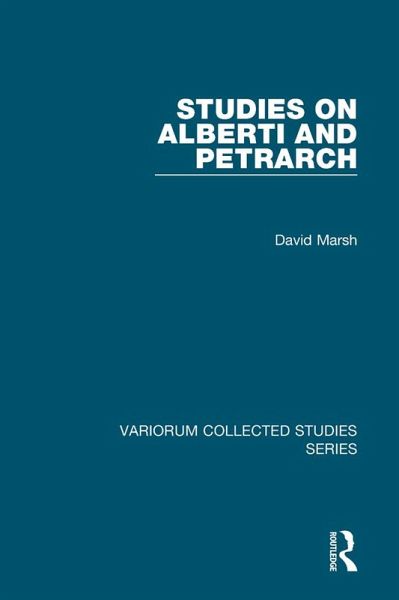
Leon Battista Alberti (1404-1472) was the most versatile humanist of the fifteenth century: author of numerous compositions in both Latin and Italian, and a groundbreaking theorist of painting, sculpture, and architecture. His Latin writings owe much to the model of Petrarch (1304-1374), the famed poet of the Italian Canzoniere, but also a prolific author of Latin epistles, biographies, and poems that sparked the revival of classical culture in the early Italian Renaissance. The essays collected here reflect some thirty years of research into these pioneers of Humanism, and offer important insights into forms of Renaissance 'self-fashioning' such as allegory and autobiography.
Dieser Download kann aus rechtlichen Gründen nur mit Rechnungsadresse in A, B, BG, CY, CZ, D, DK, EW, E, FIN, F, GR, HR, H, IRL, I, LT, L, LR, M, NL, PL, P, R, S, SLO, SK ausgeliefert werden.
'... the volume is an invaluable resource for all Alberti scholars. Such a widely varied collection of articles provides a useful overview of Alberti, through its introductory material and through the varied types of textual analysis that it includes. Readers of Marsh's books will find both the seeds of his later projects and thoughtful reflections on previously published works, thus enjoying an intriguing glimpse in the evolution of a scholar, as well as informative studies on two significant Renaissance writers.' Sixteenth Century Journal