160,95 €
160,95 €
inkl. MwSt.
Sofort per Download lieferbar

80 °P sammeln
160,95 €
Als Download kaufen
160,95 €
inkl. MwSt.
Sofort per Download lieferbar
80 °P sammeln
Jetzt verschenken
Alle Infos zum eBook verschenken
160,95 €
inkl. MwSt.
Sofort per Download lieferbar
Alle Infos zum eBook verschenken
80 °P sammeln

Andere Kunden interessierten sich auch für
") Modulation of Oxidative Stress in Heart Disease (eBook, PDF)160,95 €
Modulation of Oxidative Stress in Heart Disease (eBook, PDF)160,95 €") Oxidative Stress in Heart Diseases (eBook, PDF)191,95 €
Oxidative Stress in Heart Diseases (eBook, PDF)191,95 €") Vascular Morphogenesis: In Vivo, In Vitro, In Mente (eBook, PDF)112,95 €
Vascular Morphogenesis: In Vivo, In Vitro, In Mente (eBook, PDF)112,95 €") New Concepts in Viral Heart Disease (eBook, PDF)72,95 €
New Concepts in Viral Heart Disease (eBook, PDF)72,95 €") Mechanobiology of the Endothelium (eBook, PDF)62,95 €
Mechanobiology of the Endothelium (eBook, PDF)62,95 €") Endothelial Cell Biology in Health and Disease (eBook, PDF)40,95 €
Endothelial Cell Biology in Health and Disease (eBook, PDF)40,95 €") Mechanosensitivity and Mechanotransduction (eBook, PDF)160,95 €
Mechanosensitivity and Mechanotransduction (eBook, PDF)160,95 €
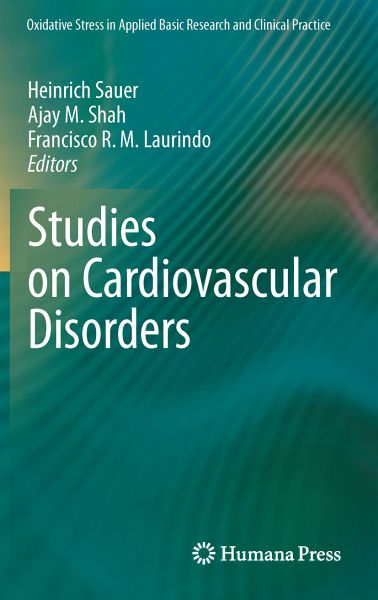
The role of reactive oxygen species (ROS) in the cardiovascular system is Jan- faced. Whereas low concentrations of ROS are involved in variety of physiological signalling events, oxidative stress resulting from deregulated overproduction of ROS and/or impaired antioxidant defences contributes to cardiovascular disease. The actions of ROS in the cardiovascular system are a fascinating topic, not only for the basic science researcher but also for the clinician who is interested in seeking new therapies for his patients suffering from cardiovascular disease. The current book provides a comprehensive overview of the molecular mechanisms and pathoph- iological settings in which chronic and detrimental oxidative stress arises within the heart and vasculature. The book also considers currently discussed strategies in avoiding chronic redox stress resulting from exposure to risk factors or various cardiovascular interventions. The series starts with an overview by Denise de Castro Fernandes, Diego Bonatto and Francisco Laurindo of redox signaling models that could underlie the dev- opment of redox-associated cardiovascular disorders. The interactions of proteins within signalling cascades with ROS and the regulation of such interactions by the anti-oxidative capacity of the cell are discussed. Rebecca Charles, Joseph Burgoyne and Philip Eaton report on redox-mediated modi cations of proteins under ph- iological and pathophysiological conditions and the variety of post-translational oxidative modi cations that explain redox sensing and signal transduction by proteins at the molecular level. ROS are generated during embryogenesis and may be involved in the proper development of the cardiovascular system.
Dieser Download kann aus rechtlichen Gründen nur mit Rechnungsadresse in A, B, BG, CY, CZ, D, DK, EW, E, FIN, F, GR, HR, H, IRL, I, LT, L, LR, M, NL, PL, P, R, S, SLO, SK ausgeliefert werden.
From the reviews:
"This is a collection of articles that provides insight into the evolving field of oxidative stress. ... It is intended for students, physicians in training, clinicians, and cardiovascular researchers interested in oxidative stress. ... This collection of articles with color diagrams provides a unique, well-organized, and clinically relevant resource on a vast range of topics relating to oxidative stress. This book will be a solid resource in this rapidly changing field." (Paul Michael, Doody's Review Service, February, 2011)
"This is a collection of articles that provides insight into the evolving field of oxidative stress. ... It is intended for students, physicians in training, clinicians, and cardiovascular researchers interested in oxidative stress. ... This collection of articles with color diagrams provides a unique, well-organized, and clinically relevant resource on a vast range of topics relating to oxidative stress. This book will be a solid resource in this rapidly changing field." (Paul Michael, Doody's Review Service, February, 2011)