Sie sind bereits eingeloggt. Klicken Sie auf 2. tolino select Abo, um fortzufahren.
Bitte loggen Sie sich zunächst in Ihr Kundenkonto ein oder registrieren Sie sich bei bücher.de, um das eBook-Abo tolino select nutzen zu können.
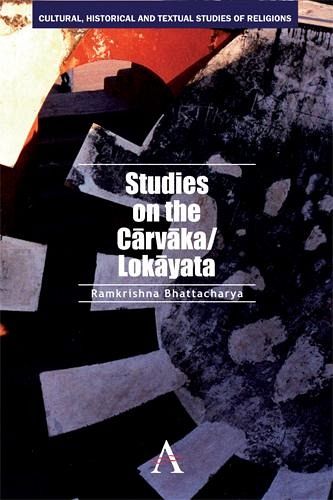
'Studies on the Carvaka/Lokayata' is the first attempt at a scientific study of the Carvaka/Lokayata, the materialist system of philosophy that flourished in ancient India between the eighth and twelfth centuries CE, and which has since disappeared. Despite the paucity of material relating to the Carvaka, a reconstruction of its basic tenets reveals it to be the lone contender standing against the perceived binary of pro-Vedic Brahminical schools on the one hand, and the non-Vedic Buddhist and Jain schools on the other. This study seeks to disprove certain notions about the…mehr
'Studies on the Carvaka/Lokayata' is the first attempt at a scientific study of the Carvaka/Lokayata, the materialist system of philosophy that flourished in ancient India between the eighth and twelfth centuries CE, and which has since disappeared. Despite the paucity of material relating to the Carvaka, a reconstruction of its basic tenets reveals it to be the lone contender standing against the perceived binary of pro-Vedic Brahminical schools on the one hand, and the non-Vedic Buddhist and Jain schools on the other.
This study seeks to disprove certain notions about the Carvaka/Lokayata, particularly that the Carvaka-s did not approve of any instrument of cognition other than perception, and that they advocated unalloyed sensualism and hedonism. In contrast, this volume offers evidence to show that the Carvaka-s, despite their difference of opinion in other areas, did admit inference in so far as it was grounded on perception. Furthermore, the author argues that the common belief that 'all materialists are nothing but sensualists' is a misconception, as no authentic Carvaka aphorisms have been cited by the movement's opponents to support this view.
This study also seeks to establish the fact that a pre-Carvaka school of materialism existed in India, although there is no way to prove that the Carvaka system grew out of it. Yet if the evidence provided by the 'Manimekalai' and indirectly supported by the 'Mahabharata' is admitted, it could be suggested that the two schools existed simultaneously.
Dieser Download kann aus rechtlichen Gründen nur mit Rechnungsadresse in A, D ausgeliefert werden.
Die Herstellerinformationen sind derzeit nicht verfügbar.
Autorenporträt
Ramkrishna Bhattacharya is an Emeritus Fellow in English, University Grants Commission, New Delhi. He was previously a Reader in the Department of English at Anandamohan College, Kolkata and a Guest Lecturer with the postgraduate faculty of English at the University of Calcutta.
Inhaltsangabe
Preface Acknowledgements Abbreviations I. Origin of Materialism in India: Royal or Popular? II. Jain Sources for the Study of Pre-Carvaka Materialist Ideas in India III. Ajita Kesakambala: Nihilist or Materialist? V. Perception and Inference in the Carvaka Philosophy V. Commentators of the ‘Carvakasutra’ VI. Carvaka Fragments: New Collection VII. On the Authenticity of an Alleged Carvaka Aphorism VIII. ‘Paurandarasutra’ Revisited X. What Did the Carvaka-s Mean by ‘sukham jivet’? X. Samkhya, Yoga and Lokayata in the ‘Kautiliya Arthasastra’: A Re-View XI. Yogacara Against the Carvaka: Critical Survey of ‘Tattvasamgraha’, Chapter 22 XII. Jayantabhatta’s Representation of the Carvaka: Critique XIII. What does Udayana mean by ‘lokavyavaharasiddha iti carvakah’? XIV. Hemacandra on the Carvaka: Study XV. Haribhadra’s ‘Saddarsanasamuccaya’, Verses 81-84: Study’ XVI. The Significance of ‘Lokayata’ in Pali XVII. On ‘Lokayata’ and ‘Lokayatana’ in Buddhist Sanskrit XVIII. ‘Lokayata’ and ‘Lokayatana’ in Sanskrit Dictionaries XIX. ‘rnam krtva ghrtam pibet’ –Who Said This? XX. ‘jivika dhatṛnirmita or jiviketi brhaspatih?’ XXI. ‘mrtanamapi jantunam...’ XXII. Carvaka/Lokayata Philosophy: Perso-Arabic Sources XXIII. What is meant by ‘Nastika’ in the ‘Nyayasutra’ Commentary? Bibliography
Es gelten unsere Allgemeinen Geschäftsbedingungen: www.buecher.de/agb
Impressum
www.buecher.de ist ein Internetauftritt der buecher.de internetstores GmbH
Geschäftsführung: Monica Sawhney | Roland Kölbl | Günter Hilger
Sitz der Gesellschaft: Batheyer Straße 115 - 117, 58099 Hagen
Postanschrift: Bürgermeister-Wegele-Str. 12, 86167 Augsburg
Amtsgericht Hagen HRB 13257
Steuernummer: 321/5800/1497
USt-IdNr: DE450055826

