39,95 €
39,95 €
inkl. MwSt.
Sofort per Download lieferbar

20 °P sammeln
39,95 €
Als Download kaufen
39,95 €
inkl. MwSt.
Sofort per Download lieferbar
20 °P sammeln
Jetzt verschenken
Alle Infos zum eBook verschenken
39,95 €
inkl. MwSt.
Sofort per Download lieferbar
Alle Infos zum eBook verschenken
20 °P sammeln

Andere Kunden interessierten sich auch für
") Sufism in Morocco's Religious Politics (eBook, ePUB)39,95 €
Sufism in Morocco's Religious Politics (eBook, ePUB)39,95 €") Studying Islam in the Arab World (eBook, PDF)42,95 €
Studying Islam in the Arab World (eBook, PDF)42,95 €") The Societies of the Middle East and North Africa (eBook, PDF)37,95 €
The Societies of the Middle East and North Africa (eBook, PDF)37,95 €") Muslim Communities and Cultures of the Himalayas (eBook, PDF)41,95 €
Muslim Communities and Cultures of the Himalayas (eBook, PDF)41,95 €") Performing Post-Tariqa Sufism (eBook, PDF)42,95 €
Performing Post-Tariqa Sufism (eBook, PDF)42,95 €") Rifian Society, Culture and Politics in Mediterranean Morocco (eBook, PDF)42,95 €
Rifian Society, Culture and Politics in Mediterranean Morocco (eBook, PDF)42,95 €") Life After Death Today in the United States, Japan, and China (eBook, PDF)37,95 €
Life After Death Today in the United States, Japan, and China (eBook, PDF)37,95 €



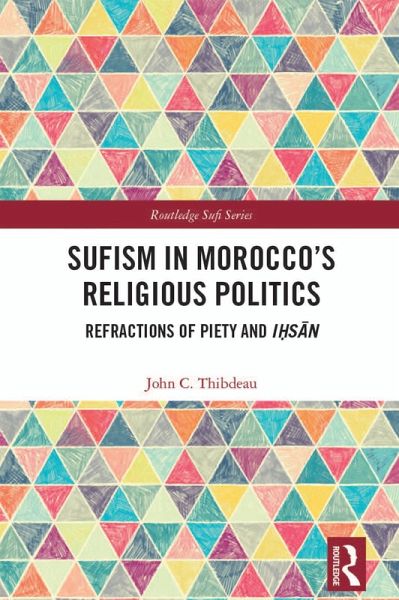
This book outlines the role of Sufism in Moroccan politics in the twenty-first century through a comparative study of contemporary Sufi organizations.
The author begins his analysis by highlighting the strategies employed by the Moroccan state over the past twenty years, aimed at regulating and producing an authorized 'Moroccan Islam' in the kingdom. Despite these policies of spiritual security and spiritual diplomacy, including the state sponsorship of Sufi organizations, the author argues that this has not decreased diversity nor produced a banal interpretation of Islam, but rather given rise to diverse articulations and performances of this religiosity. Through a comparative analysis of three Sufi organizations based on eighteen months of fieldwork - two of which have never before been studied - the author brings into relief the spaces of creative enactment of Sufism as an ethical tradition. Ultimately, it is argued that each Sufi organization reflects a different refraction of i¿san, a concept emphasising the cultivation of public piety which underpins the Moroccan state's formulation of Islam.
Focused on both theoretical contributions to Islamic studies and topical treatments of geopolitical issues like spiritual diplomacy, the Western Sahara, and Morocco-Algeria, the book spans multiple disciplines, including anthropology, religious studies, sociology, and political science.
The author begins his analysis by highlighting the strategies employed by the Moroccan state over the past twenty years, aimed at regulating and producing an authorized 'Moroccan Islam' in the kingdom. Despite these policies of spiritual security and spiritual diplomacy, including the state sponsorship of Sufi organizations, the author argues that this has not decreased diversity nor produced a banal interpretation of Islam, but rather given rise to diverse articulations and performances of this religiosity. Through a comparative analysis of three Sufi organizations based on eighteen months of fieldwork - two of which have never before been studied - the author brings into relief the spaces of creative enactment of Sufism as an ethical tradition. Ultimately, it is argued that each Sufi organization reflects a different refraction of i¿san, a concept emphasising the cultivation of public piety which underpins the Moroccan state's formulation of Islam.
Focused on both theoretical contributions to Islamic studies and topical treatments of geopolitical issues like spiritual diplomacy, the Western Sahara, and Morocco-Algeria, the book spans multiple disciplines, including anthropology, religious studies, sociology, and political science.
Dieser Download kann aus rechtlichen Gründen nur mit Rechnungsadresse in A, B, BG, CY, CZ, D, DK, EW, E, FIN, F, GR, HR, H, IRL, I, LT, L, LR, M, NL, PL, P, R, S, SLO, SK ausgeliefert werden.
"In the growing reflection about the complex relationships between Islamic mysticism and politics, or between Sufism and worldly powers, Thibdeau's brilliant book not only highlights the emblematic case of contemporary Morocco but, more critically, brings out an often overlooked phenomenon: interacting with a state which constantly tries to reshape religious life, Sufis have to reform themselves to maintain their spiritual experience."
Alexandre Papas, National Centre for Scientific Research (CNRS), Paris
"John C. Thibdeau's Sufism in Morocco's Religious Politics is an invaluable reference, for it highlights how Sufism has been constructed and deployed as part of ongoing contentions of religious and political authority in Morocco and globally . . . In a nutshell, Thibdeau tackles Sufism in certain thought-provoking ways: Sufism as an ethical tradition, as public piety, as a transnational ethical grammar, and as a political tool."
Lahoucine Aammari, Sidi Mohamed ben Abdellah University, Morocco, writing in Hespéris-Tamuda LVIII (2) (2023)
Alexandre Papas, National Centre for Scientific Research (CNRS), Paris
"John C. Thibdeau's Sufism in Morocco's Religious Politics is an invaluable reference, for it highlights how Sufism has been constructed and deployed as part of ongoing contentions of religious and political authority in Morocco and globally . . . In a nutshell, Thibdeau tackles Sufism in certain thought-provoking ways: Sufism as an ethical tradition, as public piety, as a transnational ethical grammar, and as a political tool."
Lahoucine Aammari, Sidi Mohamed ben Abdellah University, Morocco, writing in Hespéris-Tamuda LVIII (2) (2023)