65,95 €
inkl. MwSt.
Sofort per Download lieferbar
33 °P sammeln

Andere Kunden interessierten sich auch für
") Modeling, Simulation and Computer Technology (eBook, PDF)72,95 €
Modeling, Simulation and Computer Technology (eBook, PDF)72,95 €") Explainable, Trustworthy, and Responsible AI and Multi-Agent Systems (eBook, PDF)46,95 €
Explainable, Trustworthy, and Responsible AI and Multi-Agent Systems (eBook, PDF)46,95 €") Matrices, Statistics and Big Data (eBook, PDF)72,95 €
Matrices, Statistics and Big Data (eBook, PDF)72,95 €") Frontiers in Statistical Quality Control 12 (eBook, PDF)160,95 €
Frontiers in Statistical Quality Control 12 (eBook, PDF)160,95 € Data Analysis and Statistical Learning (eBook, PDF)") Classification, (Big) Data Analysis and Statistical Learning (eBook, PDF)80,95 €
Classification, (Big) Data Analysis and Statistical Learning (eBook, PDF)80,95 €") Personality Traits and Drug Consumption (eBook, PDF)40,95 €
Personality Traits and Drug Consumption (eBook, PDF)40,95 €") Generative AI (eBook, PDF)43,95 €
Generative AI (eBook, PDF)43,95 €
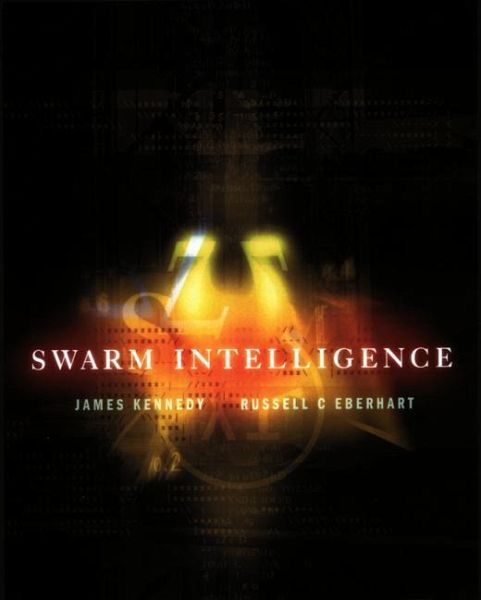
Traditional methods for creating intelligent computational systems haveprivileged private "internal" cognitive and computational processes. Incontrast, Swarm Intelligence argues that humanintelligence derives from the interactions of individuals in a social worldand further, that this model of intelligence can be effectively applied toartificially intelligent systems. The authors first present the foundations ofthis new approach through an extensive review of the critical literature insocial psychology, cognitive science, and evolutionary computation. Theythen show in detail how these theories and models apply to a newcomputational intelligence methodology-particle swarms-which focuseson adaptation as the key behavior of intelligent systems. Drilling downstill further, the authors describe the practical benefits of applying particleswarm optimization to a range of engineering problems. Developed bythe authors, this algorithm is an extension of cellular automata andprovides a powerful optimization, learning, and problem solving method. This important book presents valuable new insights by exploring theboundaries shared by cognitive science, social psychology, artificial life,artificial intelligence, and evolutionary computation and by applying theseinsights to the solving of difficult engineering problems. Researchers andgraduate students in any of these disciplines will find the materialintriguing, provocative, and revealing as will the curious and savvycomputing professional. - Places particle swarms within the larger context of intelligent adaptive behavior and evolutionary computation - Describes recent results of experiments with the particle swarm optimization (PSO) algorithm - Includes a basic overview of statistics to ensure readers can properly analyze the results of their own experiments using the algorithm - Support software which can be downloaded from the publishers website, includes a Java PSO applet, C and Visual Basic source code
Dieser Download kann aus rechtlichen Gründen nur mit Rechnungsadresse in A, B, BG, CY, CZ, D, DK, EW, E, FIN, F, GR, HR, H, IRL, I, LT, L, LR, M, NL, PL, P, R, S, SLO, SK ausgeliefert werden.