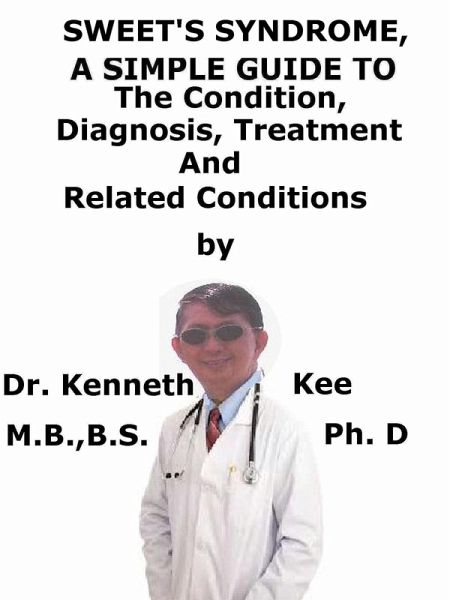
2,99 €
2,99 €
inkl. MwSt.
Sofort per Download lieferbar

0 °P sammeln
2,99 €
Als Download kaufen
2,99 €
inkl. MwSt.
Sofort per Download lieferbar
0 °P sammeln
Jetzt verschenken
Alle Infos zum eBook verschenken
2,99 €
inkl. MwSt.
Sofort per Download lieferbar
Alle Infos zum eBook verschenken
0 °P sammeln

Andere Kunden interessierten sich auch für
") Thoracic Outlet Syndrome, A Simple Guide To The Condition, Diagnosis, Treatment And Related Conditions (eBook, ePUB)2,99 €
Thoracic Outlet Syndrome, A Simple Guide To The Condition, Diagnosis, Treatment And Related Conditions (eBook, ePUB)2,99 € A Simple Guide To The Condition, Diagnosis, Treatment And Related Conditions (eBook, ePUB)") Alien Hand Syndrome, (Dr Strangelove Syndrome) A Simple Guide To The Condition, Diagnosis, Treatment And Related Conditions (eBook, ePUB)2,99 €
Alien Hand Syndrome, (Dr Strangelove Syndrome) A Simple Guide To The Condition, Diagnosis, Treatment And Related Conditions (eBook, ePUB)2,99 €") Goodpasture Syndrome, A Simple Guide To The Condition, Diagnosis, Treatment And Related Conditions (eBook, ePUB)2,99 €
Goodpasture Syndrome, A Simple Guide To The Condition, Diagnosis, Treatment And Related Conditions (eBook, ePUB)2,99 €") Horner Syndrome, A Simple Guide To The Condition, Diagnosis, Treatment And Related Conditions (eBook, ePUB)2,99 €
Horner Syndrome, A Simple Guide To The Condition, Diagnosis, Treatment And Related Conditions (eBook, ePUB)2,99 € A Simple Guide To The Condition, Diagnosis, Treatment And Related Conditions (eBook, ePUB)") Eagle Syndrome, (Long Styloid Process) A Simple Guide To The Condition, Diagnosis, Treatment And Related Conditions (eBook, ePUB)2,99 €
Eagle Syndrome, (Long Styloid Process) A Simple Guide To The Condition, Diagnosis, Treatment And Related Conditions (eBook, ePUB)2,99 €") Tarsal Tunnel Syndrome, A Simple Guide To The Condition, Diagnosis, Treatment And Related Conditions (eBook, ePUB)2,99 €
Tarsal Tunnel Syndrome, A Simple Guide To The Condition, Diagnosis, Treatment And Related Conditions (eBook, ePUB)2,99 €") Alice In Wonderland Syndrome, A Simple Guide To The Condition, Diagnosis, Treatment And Related Conditions (eBook, ePUB)2,99 €
Alice In Wonderland Syndrome, A Simple Guide To The Condition, Diagnosis, Treatment And Related Conditions (eBook, ePUB)2,99 €
This book describes Sweet's Syndrome, Diagnosis and Treatment and Related Diseases
Sweet's Syndrome is a rare, benign skin disorder, with a sudden start of fever and painful red, inflamed skin lesions that are infiltrated by neutrophils (a type of white blood cell)
These lesions normally happen on the arms, legs, trunk, face or neck.
More systems of the body can become affected such as:
1. The musculoskeletal system such as inflammation of the joints (arthritis),
2. The eyes such as inflammation of the conjunctiva or the membrane that lines the eyes (conjunctivitis), and
3. The internal organs.
There are 3 main groups of Sweet's Syndrome:
1. Idiopathic Sweet's Syndrome:
The syndrome is normally present in adults between the ages 30-60 years
Women are more likely to develop the disorder than men (in a 4:1 ratio)
Idiopathic Sweet's Syndrome recurs in one-third of the patients
In the majority of involved patients, the disorder happens by itself for no known reason (idiopathic Sweet's Syndrome)
2. Malignancy-Linked Sweet's Syndrome:
The skin findings may indicate cancer repeat occurrence or an undiagnosed cancer
Less often, the disorder can be linked with an underlying cancer (malignancy), normally a blood (hematological) cancer such as leukemia
3. Drug-Induced Sweet's Syndrome:
Persons, who are exposed to certain drugs, may develop the syndrome
The disorder can also happen as a reaction to taking certain medicines, mostly a drug known as granulocyte-colony stimulating factor
Causes
The cause of Idiopathic Sweet's Syndrome and Malignancy-Associated Sweet's Syndrome is not known
The drugs linked with Drug-Induced Sweet's Syndrome are:
1. Granulocyte colony-stimulating factor (G-CSF)
2. Bortezomib
3. Azacitidine
4. Decitabine
5. Imatinib mesylate
Other times, it happens when the immune system reacts to another disorder:
1. Blood cancer such as leukemia or lymphoma
2. Bowel disease, like ulcerative colitis or Crohn's disease
3. Chest infection or strep throat
4. Colon or breast cancer
5. Injury where the rash is, like a needle prick or insect bite
Symptoms
1. Fever (that may be high or moderate), tiredness, headache, aches in the joints, skin sores
a. Idiopathic Sweet's Syndrome is featured by the rapid onset of painful, red, inflamed skin lesions, infiltrated by neutrophils without inflammation of blood vessels
b. 75-90% of patients with Idiopathic Sweet's Syndrome and 20% of patients with Malignancy-Associated Sweet's Syndrome
report an upper respiratory infection before the manifestation of Sweet's Syndrome
Diagnosis
The doctor might be able to tell that it is Sweet's Syndrome just by looking at the rash.
Sweet's Syndrome is linked with these major criteria:
1. Rapid onset of painful skin lesions
2. Skin biopsy reveals histopathologic features of neutrophilic infiltration
Treatment
Sweet's syndrome may go away without treatment.
A treatment of Sweet's Syndrome may involve:
1. Sweet's Syndrome is often treated with 4-6 weeks of intravenous, oral or topical corticosteroids, dependent on the extensiveness of the skin findings.
2. The length of treatment is dependent on the disorder
3. Other medicines may be potassium iodide, colchicine, dapsone, and cyclosporine
4. In Malignancy-Linked Sweet's Syndrome, the treatment of the underlying malignancy may treat the disease
5. In Drug-Induced Sweet's Syndrome, stopping or temporary cessation of the causative drug may treat the disease
6. Antibiotics may be essential
Treatment of the underlying cancer results in the resolution of symptoms in malignancy-linked Sweet's Syndrome.
Drug-induced Sweet's Syndrome symptoms normally disappear after stopping causative drug
TABLE OF CONTENT
Introduction
Chapter 1 Sweet's Syndrome...
Sweet's Syndrome is a rare, benign skin disorder, with a sudden start of fever and painful red, inflamed skin lesions that are infiltrated by neutrophils (a type of white blood cell)
These lesions normally happen on the arms, legs, trunk, face or neck.
More systems of the body can become affected such as:
1. The musculoskeletal system such as inflammation of the joints (arthritis),
2. The eyes such as inflammation of the conjunctiva or the membrane that lines the eyes (conjunctivitis), and
3. The internal organs.
There are 3 main groups of Sweet's Syndrome:
1. Idiopathic Sweet's Syndrome:
The syndrome is normally present in adults between the ages 30-60 years
Women are more likely to develop the disorder than men (in a 4:1 ratio)
Idiopathic Sweet's Syndrome recurs in one-third of the patients
In the majority of involved patients, the disorder happens by itself for no known reason (idiopathic Sweet's Syndrome)
2. Malignancy-Linked Sweet's Syndrome:
The skin findings may indicate cancer repeat occurrence or an undiagnosed cancer
Less often, the disorder can be linked with an underlying cancer (malignancy), normally a blood (hematological) cancer such as leukemia
3. Drug-Induced Sweet's Syndrome:
Persons, who are exposed to certain drugs, may develop the syndrome
The disorder can also happen as a reaction to taking certain medicines, mostly a drug known as granulocyte-colony stimulating factor
Causes
The cause of Idiopathic Sweet's Syndrome and Malignancy-Associated Sweet's Syndrome is not known
The drugs linked with Drug-Induced Sweet's Syndrome are:
1. Granulocyte colony-stimulating factor (G-CSF)
2. Bortezomib
3. Azacitidine
4. Decitabine
5. Imatinib mesylate
Other times, it happens when the immune system reacts to another disorder:
1. Blood cancer such as leukemia or lymphoma
2. Bowel disease, like ulcerative colitis or Crohn's disease
3. Chest infection or strep throat
4. Colon or breast cancer
5. Injury where the rash is, like a needle prick or insect bite
Symptoms
1. Fever (that may be high or moderate), tiredness, headache, aches in the joints, skin sores
a. Idiopathic Sweet's Syndrome is featured by the rapid onset of painful, red, inflamed skin lesions, infiltrated by neutrophils without inflammation of blood vessels
b. 75-90% of patients with Idiopathic Sweet's Syndrome and 20% of patients with Malignancy-Associated Sweet's Syndrome
report an upper respiratory infection before the manifestation of Sweet's Syndrome
Diagnosis
The doctor might be able to tell that it is Sweet's Syndrome just by looking at the rash.
Sweet's Syndrome is linked with these major criteria:
1. Rapid onset of painful skin lesions
2. Skin biopsy reveals histopathologic features of neutrophilic infiltration
Treatment
Sweet's syndrome may go away without treatment.
A treatment of Sweet's Syndrome may involve:
1. Sweet's Syndrome is often treated with 4-6 weeks of intravenous, oral or topical corticosteroids, dependent on the extensiveness of the skin findings.
2. The length of treatment is dependent on the disorder
3. Other medicines may be potassium iodide, colchicine, dapsone, and cyclosporine
4. In Malignancy-Linked Sweet's Syndrome, the treatment of the underlying malignancy may treat the disease
5. In Drug-Induced Sweet's Syndrome, stopping or temporary cessation of the causative drug may treat the disease
6. Antibiotics may be essential
Treatment of the underlying cancer results in the resolution of symptoms in malignancy-linked Sweet's Syndrome.
Drug-induced Sweet's Syndrome symptoms normally disappear after stopping causative drug
TABLE OF CONTENT
Introduction
Chapter 1 Sweet's Syndrome...
Dieser Download kann aus rechtlichen Gründen nur mit Rechnungsadresse in A, B, CY, CZ, D, DK, EW, E, FIN, F, GR, H, IRL, I, LT, L, LR, M, NL, PL, P, R, S, SLO, SK ausgeliefert werden.