110,00 €
inkl. MwSt.
Sofort per Download lieferbar
0 °P sammeln

Andere Kunden interessierten sich auch für
") Jüdisches Bauen in Nachkriegsdeutschland (eBook, PDF)29,00 €
Jüdisches Bauen in Nachkriegsdeutschland (eBook, PDF)29,00 €") Dehio - Handbuch der deutschen Kunstdenkmäler / Thüringen I (eBook, PDF)52,00 €
Dehio - Handbuch der deutschen Kunstdenkmäler / Thüringen I (eBook, PDF)52,00 €") Architektur in Deutschland im 20. Jahrhundert (eBook, PDF)39,99 €
Architektur in Deutschland im 20. Jahrhundert (eBook, PDF)39,99 €") Architektur (eBook, PDF)24,90 €
Architektur (eBook, PDF)24,90 €") Le Corbusier. Die Kapelle von Ronchamp (eBook, PDF)28,00 €
Le Corbusier. Die Kapelle von Ronchamp (eBook, PDF)28,00 €") Deutsche Botschaften (eBook, PDF)55,00 €
Deutsche Botschaften (eBook, PDF)55,00 €") Dehio - Handbuch der deutschen Kunstdenkmäler / Berlin (eBook, PDF)39,90 €
Dehio - Handbuch der deutschen Kunstdenkmäler / Berlin (eBook, PDF)39,90 €




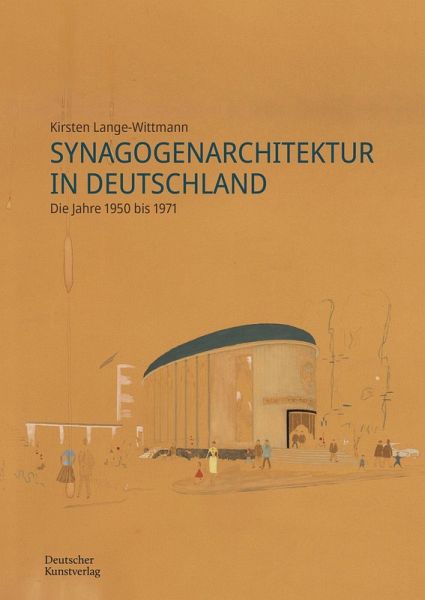
Between 1950 and 1971 in Germany, 26 new synagogues were built. The consecration of the synagogues in Saarbrücken in 1951 marked a construction phase of new synagogues and Jewish community centres throughout Germany. The consecration of the synagogue in Karlsruhe in 1971 brought this phase of relatively few projects to a temporary halt. The buildings from this first phase were designed largely by unknown Jewish and non-Jewish architects. In this context, the questions arise of which architectural models influenced post-war synagogue construction, and whether it is possible to discern the continuation of a synagogue architectural language developed prior to 1931? The importance of this new synagogue architecture in Germany after 1945, and whether the new buildings' significance was recognized are additional topics in focus.
- Synagogues and Jewish community centres in post-war Germany
- East and West Germany
- Unknown architects
Dieser Download kann aus rechtlichen Gründen nur mit Rechnungsadresse in A, B, BG, CY, CZ, D, DK, EW, E, FIN, F, GR, HR, H, IRL, I, LT, L, LR, M, NL, PL, P, R, S, SLO, SK ausgeliefert werden.