Sie sind bereits eingeloggt. Klicken Sie auf 2. tolino select Abo, um fortzufahren.
Bitte loggen Sie sich zunächst in Ihr Kundenkonto ein oder registrieren Sie sich bei bücher.de, um das eBook-Abo tolino select nutzen zu können.
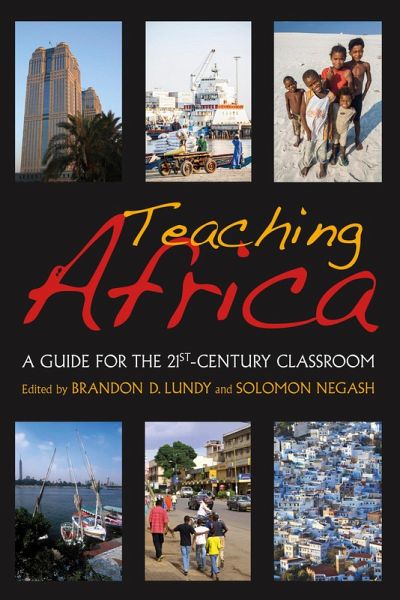
"A valuable resource [with] useful ideas about how to... enhance student engagement with the continent, and expand Africa's presence within the curriculum." -Stephen Volz, Kenyon College Teaching Africa introduces innovative strategies for teaching about Africa. The contributors address misperceptions about Africa and Africans, incorporate the latest technologies of teaching and learning, and give practical advice for creating successful lesson plans, classroom activities, and study abroad programs. Teachers in the humanities, sciences, and social sciences will find helpful hints and tips on…mehr
"A valuable resource [with] useful ideas about how to... enhance student engagement with the continent, and expand Africa's presence within the curriculum." -Stephen Volz, Kenyon College Teaching Africa introduces innovative strategies for teaching about Africa. The contributors address misperceptions about Africa and Africans, incorporate the latest technologies of teaching and learning, and give practical advice for creating successful lesson plans, classroom activities, and study abroad programs. Teachers in the humanities, sciences, and social sciences will find helpful hints and tips on how to bridge the knowledge gap and motivate understanding of Africa in a globalizing world.
Die Herstellerinformationen sind derzeit nicht verfügbar.
Autorenporträt
Brandon D. Lundy is an Assistant Professor of Anthropology at Kennesaw State University. Solomon Negash is an Associate Professor of Information Systems at Kennesaw State University.
Inhaltsangabe
Introduction Brandon D. Lundy Part I. Situating Africa: Concurrent-Divergent Rubrics of Meaning 1. Introducing "Africa" Jennifer E. Coffman 2. Africa: Which Way Forward?: An Interdisciplinary Approach Todd Cleveland 3. Why We Need African History Kathleen Smythe 4. Answering the "So What" Question: Making African History Relevant in the Provincial College Classroom Gary Marquardt 5. From African History to African Histories: Teaching Interdisciplinary Method, Philosophy, and Ethics through the African History Survey Trevor R. Getz 6. Treating the Exotic and the Familiar in the African History Classroom Ryan Ronnenberg 7. Postcolonial Perspectives on Teaching African Politics in Wales and Ireland Carl Death 8. Pan-Africanism: The Ties that Bind Ghana and the United States Harry Nii Koney Odamtten 9. The Importance of the Regional Concept: The Case for an Undergraduate Regional Geography Course of Sub-Saharan Africa Matthew Waller 10. Teach Me About Africa: Facilitating and Training Educators Toward a Socially Just Curriculum Durene I. Wheeler and Jeanine Ntihirageza Part II. African Arts: Interpreting the African "Text" 11. Inversion Rituals: The African Novel in the Global North Catherine Kroll 12. Teaching Africa through a Comparative Pedagogy: South Africa and the United States Renée Schatteman 13. Stereotypes, Myths, and Realities Regarding African Music in the African and American Academy Jean Ngoya Kidula 14. What Paltry Learning in Dumb Books!: Teaching the Power of Oral Narrative Caleb Corkery 15. Teaching about Africa: Violence and Conflict Management Linda M. Johnston and Oumar Chérif Diop 16. Contextualizing the Teaching of Africa in the 21st Century: A Student-centered Pedagogical Approach to Demystify Africa as The Heart of Darkness Lucie Viakinnou-Brinson Part III. Application of Approaches: Experiencing African Particulars 17. Shaping U.S.-Based Activism Towards Africa: The Role of a Mix of Critical Pedagogies Amy C. Finnegan 18. The Model AU as Pedagogical Method of Teaching American Students about Africa Babacar M'Baye 19. The Kalamazoo/Fourah Bay College Partnership: A Context for Understanding Study Abroad with Africa Daniel J. Paracka, Jr. 20. Teaching Culture, Health, and Political Economy in the Field: Ground-level Perspectives on Africa in the 21st Century James Ellison 21. Beyond the Biologic Basis of Disease: Collaborative Study of the Social and Economic Causation of Disease in Africa Amy C. Finnegan, Julian Jane Atim, and Michael Westerhaus 22. Educating the Educators: Ethiopian IT PhD Program Solomon Negash and Julian M. Bass Conclusion: Knowledge Circulation and Diasporic Interfacing Toyin Falola References Contributors Index
Introduction Brandon D. Lundy Part I. Situating Africa: Concurrent-Divergent Rubrics of Meaning 1. Introducing "Africa" Jennifer E. Coffman 2. Africa: Which Way Forward?: An Interdisciplinary Approach Todd Cleveland 3. Why We Need African History Kathleen Smythe 4. Answering the "So What" Question: Making African History Relevant in the Provincial College Classroom Gary Marquardt 5. From African History to African Histories: Teaching Interdisciplinary Method, Philosophy, and Ethics through the African History Survey Trevor R. Getz 6. Treating the Exotic and the Familiar in the African History Classroom Ryan Ronnenberg 7. Postcolonial Perspectives on Teaching African Politics in Wales and Ireland Carl Death 8. Pan-Africanism: The Ties that Bind Ghana and the United States Harry Nii Koney Odamtten 9. The Importance of the Regional Concept: The Case for an Undergraduate Regional Geography Course of Sub-Saharan Africa Matthew Waller 10. Teach Me About Africa: Facilitating and Training Educators Toward a Socially Just Curriculum Durene I. Wheeler and Jeanine Ntihirageza Part II. African Arts: Interpreting the African "Text" 11. Inversion Rituals: The African Novel in the Global North Catherine Kroll 12. Teaching Africa through a Comparative Pedagogy: South Africa and the United States Renée Schatteman 13. Stereotypes, Myths, and Realities Regarding African Music in the African and American Academy Jean Ngoya Kidula 14. What Paltry Learning in Dumb Books!: Teaching the Power of Oral Narrative Caleb Corkery 15. Teaching about Africa: Violence and Conflict Management Linda M. Johnston and Oumar Chérif Diop 16. Contextualizing the Teaching of Africa in the 21st Century: A Student-centered Pedagogical Approach to Demystify Africa as The Heart of Darkness Lucie Viakinnou-Brinson Part III. Application of Approaches: Experiencing African Particulars 17. Shaping U.S.-Based Activism Towards Africa: The Role of a Mix of Critical Pedagogies Amy C. Finnegan 18. The Model AU as Pedagogical Method of Teaching American Students about Africa Babacar M'Baye 19. The Kalamazoo/Fourah Bay College Partnership: A Context for Understanding Study Abroad with Africa Daniel J. Paracka, Jr. 20. Teaching Culture, Health, and Political Economy in the Field: Ground-level Perspectives on Africa in the 21st Century James Ellison 21. Beyond the Biologic Basis of Disease: Collaborative Study of the Social and Economic Causation of Disease in Africa Amy C. Finnegan, Julian Jane Atim, and Michael Westerhaus 22. Educating the Educators: Ethiopian IT PhD Program Solomon Negash and Julian M. Bass Conclusion: Knowledge Circulation and Diasporic Interfacing Toyin Falola References Contributors Index
Es gelten unsere Allgemeinen Geschäftsbedingungen: www.buecher.de/agb
Impressum
www.buecher.de ist ein Internetauftritt der buecher.de internetstores GmbH
Geschäftsführung: Monica Sawhney | Roland Kölbl | Günter Hilger
Sitz der Gesellschaft: Batheyer Straße 115 - 117, 58099 Hagen
Postanschrift: Bürgermeister-Wegele-Str. 12, 86167 Augsburg
Amtsgericht Hagen HRB 13257
Steuernummer: 321/5800/1497
USt-IdNr: DE450055826