Sie sind bereits eingeloggt. Klicken Sie auf 2. tolino select Abo, um fortzufahren.
Bitte loggen Sie sich zunächst in Ihr Kundenkonto ein oder registrieren Sie sich bei bücher.de, um das eBook-Abo tolino select nutzen zu können.
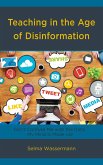
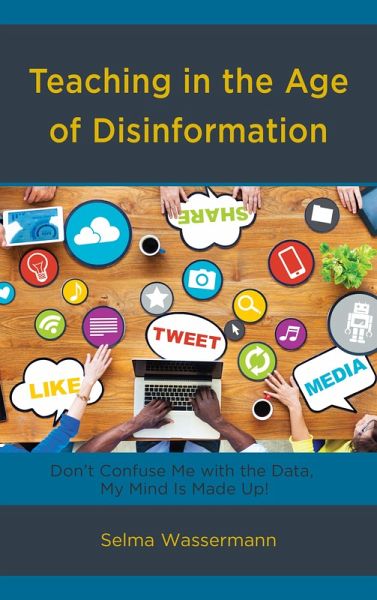
Teaching in the Age of Disinformation makes a case for the importance of developing students' intelligent habits of mind so that they become more discriminating consumers of the information that comes at them from the Internet, social media, television and the tabloid press in this "alternate truth" era. Part I sets the stage for the need for an informed citizenry, given the many and varied sources of disinformation that they are exposed to and what the implications are when they are unable to make such distinctions. Part II deals with the specifics of how teachers may develop curriculum…mehr
Teaching in the Age of Disinformation makes a case for the importance of developing students' intelligent habits of mind so that they become more discriminating consumers of the information that comes at them from the Internet, social media, television and the tabloid press in this "alternate truth" era. Part I sets the stage for the need for an informed citizenry, given the many and varied sources of disinformation that they are exposed to and what the implications are when they are unable to make such distinctions. Part II deals with the specifics of how teachers may develop curriculum activities that call for higher order thinking, within the many and diverse subject areas of elementary and secondary education. Hundreds of examples of curriculum activities are included, as well as suggestions for how teachers use higher order questioning strategies in classroom discussions to enable and promote student thinking. "A pleasure to read," the book draws on the author's long and extensive experience in teaching, writing and research with "teaching for thinking," and offers teachers research-tested ways to incorporate the development of students' intelligent habits of mind in their daily classroom work.
Die Herstellerinformationen sind derzeit nicht verfügbar.
Autorenporträt
Selma Wassermann is Professor Emerita in the Faculty of Education at Simon Fraser University. Author of more than 30 books, she is the recipient of the University Excellence in Teaching Award.
Inhaltsangabe
Preface Acknowledgements Introduction Section 1 Chapter 1- What Can Teachers Do? Chapter 2- Shifting Gears in the Curriculum to Emphasize Teaching for Thinking: An Overview A Teaching for Thinking Curriculum Framework To Know, To Understand, and To Know How - Key Steps in Teaching for Thinking An Instructional Design for Teaching for Thinking Chapter 3- Guidelines for Beginning a Teaching for Thinking Program Section 2 Chapter 4- Introduction to Observing Classroom Applications Chapter 5- Introduction to Comparing Classroom Applications Chapter 6- Introduction to Classifying Classroom Applications Chapter 7- Introduction to Suggesting Hypotheses Classroom Applications Chapter 8- Introduction to Searching Out Assumptions Classroom Applications Chapter 9- Introduction to Summarizing Classroom Applications Chapter 10- Introduction to Interpreting Classroom Applications Chapter 11- Introduction to Making Decisions Classroom Applications Chapter 12- Introduction to Designing Projects and Investigations Classroom Applications Chapter 13- Introduction to Creating and Inventing Classroom Applications Chapter 14- Introduction to Evaluating and Assessing Classroom Applications Section 3 Chapter 15- Dealing With Students' Deeply Held Beliefs Classroom Applications Chapter 16- Using Questions and Responses that Promote Further Examination of Issues: The Interactive Dialogue Chapter 17- Evaluating Students' Work But Is It Working? Using Self-Assessments Profiles of Student Behaviors Chapter 18- The Teacher is the Key Bibliography About the Author
Es gelten unsere Allgemeinen Geschäftsbedingungen: www.buecher.de/agb
Impressum
www.buecher.de ist ein Internetauftritt der buecher.de internetstores GmbH
Geschäftsführung: Monica Sawhney | Roland Kölbl | Günter Hilger
Sitz der Gesellschaft: Batheyer Straße 115 - 117, 58099 Hagen
Postanschrift: Bürgermeister-Wegele-Str. 12, 86167 Augsburg
Amtsgericht Hagen HRB 13257
Steuernummer: 321/5800/1497
USt-IdNr: DE450055826