Sie sind bereits eingeloggt. Klicken Sie auf 2. tolino select Abo, um fortzufahren.
Bitte loggen Sie sich zunächst in Ihr Kundenkonto ein oder registrieren Sie sich bei bücher.de, um das eBook-Abo tolino select nutzen zu können.
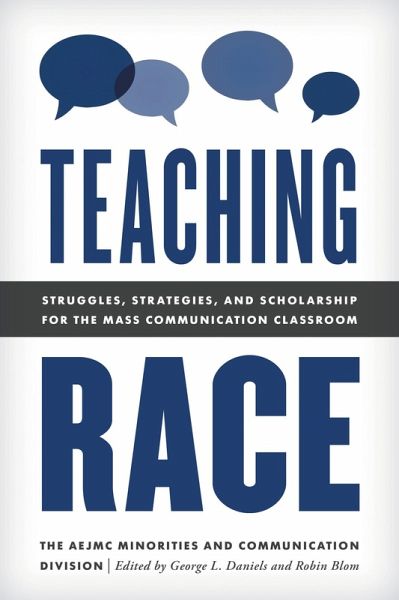
When it comes to teaching about race, journalism and mass communication faculty from various backgrounds must deliver instruction that acknowledges the challenges surrounding the topic while facilitating the learning of undergraduate and graduate students. Race should be a topic infused across the curriculum at the undergraduate and graduate level in institutions large and small, public and private. This takes a holistic approach with authors from a range of racial and ethnic backgrounds at small, mid-size, and large research institutions offering their insights. More than teaching tips, the…mehr
When it comes to teaching about race, journalism and mass communication faculty from various backgrounds must deliver instruction that acknowledges the challenges surrounding the topic while facilitating the learning of undergraduate and graduate students. Race should be a topic infused across the curriculum at the undergraduate and graduate level in institutions large and small, public and private. This takes a holistic approach with authors from a range of racial and ethnic backgrounds at small, mid-size, and large research institutions offering their insights. More than teaching tips, the chapters here offer wisdom grounded in the research of the scholarship of teaching and learning, which allows scholars to both inform their teaching with empirical research and share successful pedagogy with others.
Die Herstellerinformationen sind derzeit nicht verfügbar.
Autorenporträt
Robin Blom is associate professor and graduate director of journalism at Ball State University. He is director of the Unified Research Lab (URL), where he facilitates eye-tracking, virtual reality, psycho-physiology, and gaming studies with more than a dozen faculty and student researchers.
George L. Daniels is associate professor of journalism and creative media at The University of Alabama. He is immediate past head of the AEJMC Minorities and Communication Division and is a nationally certified master journalism educator (MJE) and the inaugural Faculty Fellow for Diversity & Inclusion for the Broadcast Education Association.
Inhaltsangabe
Foreword. Melody T. Fisher, Mississippi State University Introduction. George L. Daniels, The University of Alabama, and Robin Blom, Ball State University Part I: Structural Changes Chapter 1. Radically Transforming Programs and Syllabi, Danielle K. Kilgo, University of Minnesota Chapter 1 Perspective. Creating Spaces of Collective Unlearning, Angie Chuang, University of Colorado Chapter 2. Incorporating a Critique of Coloniality, Ilía Rodríguez, University of New Mexico Chapter 2 Perspective. Teaching Race within an Intersectionality Framework, Nathian S. Rodriguez, San Diego State University Chapter 3. Committing to Excellence in Diversity and Accreditation, Mia Moody-Ramirez, Baylor University Chapter Perspective 3. Teaching Diversity at HBCUs Requires a Deeper Dive, Robbie R. Morganfield, North Carolina A&T State University Part II: Positionality in the Classroom Chapter 4. When the Lecturer Is a Minority, Alfred J. Cotton III, University of Cincinnati Chapter 4 Perspective. When the Lecturer Is Biracial or Multiracial, Elliott Lewis, Syracuse University Chapter 5. When the Lecturer Is a Majority Brian J. Bowe, The American University in Cairo Chapter 5 Perspective. When the Majority Lecturer Is in the Minority, Gregory Adamo, Morgan State University Chapter 6. When the Lecturer Is International, Masudal K. Biswas, Loyola University Maryland Chapter 6 Perspective. When the Lecturer Is from a Different Culture, Mariam F. Alkazemi, Virginia Commonwealth University Part III: Guidance and Mentorship Chapter 7. Teaching Diversity in Immersive Learning Courses, Gabriel B. Tait, Ball State University Chapter 7 Perspective. Cultural Understanding of Diverse Communities, Aqsa Bashir, University of Florida Chapter 8. Diversity Issues in Campus Newsrooms and Agencies, Tamara Z. Buck, Southeast Missouri State University Chapter 8 Perspective. Covering Race Panic Stories and Diversity Flare-Ups, Cristina L. Azocar, San Francisco State University Chapter 9. Embracing a Pedagogy of Pain, Meta G. Carstarphen, The University of Oklahoma Chapter 9 Perspective. Confronting Color-Blindness, Keonte Coleman, Middle Tennessee State University Chapter 10. Guiding Research in Issues of Diversity and Difference, Troy Elias, University of Oregon Chapter 10 Perspective. Mentoring Students of Color, Maria De Moya, DePaul University Afterword. Of Insurrection, Injustice, and a Racial Reckoning, Deb Aikat, University of North Carolina at Chapel Hill Appendix I. ACEJMC Standard 2: Curriculum and Instruction Appendix II. ACEJMC Standard 4: Diversity and Inclusiveness Index About the Editors and Contributors
Foreword. Melody T. Fisher, Mississippi State University Introduction. George L. Daniels, The University of Alabama, and Robin Blom, Ball State University Part I: Structural Changes Chapter 1. Radically Transforming Programs and Syllabi, Danielle K. Kilgo, University of Minnesota Chapter 1 Perspective. Creating Spaces of Collective Unlearning, Angie Chuang, University of Colorado Chapter 2. Incorporating a Critique of Coloniality, Ilía Rodríguez, University of New Mexico Chapter 2 Perspective. Teaching Race within an Intersectionality Framework, Nathian S. Rodriguez, San Diego State University Chapter 3. Committing to Excellence in Diversity and Accreditation, Mia Moody-Ramirez, Baylor University Chapter Perspective 3. Teaching Diversity at HBCUs Requires a Deeper Dive, Robbie R. Morganfield, North Carolina A&T State University Part II: Positionality in the Classroom Chapter 4. When the Lecturer Is a Minority, Alfred J. Cotton III, University of Cincinnati Chapter 4 Perspective. When the Lecturer Is Biracial or Multiracial, Elliott Lewis, Syracuse University Chapter 5. When the Lecturer Is a Majority Brian J. Bowe, The American University in Cairo Chapter 5 Perspective. When the Majority Lecturer Is in the Minority, Gregory Adamo, Morgan State University Chapter 6. When the Lecturer Is International, Masudal K. Biswas, Loyola University Maryland Chapter 6 Perspective. When the Lecturer Is from a Different Culture, Mariam F. Alkazemi, Virginia Commonwealth University Part III: Guidance and Mentorship Chapter 7. Teaching Diversity in Immersive Learning Courses, Gabriel B. Tait, Ball State University Chapter 7 Perspective. Cultural Understanding of Diverse Communities, Aqsa Bashir, University of Florida Chapter 8. Diversity Issues in Campus Newsrooms and Agencies, Tamara Z. Buck, Southeast Missouri State University Chapter 8 Perspective. Covering Race Panic Stories and Diversity Flare-Ups, Cristina L. Azocar, San Francisco State University Chapter 9. Embracing a Pedagogy of Pain, Meta G. Carstarphen, The University of Oklahoma Chapter 9 Perspective. Confronting Color-Blindness, Keonte Coleman, Middle Tennessee State University Chapter 10. Guiding Research in Issues of Diversity and Difference, Troy Elias, University of Oregon Chapter 10 Perspective. Mentoring Students of Color, Maria De Moya, DePaul University Afterword. Of Insurrection, Injustice, and a Racial Reckoning, Deb Aikat, University of North Carolina at Chapel Hill Appendix I. ACEJMC Standard 2: Curriculum and Instruction Appendix II. ACEJMC Standard 4: Diversity and Inclusiveness Index About the Editors and Contributors
Es gelten unsere Allgemeinen Geschäftsbedingungen: www.buecher.de/agb
Impressum
www.buecher.de ist ein Internetauftritt der buecher.de internetstores GmbH
Geschäftsführung: Monica Sawhney | Roland Kölbl | Günter Hilger
Sitz der Gesellschaft: Batheyer Straße 115 - 117, 58099 Hagen
Postanschrift: Bürgermeister-Wegele-Str. 12, 86167 Augsburg
Amtsgericht Hagen HRB 13257
Steuernummer: 321/5800/1497
USt-IdNr: DE450055826