47,95 €
inkl. MwSt.
Sofort per Download lieferbar
24 °P sammeln

Andere Kunden interessierten sich auch für
") Technical Writing (eBook, ePUB)48,95 €
Technical Writing (eBook, ePUB)48,95 €") Technical Writing (eBook, PDF)47,95 €
Technical Writing (eBook, PDF)47,95 €") Practical Control Engineering for Mechatronics and Automation (eBook, ePUB)55,95 €
Practical Control Engineering for Mechatronics and Automation (eBook, ePUB)55,95 €") Modular Systems for Energy and Fuel Recovery and Conversion (eBook, ePUB)139,95 €
Modular Systems for Energy and Fuel Recovery and Conversion (eBook, ePUB)139,95 €") Lead-Acid Battery Technologies (eBook, ePUB)188,95 €
Lead-Acid Battery Technologies (eBook, ePUB)188,95 €") Hybrid Power (eBook, ePUB)48,95 €
Hybrid Power (eBook, ePUB)48,95 €") Scanning Probe Lithography (eBook, ePUB)97,95 €
Scanning Probe Lithography (eBook, ePUB)97,95 €

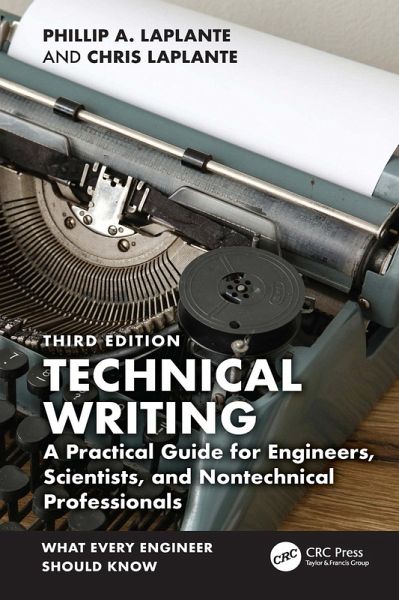
Technical Writing: A Practical Guide for Engineers, Scientists, and Nontechnical Professionals enables readers to write, edit, and publish materials of a technical nature, including books, articles, reports, and electronic media. Written by experienced practicing engineers, this guide complements traditional technical writing manuals through the presentation of firsthand examples that help readers understand practical considerations in writing and producing technical content. These examples illustrate how a publication originates as well as explain various challenges and solutions.
The third edition features the following:
Written in an informal, conversational style, unlike traditional writing texts, this book contains many interesting vignettes and personal stories to add interest to otherwise stodgy lessons. It is aimed at students and professionals in the science and engineering domains.
The third edition features the following:
- New and updated exercises, examples, and case studies
- New content on software/systems documentation
- Treatment of plagiarism to incorporate issues in generative artificial intelligence (AI), open-access archiving, and more
- Coverage of popular writing and collaboration tools such as Grammarly, Overleaf, and Google Docs
- Increased conversation of writing for non-native English speakers
- Latest standards and research
Written in an informal, conversational style, unlike traditional writing texts, this book contains many interesting vignettes and personal stories to add interest to otherwise stodgy lessons. It is aimed at students and professionals in the science and engineering domains.
Dieser Download kann aus rechtlichen Gründen nur mit Rechnungsadresse in A, B, BG, CY, CZ, D, DK, EW, E, FIN, F, GR, HR, H, IRL, I, LT, L, LR, M, NL, PL, P, R, S, SLO, SK ausgeliefert werden.
"Overall the book provides practical, actionable, information that can be used to improve anyone's writing skills - technical or nontechnical. The author covers a wide variety of media used to convey technical information not only including books and journals, but also magazines, conference proceedings, newsletters, websites, and blogs. Rather than a boring cookbook style of writing, the author uses many stories, personal examples of his own writing, and visuals (graphs, tables, drawings) to convey good writing styles and practical information that will improve your writing.
There are references and sample exercises at the end of each chapter for further study. The appendix also contains a list of templates for various types of documents Anyone interested in improving their writing skills and technical communication skills in general will find this book to be an invaluable and practical reference guide."
-IEEE Electrical Insulation Magazine June 2019 Issue
There are references and sample exercises at the end of each chapter for further study. The appendix also contains a list of templates for various types of documents Anyone interested in improving their writing skills and technical communication skills in general will find this book to be an invaluable and practical reference guide."
-IEEE Electrical Insulation Magazine June 2019 Issue