2,99 €
2,99 €
inkl. MwSt.
Sofort per Download lieferbar

0 °P sammeln
2,99 €
Als Download kaufen
2,99 €
inkl. MwSt.
Sofort per Download lieferbar
0 °P sammeln
Jetzt verschenken
Alle Infos zum eBook verschenken
2,99 €
inkl. MwSt.
Sofort per Download lieferbar
Alle Infos zum eBook verschenken
0 °P sammeln

Andere Kunden interessierten sich auch für
") The Treatment Of Psychiatric Disorders (eBook, ePUB)30,95 €
The Treatment Of Psychiatric Disorders (eBook, ePUB)30,95 €") The Temporal Lobe (eBook, ePUB)175,95 €
The Temporal Lobe (eBook, ePUB)175,95 €") Understanding Mental Disorders Due To Medical Conditions Or Substance Abuse (eBook, ePUB)28,95 €
Understanding Mental Disorders Due To Medical Conditions Or Substance Abuse (eBook, ePUB)28,95 €") Peripheral Nerve Diseases, A Simple Guide To The Condition, Diagnosis, Treatment And Related Conditions (eBook, ePUB)2,99 €
Peripheral Nerve Diseases, A Simple Guide To The Condition, Diagnosis, Treatment And Related Conditions (eBook, ePUB)2,99 € A Simple Guide To The Condition, Diagnosis, Treatment And Related Conditions (eBook, ePUB)") Alien Hand Syndrome, (Dr Strangelove Syndrome) A Simple Guide To The Condition, Diagnosis, Treatment And Related Conditions (eBook, ePUB)2,99 €
Alien Hand Syndrome, (Dr Strangelove Syndrome) A Simple Guide To The Condition, Diagnosis, Treatment And Related Conditions (eBook, ePUB)2,99 €") Spinal Cord Injury, A Simple Guide To The Condition, Diagnosis, Treatment And Related Conditions (eBook, ePUB)2,99 €
Spinal Cord Injury, A Simple Guide To The Condition, Diagnosis, Treatment And Related Conditions (eBook, ePUB)2,99 € A Simple Guide To The Condition, Diagnosis, Treatment And Related Conditions (eBook, ePUB)") Nystagmus, (Rapid Eye Movements) A Simple Guide To The Condition, Diagnosis, Treatment And Related Conditions (eBook, ePUB)2,99 €
Nystagmus, (Rapid Eye Movements) A Simple Guide To The Condition, Diagnosis, Treatment And Related Conditions (eBook, ePUB)2,99 €

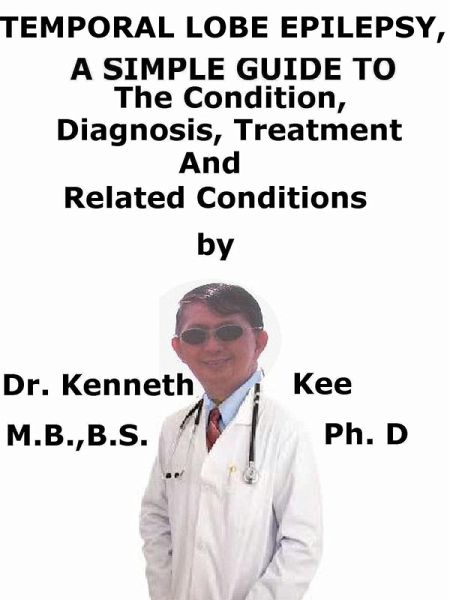
This book describes Temporal Lobe Epilepsy, Diagnosis and Treatment and Related Diseases
Epilepsy is a brain disorder that induces changes in brain cell activity that lead to seizures, durations of unusual behavior or feelings, and in some patients a loss of consciousness.
Temporal lobe epilepsy (TLE) can be simple focal temporal seizures without loss of consciousness (with or without aura) or focal dyscognitive seizures (with loss of consciousness).
Loss of consciousness happens during a focal dyscognitive seizure when the seizure extends to involve both temporal lobes.
Temporal lobe epilepsy is one of 20 different types of epilepsy.
There are 2 main types of temporal lobe epilepsy.
Each is depicted by the part of the temporal lobe in which it begins.
1. One begins in the medial (inner) region of the temporal lobe
2. The other begins in the neocortical (side) region of the temporal lobe.
The brain's temporal lobes take care of emotions and also assist with the processing and storage of short-term memories.
Temporal lobe epileptic seizures can further categorized.
1. If there is a loss of consciousness, they are termed complex partial seizures.
2. If the patient remains conscious, they are termed simple partial seizures.
In most cases, people stay conscious during temporal lobe seizures, making the TLE simple partial seizures.
Of all types of epilepsy, temporal lobe epilepsy is most frequent.
It involves about 60 percent of all people with epilepsy and can happen at any age.
There are many possible causes, and often the precise cause is not known.
Doctors believe some possible causes of temporal lobe seizures are:
1. Severe traumatic brain injury
2. Infections or a history of infections like meningitis or encephalitis
3. Scarring (gliosis) in the hippocampus part of the temporal lobe
4. Blood vessel deformities in the brain
5. Stroke
6. Brain tumors
7. Genetics
8. Abnormal electrical activity in the brain
Risk Factors
The most frequent risk factor for temporal lobe epilepsy is having had a seizure, particularly an extraordinarily long-lasting seizure, with a fever at some period in life.
Other risk factors for temporal lobe epilepsy are:
1. Head trauma with loss of consciousness
2. Early childhood injuries
3. Birth injuries
4. Brain defects
5. Vascular malformations (i.e. arteriovenous malformation, cavernous angioma).
5. Past infections (e.g., herpes encephalitis or bacterial meningitis)
6. Brain tumors
a. Hamartomas.
b. Gliomas.
7. Head injury producing contusion or hemorrhage that causes encephalomalacia or cortical scarring.
8. Cryptogenic: a cause is presumed but has not been diagnosed.
9. Idiopathic (rare).
Hippocampal sclerosis induces a medical syndrome termed mesial temporal lobe epilepsy, which happens in late childhood, then remits but recurs in adolescence or early adulthood in a refractory form.
Febrile seizures: some children with complex febrile seizures seem to be at risk of developing TLE in later life.
Aura happens in the majority of temporal lobe seizures.
Most auras and automatisms persist a very short period - seconds or 1 to 2 minutes.
Auras may produce sensory, autonomic or psychic symptoms:
1. Somatosensory and special sensory phenomena:
2. Olfactory, auditory and gustatory illusions and hallucinations may happen
3. Vertigo may occur with seizures in the posterior superior temporal gyrus.
4. Psychic phenomena:
5. Autonomic phenomena: changes in heart rate and sweating.
MRI and EEG are the tests of choice in diagnosis of temporal lobe epilepsy
Most people with temporal lobe epilepsy respond well to anti-epileptic drugs.
Surgery is another frequent treatment for temporal lobe epilepsy
TABLE OF CONTENT
Introduction
Chapter 1 Temporal L...
Epilepsy is a brain disorder that induces changes in brain cell activity that lead to seizures, durations of unusual behavior or feelings, and in some patients a loss of consciousness.
Temporal lobe epilepsy (TLE) can be simple focal temporal seizures without loss of consciousness (with or without aura) or focal dyscognitive seizures (with loss of consciousness).
Loss of consciousness happens during a focal dyscognitive seizure when the seizure extends to involve both temporal lobes.
Temporal lobe epilepsy is one of 20 different types of epilepsy.
There are 2 main types of temporal lobe epilepsy.
Each is depicted by the part of the temporal lobe in which it begins.
1. One begins in the medial (inner) region of the temporal lobe
2. The other begins in the neocortical (side) region of the temporal lobe.
The brain's temporal lobes take care of emotions and also assist with the processing and storage of short-term memories.
Temporal lobe epileptic seizures can further categorized.
1. If there is a loss of consciousness, they are termed complex partial seizures.
2. If the patient remains conscious, they are termed simple partial seizures.
In most cases, people stay conscious during temporal lobe seizures, making the TLE simple partial seizures.
Of all types of epilepsy, temporal lobe epilepsy is most frequent.
It involves about 60 percent of all people with epilepsy and can happen at any age.
There are many possible causes, and often the precise cause is not known.
Doctors believe some possible causes of temporal lobe seizures are:
1. Severe traumatic brain injury
2. Infections or a history of infections like meningitis or encephalitis
3. Scarring (gliosis) in the hippocampus part of the temporal lobe
4. Blood vessel deformities in the brain
5. Stroke
6. Brain tumors
7. Genetics
8. Abnormal electrical activity in the brain
Risk Factors
The most frequent risk factor for temporal lobe epilepsy is having had a seizure, particularly an extraordinarily long-lasting seizure, with a fever at some period in life.
Other risk factors for temporal lobe epilepsy are:
1. Head trauma with loss of consciousness
2. Early childhood injuries
3. Birth injuries
4. Brain defects
5. Vascular malformations (i.e. arteriovenous malformation, cavernous angioma).
5. Past infections (e.g., herpes encephalitis or bacterial meningitis)
6. Brain tumors
a. Hamartomas.
b. Gliomas.
7. Head injury producing contusion or hemorrhage that causes encephalomalacia or cortical scarring.
8. Cryptogenic: a cause is presumed but has not been diagnosed.
9. Idiopathic (rare).
Hippocampal sclerosis induces a medical syndrome termed mesial temporal lobe epilepsy, which happens in late childhood, then remits but recurs in adolescence or early adulthood in a refractory form.
Febrile seizures: some children with complex febrile seizures seem to be at risk of developing TLE in later life.
Aura happens in the majority of temporal lobe seizures.
Most auras and automatisms persist a very short period - seconds or 1 to 2 minutes.
Auras may produce sensory, autonomic or psychic symptoms:
1. Somatosensory and special sensory phenomena:
2. Olfactory, auditory and gustatory illusions and hallucinations may happen
3. Vertigo may occur with seizures in the posterior superior temporal gyrus.
4. Psychic phenomena:
5. Autonomic phenomena: changes in heart rate and sweating.
MRI and EEG are the tests of choice in diagnosis of temporal lobe epilepsy
Most people with temporal lobe epilepsy respond well to anti-epileptic drugs.
Surgery is another frequent treatment for temporal lobe epilepsy
TABLE OF CONTENT
Introduction
Chapter 1 Temporal L...
Dieser Download kann aus rechtlichen Gründen nur mit Rechnungsadresse in A, B, CY, CZ, D, DK, EW, E, FIN, F, GR, H, IRL, I, LT, L, LR, M, NL, PL, P, R, S, SLO, SK ausgeliefert werden.