Sie sind bereits eingeloggt. Klicken Sie auf 2. tolino select Abo, um fortzufahren.
Bitte loggen Sie sich zunächst in Ihr Kundenkonto ein oder registrieren Sie sich bei bücher.de, um das eBook-Abo tolino select nutzen zu können.
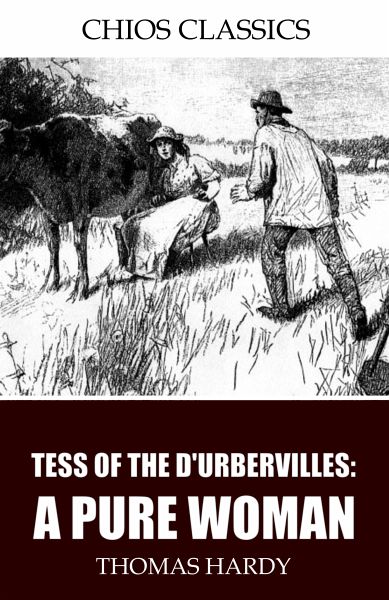
Chios Classics brings literature's greatest works back to life for new generations. All our books contain a linked table of contents. Tess of the d'Urbervilles is considered the most famous work of Thomas Hardy. The novel, considered one of the best of the 19th century, was controversial at the time of its release because it challenged the sexual morals of Victorian-era England.
Chios Classics brings literature's greatest works back to life for new generations. All our books contain a linked table of contents.
Tess of the d'Urbervilles is considered the most famous work of Thomas Hardy. The novel, considered one of the best of the 19th century, was controversial at the time of its release because it challenged the sexual morals of Victorian-era England.
Dieser Download kann aus rechtlichen Gründen nur mit Rechnungsadresse in D, E, F, I ausgeliefert werden.
Die Herstellerinformationen sind derzeit nicht verfügbar.
Autorenporträt
Thomas Hardy (1840-1928) was an English novelist and poet, who is widely regarded as one of the seminal writers of the Victorian era. His work is characterized by a deep psychological insight, a keen observation of social strata, and a profound pessimism about human nature and the fate of humanity. Hardy's rural upbringing in Dorset provided the backdrop for much of his fiction, earning him the reputation of a regional novelist, while his sharp critique of social mores spoke to a universally human experience. 'Tess of the d'Urbervilles: A Pure Woman' (1891), one of his most famous novels, is a poignant exploration of issues such as societal hypocrisy, the inevitability of fate, and the struggles of individuals against an indifferent universe. Hardy's Tess is a landmark character in English literature, a woman whose purity and moral integrity are at odds with the judgement of the society in which she lives. This novel, alongside others like 'The Mayor of Casterbridge' (1886) and 'Jude the Obscure' (1895), helped cement Hardy's literary legacy. His novels and poetry-marked by a use of irony, naturalistic elements, and classical tragic structure-continue to be celebrated and analysed for their rich language, complex characters, and their exploration of the human condition.
Es gelten unsere Allgemeinen Geschäftsbedingungen: www.buecher.de/agb
Impressum
www.buecher.de ist ein Internetauftritt der buecher.de internetstores GmbH
Geschäftsführung: Monica Sawhney | Roland Kölbl | Günter Hilger
Sitz der Gesellschaft: Batheyer Straße 115 - 117, 58099 Hagen
Postanschrift: Bürgermeister-Wegele-Str. 12, 86167 Augsburg
Amtsgericht Hagen HRB 13257
Steuernummer: 321/5800/1497
USt-IdNr: DE450055826