Sie sind bereits eingeloggt. Klicken Sie auf 2. tolino select Abo, um fortzufahren.
Bitte loggen Sie sich zunächst in Ihr Kundenkonto ein oder registrieren Sie sich bei bücher.de, um das eBook-Abo tolino select nutzen zu können.
The Arabic Classroom is a multicontributor work for trainee and in-service teachers of Arabic as a foreign language. Collected here is recent scholarly work, and also critical writing from Arabic instructors, Arabists and language experts, to examine the status of the teaching and learning of Arabic in the modern classroom. The book stresses the inseparability of the parameters of contexts, texts and learners in the effective Arabic classroom and investigates their role in enhancing the experience of teaching and learning Arabic. The book also provides a regional perspective through global…mehr
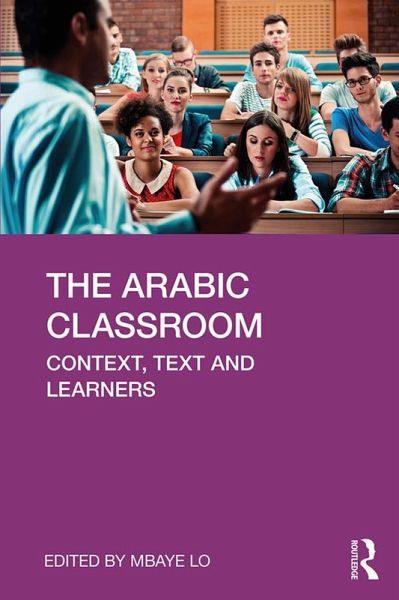
The Arabic Classroom is a multicontributor work for trainee and in-service teachers of Arabic as a foreign language. Collected here is recent scholarly work, and also critical writing from Arabic instructors, Arabists and language experts, to examine the status of the teaching and learning of Arabic in the modern classroom. The book stresses the inseparability of the parameters of contexts, texts and learners in the effective Arabic classroom and investigates their role in enhancing the experience of teaching and learning Arabic.
The book also provides a regional perspective through global case studies and encourages Arabic experts to search for better models of instruction and best practices beyond the American experience.
Dieser Download kann aus rechtlichen Gründen nur mit Rechnungsadresse in A, B, BG, CY, CZ, D, DK, EW, E, FIN, F, GR, HR, H, IRL, I, LT, L, LR, M, NL, PL, P, R, S, SLO, SK ausgeliefert werden.
Die Herstellerinformationen sind derzeit nicht verfügbar.
Autorenporträt
Mbaye Lo is Associate Professor of the Practice of Asian and Middle Eastern Studies and International Comparative Studies at Duke University, USA. Dr Lo, a recipient of the Duke Alumni Distinguished Undergraduate Teaching Award, is the Arabic Program Coordinator and Director of Duke in the Arab World Academic Program.
Inhaltsangabe
Introduction. Part I: American Contexts of Teaching and Learning Arabic. Chapter 1: Taking the Arabic Classroom Beyond the American Experience: Navigating Context, Text and Students, Mbaye Bashir Lo. Chapter 2: A Survey of Arabic Syllabi at US Institutions: Pedagogical Implications, Hanada Al-Masri. Chapter 3: Arabic and the Problem of Learning: Experiences in Teaching Arabic at Two Historically Black Colleges and Universities, Aman Nadhiri and Maurice Hines. Chapter 4: On Arabic: Reflections from Edinburgh University to Duke University, Miriam Cooke. Part II: Texts and Textbooks in Teaching and Learning Arabic. Chapter 5: Evaluating Alif Baa Textbook: A Pedagogical Perspective, Badr Abdelfattah Badr. Chapter 6: Technology and Culture in the Arabic Classroom, Manar Darwish. Chapter 7: Principles of Teaching Arabic as a Foreign Language: A European Economical Point of View, Van Mol Mark. Part III: Methods and Methodology in Teaching and Learning Arabic. Chapter 8: Personalizing Proficiency: a Student-Centered Proficiency-Oriented Curriculum, David DiMeo. Chapter 9: The Arabyola Portal - Integrating Trusted Arabic e-Resources into Curriculum, Inas Hassan. Chapter 10: Teaching Grammar Orally through Colloquial Arabic -report of an Experiment, Rachael Harris. Chapter 11: Teaching Literature to Advanced Learners of Arabic: Methods and Tools, Rachel Friedman. Part IV: Students and Learners of Arabic. Chapter 12: Unleashing the Power of the Learner, Mahdi Alosh. Chapter 13: Toward a New Approach to Teaching Arabic Grammar: A Model for Arabic Learners, Mounira Gannouni, Qatar University. Chapter 14: 177 Connectives in the Writing of Native and Non-native Speakers of Arabic: Similarities, Differences and a Teaching Model, Nesrine Basheer. Chapter 15: The Arabic Plunge at Middlebury's School in Jordan: Helping Students Swim after Diving into Jordanian Language and Culture, Kerstin Wilsch, Elsa Belmont Flores and Emily Goldman. Part V: The Global Contexts of Teaching and Learning Arabic. Chapter 16: Arabic Education In Chinese Universities: A Historical Perspective, LIN Fengmin and LIN Zhe. Chapter 17: The History of Arabic as a Second Language in Azerbaijan: The Textbooks of Professor Ali Asgar Mammadov, A Case of Study, By Aida Gasimova, Baku State University, Baku, Azerbaijan. Chapter 18: Arabic Education in the Southwest Nigeria: The Role of Private Arabic Schools (PASs), A.G.A.S. Oladosu. Chapter 19: How Arabic Fares in UK Schools, Vicky Gough and Tony Calderbank.
Introduction. Part I: American Contexts of Teaching and Learning Arabic. Chapter 1: Taking the Arabic Classroom Beyond the American Experience: Navigating Context, Text and Students, Mbaye Bashir Lo. Chapter 2: A Survey of Arabic Syllabi at US Institutions: Pedagogical Implications, Hanada Al-Masri. Chapter 3: Arabic and the Problem of Learning: Experiences in Teaching Arabic at Two Historically Black Colleges and Universities, Aman Nadhiri and Maurice Hines. Chapter 4: On Arabic: Reflections from Edinburgh University to Duke University, Miriam Cooke. Part II: Texts and Textbooks in Teaching and Learning Arabic. Chapter 5: Evaluating Alif Baa Textbook: A Pedagogical Perspective, Badr Abdelfattah Badr. Chapter 6: Technology and Culture in the Arabic Classroom, Manar Darwish. Chapter 7: Principles of Teaching Arabic as a Foreign Language: A European Economical Point of View, Van Mol Mark. Part III: Methods and Methodology in Teaching and Learning Arabic. Chapter 8: Personalizing Proficiency: a Student-Centered Proficiency-Oriented Curriculum, David DiMeo. Chapter 9: The Arabyola Portal - Integrating Trusted Arabic e-Resources into Curriculum, Inas Hassan. Chapter 10: Teaching Grammar Orally through Colloquial Arabic -report of an Experiment, Rachael Harris. Chapter 11: Teaching Literature to Advanced Learners of Arabic: Methods and Tools, Rachel Friedman. Part IV: Students and Learners of Arabic. Chapter 12: Unleashing the Power of the Learner, Mahdi Alosh. Chapter 13: Toward a New Approach to Teaching Arabic Grammar: A Model for Arabic Learners, Mounira Gannouni, Qatar University. Chapter 14: 177 Connectives in the Writing of Native and Non-native Speakers of Arabic: Similarities, Differences and a Teaching Model, Nesrine Basheer. Chapter 15: The Arabic Plunge at Middlebury's School in Jordan: Helping Students Swim after Diving into Jordanian Language and Culture, Kerstin Wilsch, Elsa Belmont Flores and Emily Goldman. Part V: The Global Contexts of Teaching and Learning Arabic. Chapter 16: Arabic Education In Chinese Universities: A Historical Perspective, LIN Fengmin and LIN Zhe. Chapter 17: The History of Arabic as a Second Language in Azerbaijan: The Textbooks of Professor Ali Asgar Mammadov, A Case of Study, By Aida Gasimova, Baku State University, Baku, Azerbaijan. Chapter 18: Arabic Education in the Southwest Nigeria: The Role of Private Arabic Schools (PASs), A.G.A.S. Oladosu. Chapter 19: How Arabic Fares in UK Schools, Vicky Gough and Tony Calderbank.
Es gelten unsere Allgemeinen Geschäftsbedingungen: www.buecher.de/agb
Impressum
www.buecher.de ist ein Internetauftritt der buecher.de internetstores GmbH
Geschäftsführung: Monica Sawhney | Roland Kölbl | Günter Hilger
Sitz der Gesellschaft: Batheyer Straße 115 - 117, 58099 Hagen
Postanschrift: Bürgermeister-Wegele-Str. 12, 86167 Augsburg
Amtsgericht Hagen HRB 13257
Steuernummer: 321/5800/1497
USt-IdNr: DE450055826