25,95 €
25,95 €
inkl. MwSt.
Sofort per Download lieferbar

13 °P sammeln
25,95 €
Als Download kaufen
25,95 €
inkl. MwSt.
Sofort per Download lieferbar
13 °P sammeln
Jetzt verschenken
Alle Infos zum eBook verschenken
25,95 €
inkl. MwSt.
Sofort per Download lieferbar
Alle Infos zum eBook verschenken
13 °P sammeln

Andere Kunden interessierten sich auch für
") Conceiving Identities (eBook, ePUB)28,95 €
Conceiving Identities (eBook, ePUB)28,95 €") Why, as a Muslim, I Defend Liberty (eBook, ePUB)5,99 €
Why, as a Muslim, I Defend Liberty (eBook, ePUB)5,99 €") Jihad: What Everyone Needs to Know (eBook, ePUB)6,99 €
Jihad: What Everyone Needs to Know (eBook, ePUB)6,99 €") A Map of the Divine Subtle Faculty (eBook, ePUB)13,84 €
A Map of the Divine Subtle Faculty (eBook, ePUB)13,84 €") A Muslim Reformist in Communist Yugoslavia (eBook, ePUB)42,95 €
A Muslim Reformist in Communist Yugoslavia (eBook, ePUB)42,95 €") The Messenger (eBook, ePUB)11,86 €
The Messenger (eBook, ePUB)11,86 €") God, Man, and Mortality (eBook, ePUB)13,84 €
God, Man, and Mortality (eBook, ePUB)13,84 €






Considers the work of nineteenth-century theologian Ibrahim al-Bajuri and contests the notion of intellectual decline in Islamic thought from the thirteenth through nineteenth centuries.
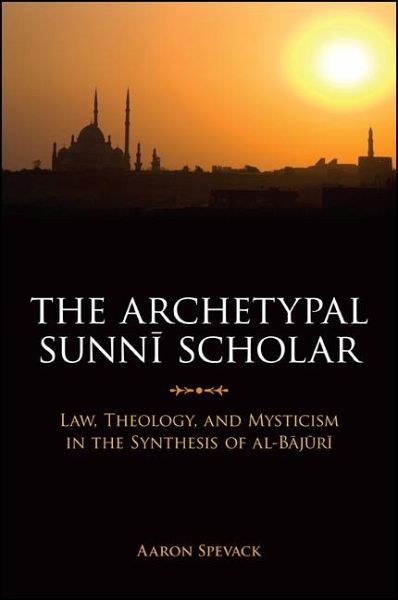
This is a rare study of a late premodern Islamic thinker, Ibrahim al- Bajuri, a nineteenth-century scholar and rector of Cairo's al-Azhar University. Aaron Spevack explores al- Bajuri's legal, theological, and mystical thought, highlighting its originality and vibrancy in relation to the millennium of scholarship that preceded and informed it, and also detailing its continuing legacy. The book makes a case for the normativity of the Gabrielian Paradigm, the study of law, rational theology, and Sufism, in the person of al- Bajuri. Soon after his death in 1860, this typical pattern of scholarship would face significant challenges from modernists, reformers, and fundamentalists. Spevack challenges beliefs that rational theology, syllogistic logic, and Sufism were not part of the predominant conception of orthodox scholarship and shows this scholarly archetype has not disappeared as an ideal. In addition, the book contests prevailing beliefs in academic and Muslim circles about intellectual decline from the thirteenth through nineteenth centuries.
This is a rare study of a late premodern Islamic thinker, Ibrahim al- Bajuri, a nineteenth-century scholar and rector of Cairo's al-Azhar University. Aaron Spevack explores al- Bajuri's legal, theological, and mystical thought, highlighting its originality and vibrancy in relation to the millennium of scholarship that preceded and informed it, and also detailing its continuing legacy. The book makes a case for the normativity of the Gabrielian Paradigm, the study of law, rational theology, and Sufism, in the person of al- Bajuri. Soon after his death in 1860, this typical pattern of scholarship would face significant challenges from modernists, reformers, and fundamentalists. Spevack challenges beliefs that rational theology, syllogistic logic, and Sufism were not part of the predominant conception of orthodox scholarship and shows this scholarly archetype has not disappeared as an ideal. In addition, the book contests prevailing beliefs in academic and Muslim circles about intellectual decline from the thirteenth through nineteenth centuries.
Dieser Download kann aus rechtlichen Gründen nur mit Rechnungsadresse in A, D ausgeliefert werden.