Sie sind bereits eingeloggt. Klicken Sie auf 2. tolino select Abo, um fortzufahren.
Bitte loggen Sie sich zunächst in Ihr Kundenkonto ein oder registrieren Sie sich bei bücher.de, um das eBook-Abo tolino select nutzen zu können.
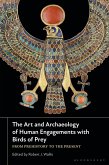
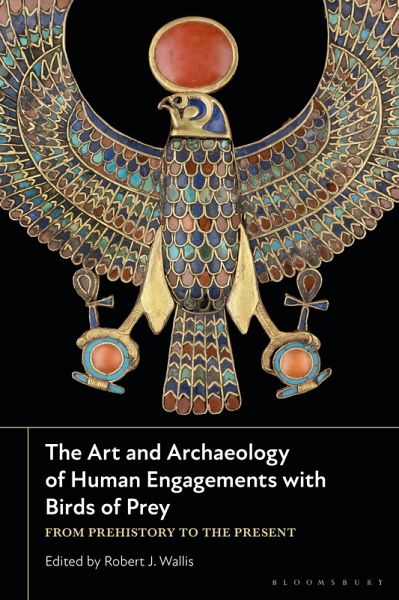
Of all avian groups, birds of prey in particular have long been a prominent subject of fascination in many human societies. This book demonstrates that the art and materiality of human engagements with raptors has been significant through deep time and across the world, from earliest prehistory to Indigenous thinking in the present day. Drawing on a wide range of global case studies and a plurality of complementary perspectives, it explores the varied and fluid dynamics between humans and birds of prey as evidenced in this diverse art-historical and archaeological record. From their depictions…mehr
Of all avian groups, birds of prey in particular have long been a prominent subject of fascination in many human societies. This book demonstrates that the art and materiality of human engagements with raptors has been significant through deep time and across the world, from earliest prehistory to Indigenous thinking in the present day. Drawing on a wide range of global case studies and a plurality of complementary perspectives, it explores the varied and fluid dynamics between humans and birds of prey as evidenced in this diverse art-historical and archaeological record. From their depictions as powerful beings in visual art and their important roles in Indigenous mythologies, to the significance of their body parts as active agents in religious rituals, the intentional deposition of their faunal remains and the display of their preserved bodies in museums, there is no doubt that birds of prey have been figures of great import for the shaping of human society and culture. However, several of the chapters in this volume are particularly concerned with looking beyond the culture-nature dichotomy and human-centred accounts to explore perspectival and other post-humanist thinking on human-raptor ontologies and epistemologies. The contributors recognize that human-raptor relationships are not driven exclusively by human intentionality, and that when these species meet they relate-to and become-with one another. This 'raptor-with-human'-focused approach allows for a productive re-framing of questions about human-raptor interstices, enables fresh thinking about established evidence and offers signposts for present and future intra-actions with birds of prey.
Die Herstellerinformationen sind derzeit nicht verfügbar.
Autorenporträt
Robert J. Wallis is Senior Lecturer and Staff Tutor in Art History at the Open University, UK.
Inhaltsangabe
Table of Contents Introduction (Robert J. Wallis The Open University UK) Part 1 The Materiality of Human Engagements with Birds of Prey 1. Raptors as companions: comparative deep-time forays in multispecies archaeology (Shumon T. Hussain Aarhus University Denmark) 2. Gods Kings and Offerings: Raptors in Ancient Egypt (Salima Ikram American University in Cairo Egypt) 3. Ghosthawk Worldings: Raptor Haruspicy During the North European Bronze Age (Joakim Goldhahn University of Western Australia Australia) Part 2 Visualising Human Relations with Raptors 4. Golden Eagles: Raptor Imagery Biographies in Kazakhstan During the Early First Millennium BCE. (Kenneth Lymer Independent Scholar UK) 5. Visual Hybridity Political Power and Cultural Contest: Kitan Liao (916-1125 CE) and Jurchen Jin (1115-1234 CE) Textiles with Falconry-Related Imagery (Leslie Wallace Coastal Carolina University USA) 6. 'The Falcon-Cloak Whistled': Bird Fibulae Falconry and Powerful Women in Seventh Century Scandinavia (Kristina Jennbert Lund University Sweden) Part 3 Post-Humanist Ontologies of Human-Raptor Relations 7. Relating to Raptors: The 'upper part of a hawk's head and beak' in a Chalcolithic/Early Bronze Age 'Beaker' Grave Driffield East Yorkshire (Robert J. Wallis The Open University UK) 8. Raptors in Precolumbian North America: An Ontology of Art (Max Carocci The American University in London UK) 9. Birds of Prey in Ancient Amazonia: Predation and Perspective in Ceramic Iconography (Cristiana Barreto Museu Paraense Emílio Goeldi Brazil and Marcony Alves University of Sao Paulo Brazil) 10. 'Now I Am a Bird and Now I Am a Man': Post-humanism Raptors and the Rus' (Neil Price University of Uppsala Sweden) Part 4 Indigenous Knowledges of Birds of Prey 11. Birds of Prey 'Our Mothers' and Women of Power: The 'Spirit Bird of Night' Masquerade in Yoru`bä Art and Thought (Henry John Drewal University of Wisconsin-Madison USA) 12. Pouakai: Rock Drawings of Haast's Eagle or New Zealand's Legendary Bird? (Gerard O'Regan and Emma Burns Tuhura Otago Museum New Zealand and Te Maire Tau University of Canterbury New Zealand) 13. Ancestors Messengers and 'Good Country': Birds of Prey Rock Art and Indigenous Knowledge in the Kimberley Northwest Australia (Ana Paula Motta and Martin Porr University of Western Australia Australia)
Es gelten unsere Allgemeinen Geschäftsbedingungen: www.buecher.de/agb
Impressum
www.buecher.de ist ein Internetauftritt der buecher.de internetstores GmbH
Geschäftsführung: Monica Sawhney | Roland Kölbl | Günter Hilger
Sitz der Gesellschaft: Batheyer Straße 115 - 117, 58099 Hagen
Postanschrift: Bürgermeister-Wegele-Str. 12, 86167 Augsburg
Amtsgericht Hagen HRB 13257
Steuernummer: 321/5800/1497
USt-IdNr: DE450055826