Sie sind bereits eingeloggt. Klicken Sie auf 2. tolino select Abo, um fortzufahren.
Bitte loggen Sie sich zunächst in Ihr Kundenkonto ein oder registrieren Sie sich bei bücher.de, um das eBook-Abo tolino select nutzen zu können.
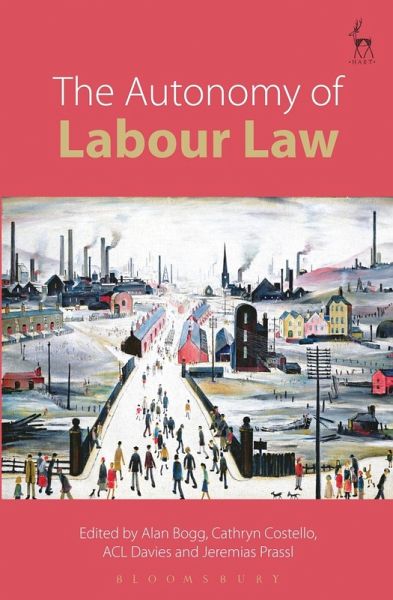
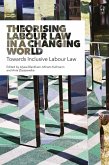
To what extent is labour law an autonomous field of study? This book is based upon the papers written by a group of leading international scholars on this theme, delivered at a conference to mark Professor Mark Freedland's retirement from his teaching fellowship in Oxford. The chapters explore the boundaries and connections between labour law and other legal disciplines such as company law, competition law, contract law and public law; labour law and legal methodologies such as reflexive governance and comparative law; and labour law and other disciplines such as ethics, economics and…mehr
To what extent is labour law an autonomous field of study? This book is based upon the papers written by a group of leading international scholars on this theme, delivered at a conference to mark Professor Mark Freedland's retirement from his teaching fellowship in Oxford. The chapters explore the boundaries and connections between labour law and other legal disciplines such as company law, competition law, contract law and public law; labour law and legal methodologies such as reflexive governance and comparative law; and labour law and other disciplines such as ethics, economics and political philosophy. In so doing, it represents a cross-section of the most sophisticated current work at the cutting edge of labour law theory.
Die Herstellerinformationen sind derzeit nicht verfügbar.
Autorenporträt
Alan Bogg is Professor of Labour Law at the University of Oxford and Fellow and Tutor in Law at Hertford College. Cathryn Costello is Andrew W Mellon Associate Professor in International Human Rights and Refugee Law, Refugee Studies Centre, Oxford Department of International Development. ACL Davies is Professor of Law and Public Policy, University of Oxford and Garrick Fellow and Tutor in Law at Brasenose College. Jeremias Prassl is an Associate Professor in the Faculty of Law, University of Oxford, and a Tutorial Fellow at Magdalen College, Oxford.
Inhaltsangabe
Part I: Labour Law's Autonomy: Theory and Methodology 1 Otto Kahn-Freund, the Contract of Employment and the Autonomy of Labour Law Mark Freedland 2 Contractual Autonomy Hugh Collins 3 Labour Law and the Trade Unions: Autonomy and Betrayal Alan Bogg 4 Common Law Confusion and Empirical Research in Labour Law Lizzie Barmes 5 Evaluating the Reflexive Turn in Labour Law Diamond Ashiagbor Part II: Labour Law's Autonomy: Core Organizing Concepts 6 Autonomous Concepts in Labour Law? The Complexities of the Employing Enterprise Revisited Jeremias Prassl 7 Uses and Misuses of 'Mutuality of Obligations' and the Autonomy of Labour Law Nicola Countouris 8 Migrants and Forced Labour: A Labour Law Response Cathryn Costello Part III: Labour Law's Autonomy: Labour Law, Public Law and Human Rights 9 Labour Law as Public Law ACL Davies 10 Equality Law: Labour Law or an Autonomous Field? Sandra Fredman 11 Labour Law as Human Rights Law: A Critique of the Use of 'Dignity' by Freedland and Kountouris Christopher McCrudden 12 The EU Internal Market and Domestic Labour Law: Looking Beyond Autonomy Phil Syrpis and Tonia Novitz Part IV: Labour Law's Autonomy: Labour Law, Commercial Law and Economic Theory 13 Labour Law as the Law of the Business Enterprise Alice Carse and Wanjiru Njoya 14 Conceptualizing the Employer as Fiduciary: Mission Impossible? Jill Murray 15 Efficiency Arguments for the Collective Representation of Workers: A Sketch Paul Davies 16 Labour Law on the Plateau: Towards Regulatory Policy for Endogenous Norms Deirdre McCann
Part I: Labour Law's Autonomy: Theory and Methodology 1 Otto Kahn-Freund, the Contract of Employment and the Autonomy of Labour Law Mark Freedland 2 Contractual Autonomy Hugh Collins 3 Labour Law and the Trade Unions: Autonomy and Betrayal Alan Bogg 4 Common Law Confusion and Empirical Research in Labour Law Lizzie Barmes 5 Evaluating the Reflexive Turn in Labour Law Diamond Ashiagbor Part II: Labour Law's Autonomy: Core Organizing Concepts 6 Autonomous Concepts in Labour Law? The Complexities of the Employing Enterprise Revisited Jeremias Prassl 7 Uses and Misuses of 'Mutuality of Obligations' and the Autonomy of Labour Law Nicola Countouris 8 Migrants and Forced Labour: A Labour Law Response Cathryn Costello Part III: Labour Law's Autonomy: Labour Law, Public Law and Human Rights 9 Labour Law as Public Law ACL Davies 10 Equality Law: Labour Law or an Autonomous Field? Sandra Fredman 11 Labour Law as Human Rights Law: A Critique of the Use of 'Dignity' by Freedland and Kountouris Christopher McCrudden 12 The EU Internal Market and Domestic Labour Law: Looking Beyond Autonomy Phil Syrpis and Tonia Novitz Part IV: Labour Law's Autonomy: Labour Law, Commercial Law and Economic Theory 13 Labour Law as the Law of the Business Enterprise Alice Carse and Wanjiru Njoya 14 Conceptualizing the Employer as Fiduciary: Mission Impossible? Jill Murray 15 Efficiency Arguments for the Collective Representation of Workers: A Sketch Paul Davies 16 Labour Law on the Plateau: Towards Regulatory Policy for Endogenous Norms Deirdre McCann
Es gelten unsere Allgemeinen Geschäftsbedingungen: www.buecher.de/agb
Impressum
www.buecher.de ist ein Internetauftritt der buecher.de internetstores GmbH
Geschäftsführung: Monica Sawhney | Roland Kölbl | Günter Hilger
Sitz der Gesellschaft: Batheyer Straße 115 - 117, 58099 Hagen
Postanschrift: Bürgermeister-Wegele-Str. 12, 86167 Augsburg
Amtsgericht Hagen HRB 13257
Steuernummer: 321/5800/1497
USt-IdNr: DE450055826