Alle Infos zum eBook verschenken
- Format: ePub
- Merkliste
- Auf die Merkliste
- Bewerten Bewerten
- Teilen
- Produkt teilen
- Produkterinnerung
- Produkterinnerung

Hier können Sie sich einloggen

Bitte loggen Sie sich zunächst in Ihr Kundenkonto ein oder registrieren Sie sich bei bücher.de, um das eBook-Abo tolino select nutzen zu können.
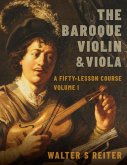
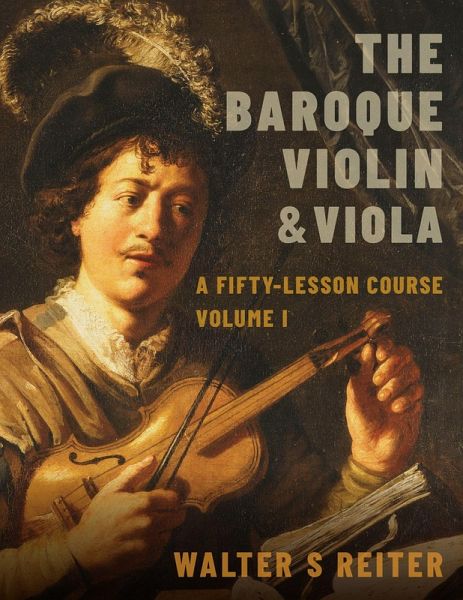
In the early seventeenth century, enthusiasm for the violin swept across Europe--this was an instrument capable of bewitching virtuosity, with the power to express emotions in a way only before achieved with the human voice. With this new guide to the Baroque violin, and its close cousin, the Baroque viola, distinguished performer and pedagogue Walter Reiter puts this power into the hands of today's players. Through fifty lessons based on the Reiter's own highly-renowned course at The Royal Conservatory of the Hague, The Baroque Violin & Viola, Volume I provides a comprehensive exploration of…mehr
- Geräte: eReader
- mit Kopierschutz
- eBook Hilfe
- Größe: 16.67MB
Walter S. ReiterThe Baroque Violin & Viola, vol. II (eBook, ePUB)20,95 €
Ivo-Jan van der WerffA Notebook for Viola Players (eBook, ePUB)12,95 €
Steven L. SchweizerTimpani Tone and the Interpretation of Baroque and Classical Music (eBook, ePUB)12,95 €
Walter S. ReiterThe Baroque Violin & Viola (eBook, PDF)18,95 €
The Russian Violin School (eBook, ePUB)19,95 €
Karl GeiringerInstruments in the History of Western Music (eBook, ePUB)52,95 €
Cole BurgerKeyboard Skills for the Practical Musician (eBook, ePUB)52,95 €-
-
-
Dieser Download kann aus rechtlichen Gründen nur mit Rechnungsadresse in A, B, BG, CY, CZ, D, DK, EW, E, FIN, F, GR, HR, H, IRL, I, LT, L, LR, M, NL, PL, P, R, S, SLO, SK ausgeliefert werden.
- Produktdetails
- Verlag: OUP eBook
- Seitenzahl: 496
- Erscheinungstermin: 28. September 2020
- Englisch
- ISBN-13: 9780190922726
- Artikelnr.: 60348368
- Verlag: OUP eBook
- Seitenzahl: 496
- Erscheinungstermin: 28. September 2020
- Englisch
- ISBN-13: 9780190922726
- Artikelnr.: 60348368
- Herstellerkennzeichnung Die Herstellerinformationen sind derzeit nicht verfügbar.
* Introductory quotes
* Questions and Answers
* Part One
* The Basics
* Lesson One. Prelude
* Choosing a Violin - Choosing a Bow - Strings - Pitch.
* Lesson Two. Holding the violin
* How to hold the Baroque violin: a beginner's guide.
* Lesson Three. The Bow, Creator of Sound
* Holding the Bow.
* Lesson Four. First Sounds: Celebrating our Vocal Heritage
* Searching for our Vocal Roots - Exploring the Rhythm of words -
Postscript.
* Lesson Five. Copying the Human Voice: Sweelinck's Garrulous Little
Swallow
* Vowels - Dipthongs - Consonants - Double Consonants - Bowings -
Postscript.
* Lesson Six. Five Exercises to Help Accustom You to 'Chinless' Playing
* Recalling These Exercises in a Performance Situation - Technical
Factors - Emotional Factors - Nerves.
* Lesson Seven. More Basic Concepts and Techniques. 'A Division on a
Ground' by Mr Faronell, from 'The Division Violin,' London, 1684
* The Importance of the Bass Line - Tempo and Rhythm - The Hierarchies
and the Bow Impulses - Engramelle - Good Notes and Bad Notes -
Varying the Articulation.
* Lesson Eight. Learning to Feel. Developing a heightened awareness of
the Emotional Power of Sound and the Intervals
* Emotional Information: What Sound Tells Us - How to Prepare:
Manipulating Our Emotions.
* Lesson Nine. The Inner Life of Sound: 'Messa di voce'
* Lesson Ten. Applying the Messa di voce. Arcangelo Corelli: Adagio
from Sonata Opus V No 3
* Applying the 'Messa di voce' - Dissonances and Consonances - On
Trills - In Praise of the Second Position - Hemiolas: To be Heard as
Well as Seen? - A Note on Chromatic Fingering - Sound and Expression
- Summary
* Lesson Eleven: Temperament and 'Historical' Intonation: an Outline
* How Do We Learn 'Pure' Intonation? - Leopold Mozart on Overtones -
Peter Prelleur's Fingerboard.
* Lesson Twelve. Scale Exercises and Etudes for Shifting and Intonation
* Part One: Towards a Chinless Scale Book
* The Four Springs - Techniques of Displacement - Shifting and
Expression.
* Part Two: Fifteen Exercises for the Methodical Study of Pure
Intonation. Applying Pure Intonation to Geminiani's Scale Studies
from 'The Art of Playing the Violin (1751)
* Lesson Thirteen. Bringing Fast Notes to Life: the Inequality of the
Equal. Albinoni. Sonata Op V1 No 2, Allegro
* How to Play Equal Notes in a Flexible and Subtle Way - The Three
Flexibilities - Rhythmic flexibility - Dynamic flexibility -
Flexibility of articulation - Adding Slurs: a Misdemeanour? -
Sequences.
* Lesson Fourteen. Learning to Feel Comfortable on Gut Strings. I) The
Bow
* Lesson Fifteen. Learning to Feel Comfortable on Gut Strings. II) The
Left Hand
* Slaves of our Inner Voice: the Fingers.
* Part Two
* Re-examining the Familiar: Sonatas by Vivaldi and Corelli
* Lesson Sixteen. The Starting-point of Interpretation: Learning to
Observe
* Arcangelo Corelli: Sonata Op V no VII
* Interpretation: a Question of Taste? - Editions or Facsimiles? -
Instrumentation in Corelli's Opus V Sonatas - Means of Expression -
Choosing a Convincing Tempo - Preludio - Afterthought: What Happens
Within.
* Lesson Seventeen. Corelli. Sonata Op V No VII. Corrente - Sarabanda -
Giga
* Lesson Eighteen. Transforming musical decisions into sound
* Lesson Nineteen. In the Footsteps of Corelli. Antonio Vivaldi: Sonata
Op 2 No 1
* Preludio.
* Gesture - Shifting: How, When and Whither? - Open Strings: Use or
Misuse- Notes Essential and Notes Ornamental
* Lesson Twenty. In the Footsteps of Corelli. Antonio Vivaldi: Sonata
Op 2 No 1
* Giga, Sarabanda Largo, Corrente.
* Emotional Information in Rhythm - Learning to Read Vivaldi's Sonata
in the Original Notation
* Lesson Twenty-One. Nurturing Spontaneity: Ornamentation, Module One
* Ornamentation: Diversion or Essence? - Overcoming Our Fear of Playing
the Unwritten - Ornamentation and National Styles - Composed
Ornamentation - First Steps in Ornamenting: Corelli's Sarabanda -
Ornamenting the Second Half of the Sarabanda - Corelli's Sarabanda
Ornamented by Dubourg.
* Lesson Twenty-Two. Straight from the Heart: the Great Vibrato Debate
* Lesson Twenty-Three. Rhetoric: the Power to Persuade
* The Origins of Rhetoric - Rhetoric and Music - The Musician as Orator
- Rhetorical Playing Versus Pure Instrumentalism - Some Rhetorical
Figures: Dynamics, Parenthesis, Repetition, Direction, Punctuation
and Intonation - Tonality - Dissonance - Tessitura - Tempo - Metre -
Acoustic - Imagery - Presentation.
* Notes to Lessons
* Bibliography
* Index
* Acknowledgements
* Introductory quotes
* Questions and Answers
* Part One
* The Basics
* Lesson One. Prelude
* Choosing a Violin - Choosing a Bow - Strings - Pitch.
* Lesson Two. Holding the violin
* How to hold the Baroque violin: a beginner's guide.
* Lesson Three. The Bow, Creator of Sound
* Holding the Bow.
* Lesson Four. First Sounds: Celebrating our Vocal Heritage
* Searching for our Vocal Roots - Exploring the Rhythm of words -
Postscript.
* Lesson Five. Copying the Human Voice: Sweelinck's Garrulous Little
Swallow
* Vowels - Dipthongs - Consonants - Double Consonants - Bowings -
Postscript.
* Lesson Six. Five Exercises to Help Accustom You to 'Chinless' Playing
* Recalling These Exercises in a Performance Situation - Technical
Factors - Emotional Factors - Nerves.
* Lesson Seven. More Basic Concepts and Techniques. 'A Division on a
Ground' by Mr Faronell, from 'The Division Violin,' London, 1684
* The Importance of the Bass Line - Tempo and Rhythm - The Hierarchies
and the Bow Impulses - Engramelle - Good Notes and Bad Notes -
Varying the Articulation.
* Lesson Eight. Learning to Feel. Developing a heightened awareness of
the Emotional Power of Sound and the Intervals
* Emotional Information: What Sound Tells Us - How to Prepare:
Manipulating Our Emotions.
* Lesson Nine. The Inner Life of Sound: 'Messa di voce'
* Lesson Ten. Applying the Messa di voce. Arcangelo Corelli: Adagio
from Sonata Opus V No 3
* Applying the 'Messa di voce' - Dissonances and Consonances - On
Trills - In Praise of the Second Position - Hemiolas: To be Heard as
Well as Seen? - A Note on Chromatic Fingering - Sound and Expression
- Summary
* Lesson Eleven: Temperament and 'Historical' Intonation: an Outline
* How Do We Learn 'Pure' Intonation? - Leopold Mozart on Overtones -
Peter Prelleur's Fingerboard.
* Lesson Twelve. Scale Exercises and Etudes for Shifting and Intonation
* Part One: Towards a Chinless Scale Book
* The Four Springs - Techniques of Displacement - Shifting and
Expression.
* Part Two: Fifteen Exercises for the Methodical Study of Pure
Intonation. Applying Pure Intonation to Geminiani's Scale Studies
from 'The Art of Playing the Violin (1751)
* Lesson Thirteen. Bringing Fast Notes to Life: the Inequality of the
Equal. Albinoni. Sonata Op V1 No 2, Allegro
* How to Play Equal Notes in a Flexible and Subtle Way - The Three
Flexibilities - Rhythmic flexibility - Dynamic flexibility -
Flexibility of articulation - Adding Slurs: a Misdemeanour? -
Sequences.
* Lesson Fourteen. Learning to Feel Comfortable on Gut Strings. I) The
Bow
* Lesson Fifteen. Learning to Feel Comfortable on Gut Strings. II) The
Left Hand
* Slaves of our Inner Voice: the Fingers.
* Part Two
* Re-examining the Familiar: Sonatas by Vivaldi and Corelli
* Lesson Sixteen. The Starting-point of Interpretation: Learning to
Observe
* Arcangelo Corelli: Sonata Op V no VII
* Interpretation: a Question of Taste? - Editions or Facsimiles? -
Instrumentation in Corelli's Opus V Sonatas - Means of Expression -
Choosing a Convincing Tempo - Preludio - Afterthought: What Happens
Within.
* Lesson Seventeen. Corelli. Sonata Op V No VII. Corrente - Sarabanda -
Giga
* Lesson Eighteen. Transforming musical decisions into sound
* Lesson Nineteen. In the Footsteps of Corelli. Antonio Vivaldi: Sonata
Op 2 No 1
* Preludio.
* Gesture - Shifting: How, When and Whither? - Open Strings: Use or
Misuse- Notes Essential and Notes Ornamental
* Lesson Twenty. In the Footsteps of Corelli. Antonio Vivaldi: Sonata
Op 2 No 1
* Giga, Sarabanda Largo, Corrente.
* Emotional Information in Rhythm - Learning to Read Vivaldi's Sonata
in the Original Notation
* Lesson Twenty-One. Nurturing Spontaneity: Ornamentation, Module One
* Ornamentation: Diversion or Essence? - Overcoming Our Fear of Playing
the Unwritten - Ornamentation and National Styles - Composed
Ornamentation - First Steps in Ornamenting: Corelli's Sarabanda -
Ornamenting the Second Half of the Sarabanda - Corelli's Sarabanda
Ornamented by Dubourg.
* Lesson Twenty-Two. Straight from the Heart: the Great Vibrato Debate
* Lesson Twenty-Three. Rhetoric: the Power to Persuade
* The Origins of Rhetoric - Rhetoric and Music - The Musician as Orator
- Rhetorical Playing Versus Pure Instrumentalism - Some Rhetorical
Figures: Dynamics, Parenthesis, Repetition, Direction, Punctuation
and Intonation - Tonality - Dissonance - Tessitura - Tempo - Metre -
Acoustic - Imagery - Presentation.
* Notes to Lessons
* Bibliography
* Index
* Acknowledgements