13,95 €
13,95 €
inkl. MwSt.
Sofort per Download lieferbar

7 °P sammeln
13,95 €
Als Download kaufen
13,95 €
inkl. MwSt.
Sofort per Download lieferbar
7 °P sammeln
Jetzt verschenken
Alle Infos zum eBook verschenken
13,95 €
inkl. MwSt.
Sofort per Download lieferbar
Alle Infos zum eBook verschenken
7 °P sammeln

Andere Kunden interessierten sich auch für
") The Artist's Problem Solver (eBook, ePUB)8,99 €
The Artist's Problem Solver (eBook, ePUB)8,99 €") The Artist's Watercolour Problem Solver (eBook, ePUB)11,99 €
The Artist's Watercolour Problem Solver (eBook, ePUB)11,99 €") The Beauty of Zentangle (eBook, ePUB)12,77 €
The Beauty of Zentangle (eBook, ePUB)12,77 €") Beauty Beyond the Looking Glass (eBook, ePUB)1,82 €
Beauty Beyond the Looking Glass (eBook, ePUB)1,82 €") Beauty and Truth (eBook, ePUB)2,99 €
Beauty and Truth (eBook, ePUB)2,99 €") London Beauty Through Watercolors (eBook, ePUB)10,99 €
London Beauty Through Watercolors (eBook, ePUB)10,99 €") South Africa Beauty Through Watercolors (eBook, ePUB)10,99 €
South Africa Beauty Through Watercolors (eBook, ePUB)10,99 €





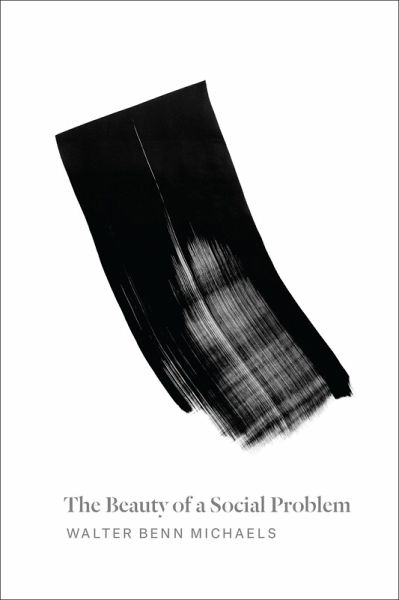
Bertolt Brecht once worried that our sympathy for the victims of a social problem can make the problem's "beauty and attraction" invisible. In The Beauty of a Social Problem, Walter Benn Michaels explores the effort to overcome this difficulty through a study of several contemporary artist-photographers whose work speaks to questions of political economy. Although he discusses well-known figures like Walker Evans and Jeff Wall, Michaels's focus is on a group of younger artists, including Viktoria Binschtok, Phil Chang, Liz Deschenes, and Arthur Ou. All born after 1965, they have always lived in a world where, on the one hand, artistic ambition has been synonymous with the critique of autonomous form and intentional meaning, while, on the other, the struggle between capital and labor has essentially been won by capital. Contending that the aesthetic and political conditions are connected, Michaels argues that these artists' new commitment to form and meaning is a way for them to depict the conditions that have taken US economic inequality from its lowest level, in 1968, to its highest level today. As Michaels demonstrates, these works of art, unimaginable without the postmodern critique of autonomy and intentionality, end up departing and dissenting from that critique in continually interesting and innovative ways.