20,95 €
inkl. MwSt.
Sofort per Download lieferbar
10 °P sammeln

Andere Kunden interessierten sich auch für
") Congress Politics in Bengal 1919-1939 (eBook, PDF)16,95 €
Congress Politics in Bengal 1919-1939 (eBook, PDF)16,95 €") Kingship and Polity on the Himalayan Borderland (eBook, PDF)0,00 €
Kingship and Polity on the Himalayan Borderland (eBook, PDF)0,00 €") The Long History of Partition in Bengal (eBook, PDF)42,95 €
The Long History of Partition in Bengal (eBook, PDF)42,95 €") Becoming a Borderland (eBook, PDF)34,95 €
Becoming a Borderland (eBook, PDF)34,95 €") Caste and Partition in Bengal (eBook, PDF)43,95 €
Caste and Partition in Bengal (eBook, PDF)43,95 €") The Bengal Delta (eBook, PDF)72,95 €
The Bengal Delta (eBook, PDF)72,95 €") The Partition of Bengal and Assam, 1932-1947 (eBook, PDF)29,95 €
The Partition of Bengal and Assam, 1932-1947 (eBook, PDF)29,95 €





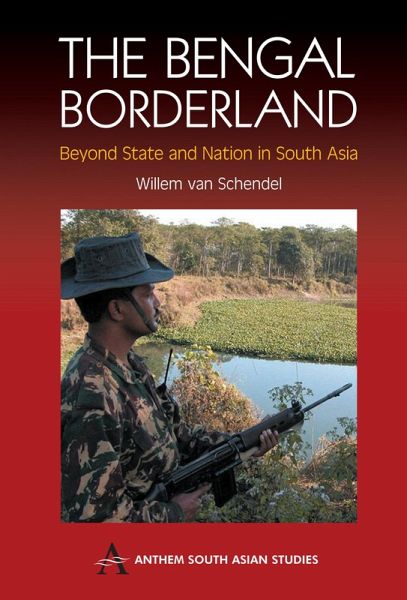
'The Bengal Borderland' constitutes the epicentre of the partition of British India. Yet while the forging of international borders between India, Pakistan, Bangladesh and Burma (the 'Bengal Borderland') has been a core theme in Partition studies, these crucial borderlands have, remarkably, been largely ignored by historians. While South Asia is poorly represented in borderland studies, the study of South Asian borderlands appears indispensable because here a major and intensely contested experiment in twentieth-century border making took place. Without direct reference to the borderlands as a historical reality it is not possible to understand how post-colonial societies in South Asia developed, the extent to which South Asian economies actually became bounded by borders, or the ways in which national identities became internalized. In examining this crucial region, Willem van Schendel challenges existing assumptions about the nature of relationships between people, place, identity and culture, and raises particularly urgent questions in the context of globalization, with its predictions of the 'end of geography' and a borderless homogenous world. This book will interest historians, geographers, political scientists and economists, as well as South Asianists and migration experts, and will appeal to academics, students and practitioners.
Dieser Download kann aus rechtlichen Gründen nur mit Rechnungsadresse in A, D ausgeliefert werden.