7,99 €
inkl. MwSt.
Sofort per Download lieferbar
4 °P sammeln

Andere Kunden interessierten sich auch für
") After Christianity (eBook, ePUB)31,95 €
After Christianity (eBook, ePUB)31,95 €") Living The All (eBook, ePUB)9,99 €
Living The All (eBook, ePUB)9,99 €") Omar Khayyam's Secret: Hermeneutics of the Robaiyat in Quantum Sociological Imagination: Book 6: Khayyami Science (eBook, ePUB)29,95 €
Omar Khayyam's Secret: Hermeneutics of the Robaiyat in Quantum Sociological Imagination: Book 6: Khayyami Science (eBook, ePUB)29,95 €") the Hermeneutics of Retrieval (eBook, ePUB)6,49 €
the Hermeneutics of Retrieval (eBook, ePUB)6,49 €") THE DIVINE TRUTH (eBook, ePUB)16,95 €
THE DIVINE TRUTH (eBook, ePUB)16,95 €") Money: The Illusion of Safety, Scarcity, and Self (eBook, ePUB)6,99 €
Money: The Illusion of Safety, Scarcity, and Self (eBook, ePUB)6,99 € (eBook, ePUB)") God: The One Beyond Names (14, #14) (eBook, ePUB)0,99 €
God: The One Beyond Names (14, #14) (eBook, ePUB)0,99 €



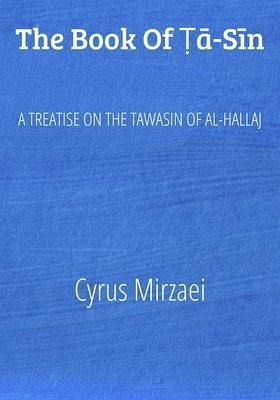
The Book of TA-Sin: Mystical Commentary on Hallaj's Ascension to the Beloved is a comprehensive scholarly work devoted to the symbolic, metaphysical, and ontological dimensions of the Tawasin texts attributed to Man¿ur al-¿allaj (d. 309/922), one of the most provocative figures in the history of Islamic mysticism. This book does not present a translation or devotional exposition; rather, it offers a sustained philosophical and contemplative commentary that approaches the TA-Sin texts as structured expressions of nearness, annihilation, and divine intimacy.
The Tawasin occupy a singular position within Islamic intellectual history. Composed in a language that fuses Qur¿anic resonance, prophetic symbolism, and paradoxical expression, these texts resist linear interpretation and conventional genre classification. This work treats the TA-Sin as a language of threshold-where meaning unfolds through symbolic density, recursive imagery, and deliberate ambiguity. The commentary engages the TA-Sin as ontological gestures rather than literary curiosities, emphasizing how Hallaj articulates proximity to the Divine through a disciplined collapse of conceptual boundaries.
Central themes explored include the symbolism of the Point, the Circle, the Letter, Light, Flame, the Moth, Pre-Eternity, Poverty (faqr), Annihilation (fanä), and Subsistence (baqä). Each symbol is examined through classical Arabic lexicons, Qur¿anic intertextuality, and the broader framework of Islamic metaphysics. Rather than treating these symbols as metaphors alone, the commentary reads them as experiential stations that map the interior ascent of consciousness toward intimacy with the Beloved.
A defining feature of this work is its treatment of ascension not as spatial elevation, but as ontological nearness. Hallaj's TA-Sin is interpreted as a vertical grammar of proximity, tracing the movement from multiplicity to unity, from mediated knowledge to direct witnessing, and from speech toward the exhaustion of language itself. The text situates this vision within debates on divine immanence and transcendence, the limits of rational theology, and the function of paradox within mystical epistemology.
The author makes no claim to Qur¿anic translation, authoritative tafsir, or doctrinal adjudication. This book is presented as an independent scholarly commentary grounded in historical sources and philosophical reflection, advancing an original interpretive synthesis without asserting theological authority. The approach combines textual rigor with metaphysical inquiry, remaining attentive to both linguistic precision and contemplative depth.
Written for scholars, advanced students, and serious readers of Islamic studies, philosophy of religion, and comparative mysticism, The Book of TA-Sin offers a demanding yet illuminating engagement with Hallaj's thought. It is a work that neither simplifies nor resolves the TA-Sin, but instead accompanies the reader into the symbolic space where nearness is spoken only through paradox-and where language itself approaches its limit.
The Tawasin occupy a singular position within Islamic intellectual history. Composed in a language that fuses Qur¿anic resonance, prophetic symbolism, and paradoxical expression, these texts resist linear interpretation and conventional genre classification. This work treats the TA-Sin as a language of threshold-where meaning unfolds through symbolic density, recursive imagery, and deliberate ambiguity. The commentary engages the TA-Sin as ontological gestures rather than literary curiosities, emphasizing how Hallaj articulates proximity to the Divine through a disciplined collapse of conceptual boundaries.
Central themes explored include the symbolism of the Point, the Circle, the Letter, Light, Flame, the Moth, Pre-Eternity, Poverty (faqr), Annihilation (fanä), and Subsistence (baqä). Each symbol is examined through classical Arabic lexicons, Qur¿anic intertextuality, and the broader framework of Islamic metaphysics. Rather than treating these symbols as metaphors alone, the commentary reads them as experiential stations that map the interior ascent of consciousness toward intimacy with the Beloved.
A defining feature of this work is its treatment of ascension not as spatial elevation, but as ontological nearness. Hallaj's TA-Sin is interpreted as a vertical grammar of proximity, tracing the movement from multiplicity to unity, from mediated knowledge to direct witnessing, and from speech toward the exhaustion of language itself. The text situates this vision within debates on divine immanence and transcendence, the limits of rational theology, and the function of paradox within mystical epistemology.
The author makes no claim to Qur¿anic translation, authoritative tafsir, or doctrinal adjudication. This book is presented as an independent scholarly commentary grounded in historical sources and philosophical reflection, advancing an original interpretive synthesis without asserting theological authority. The approach combines textual rigor with metaphysical inquiry, remaining attentive to both linguistic precision and contemplative depth.
Written for scholars, advanced students, and serious readers of Islamic studies, philosophy of religion, and comparative mysticism, The Book of TA-Sin offers a demanding yet illuminating engagement with Hallaj's thought. It is a work that neither simplifies nor resolves the TA-Sin, but instead accompanies the reader into the symbolic space where nearness is spoken only through paradox-and where language itself approaches its limit.
Dieser Download kann aus rechtlichen Gründen nur mit Rechnungsadresse in A, D ausgeliefert werden.