Sie sind bereits eingeloggt. Klicken Sie auf 2. tolino select Abo, um fortzufahren.
Bitte loggen Sie sich zunächst in Ihr Kundenkonto ein oder registrieren Sie sich bei bücher.de, um das eBook-Abo tolino select nutzen zu können.
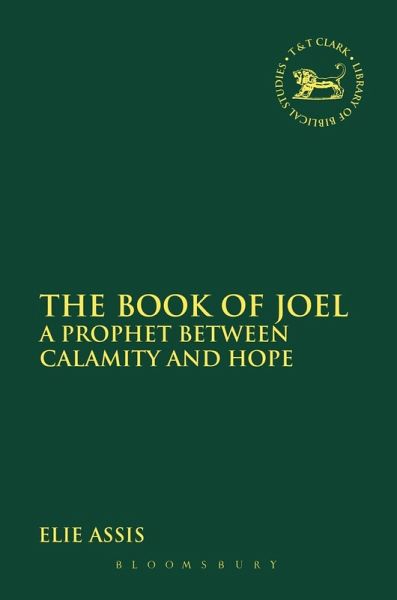
Prophetic sayings are generally a reaction to immediate realities, and therefore attempts to understand prophetic literature without the benefit of the prophet's historical milieu are limited or inaccurate. Contrary to the prevailing opinion that Joel is post-exilic, the book is located within the exilic period, recognising the lack of any rebuke consistent with a people experiencing deep despair. The Book of Joel places great emphasis on the motif of the divine presence residing in the midst of Israel, and it is asserted that the prophet's main purpose was to bring the people to renew their…mehr
Prophetic sayings are generally a reaction to immediate realities, and therefore attempts to understand prophetic literature without the benefit of the prophet's historical milieu are limited or inaccurate. Contrary to the prevailing opinion that Joel is post-exilic, the book is located within the exilic period, recognising the lack of any rebuke consistent with a people experiencing deep despair. The Book of Joel places great emphasis on the motif of the divine presence residing in the midst of Israel, and it is asserted that the prophet's main purpose was to bring the people to renew their connection with the Lord after the destruction of the Temple, which, though physically ruined, had not lost its religious significance. A literary and rhetorical analysis demonstrates how the prophet sought to influence his audience. Literary devices and rhetorical tools are investigated, and their relevance and contribution to the book's meanings are explored. One central feature of the book is its focus on a detailed discussion of the position and purpose of the locust plague, employing recent literary approaches.
Die Herstellerinformationen sind derzeit nicht verfügbar.
Autorenporträt
Elie Assis is the head of the Department of Bible Studies at Bar Ilan University. Among his scholarly work are his books From Moses to Joshua and from the Miraculous to the Ordinary: A Literary Analysis of the Conquest Narrative in the Book of Joshua, Jerusalem: Magnes Press, 2005 (Hebrew), and Self-Interest or Communal Interest? An Ideology of Leadership in the Gideon, Abimelech and Jephthah Narratives (Judg. 6-12) (Supplements to Vetus Testamentum, 106), Brill Academic Press, Leiden, 2005. His book Flashes of Fire was published by T&T Clark in 2009.
Inhaltsangabe
Introduction The Date and Meaning of the Book of Joel Part I: Description of the locusts, call to the people to turn to God, priests' prayer (1:2-2-17) The First Pericope about the Locusts (1:2-12) The Second Pericope about the Locusts (1:13-20) The Third Pericope about the Locusts (2:1-14) The Fourth Pericope about the Locusts, and the Priests' Prayer (2:15-17) Part II Divine Response to the Priests' Prayer (2:18-4:17) The first Divine reply - Salvation from the Locust Plague, 2:18-27 The second Divine reply - Salvation for the People from National Distress 3:1-4:17 Outpouring of God's Spirit ans Cosmic Omens for of the Day of the Lord (3:1-5) Judgement of the Nations (4:1-17) The Book's Ending (4:18-21) Salvation of the agriculture (4:18) National Salvation (4:19-21) Conclusions Bibliography Index
Es gelten unsere Allgemeinen Geschäftsbedingungen: www.buecher.de/agb
Impressum
www.buecher.de ist ein Internetauftritt der buecher.de internetstores GmbH
Geschäftsführung: Monica Sawhney | Roland Kölbl | Günter Hilger
Sitz der Gesellschaft: Batheyer Straße 115 - 117, 58099 Hagen
Postanschrift: Bürgermeister-Wegele-Str. 12, 86167 Augsburg
Amtsgericht Hagen HRB 13257
Steuernummer: 321/5800/1497
USt-IdNr: DE450055826