Sie sind bereits eingeloggt. Klicken Sie auf 2. tolino select Abo, um fortzufahren.
Bitte loggen Sie sich zunächst in Ihr Kundenkonto ein oder registrieren Sie sich bei bücher.de, um das eBook-Abo tolino select nutzen zu können.
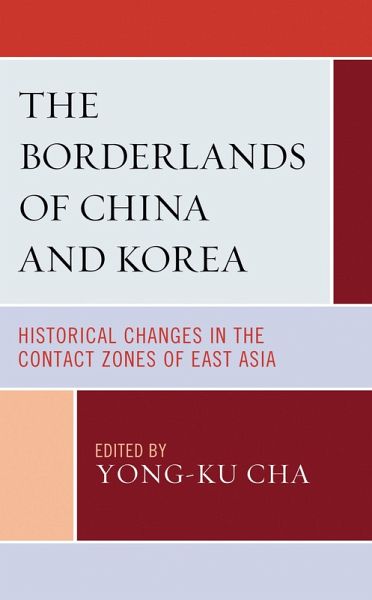
This volume utilizes the concept of contact zones to reconceptualize the time and space around East Asian borders as meeting zones where multiple races, nations, and cultures interacted through the processes of exchange, coexistence, and acculturation. Focusing especially on the borderlands of China and Korea, the contributors document the shifts and repositioning of the contact zones of East Asia as well as the encounters and conflicts that transpired in these spaces, with historical materials spanning the period from the first to the early twentieth centuries and geographical regions from…mehr
This volume utilizes the concept of contact zones to reconceptualize the time and space around East Asian borders as meeting zones where multiple races, nations, and cultures interacted through the processes of exchange, coexistence, and acculturation. Focusing especially on the borderlands of China and Korea, the contributors document the shifts and repositioning of the contact zones of East Asia as well as the encounters and conflicts that transpired in these spaces, with historical materials spanning the period from the first to the early twentieth centuries and geographical regions from the Tibetan Plateau to Manchuria to the Korean Peninsula. What emerges is a rich account of how the historical changes in the contact zones significantly shaped the history of East Asia as a whole.
Die Herstellerinformationen sind derzeit nicht verfügbar.
Autorenporträt
Yong-ku Cha is professor in the Department of History and director of the HK+ Reconciliation and Coexistence in Contact Zones (RCCZ) Research Center at Chung-Ang University.
Inhaltsangabe
Part I: Historical Changes in the Contact Zones of Korean Peninsula Chapter 1: Goguryeo and Chinese Dynasties' Spatial Perception of the Manchu Region Chapter 2: Liaoxi: The Contact Zone Between the Chinese Dynasty, the Nomadic Tribes, and Goguryeo in Sixth and Seventh Century East Asia Chapter 3: Goryeo's Relations with the Northern Peoples and the Change in the North-Western Contact Zone of the Goryeo Dynasty Chapter 4: The Temporal Aspects of Change in the Contact Zone during the Joseon Dynasty: Focusing on the Yalu River and Tumen River Basins Chapter 5: Joseon's Status as the Frontier of the Empire: From the Qing's Dependent State to Japan's Occupied Territory Part II: Historical Changes in the Contact Zones of China Chapter 6: The Boundaries of the Han Dynasty Famine Relief Policy: Focusing on the Division of the Inner and Frontier Commanderies Chapter 7: A Study on the Changes of the Frontier Prefectures as Contact Zones in the Tang Dynasty: Expansion and Reduction of the Tang-Tibetan Bia
Es gelten unsere Allgemeinen Geschäftsbedingungen: www.buecher.de/agb
Impressum
www.buecher.de ist ein Internetauftritt der buecher.de internetstores GmbH
Geschäftsführung: Monica Sawhney | Roland Kölbl | Günter Hilger
Sitz der Gesellschaft: Batheyer Straße 115 - 117, 58099 Hagen
Postanschrift: Bürgermeister-Wegele-Str. 12, 86167 Augsburg
Amtsgericht Hagen HRB 13257
Steuernummer: 321/5800/1497
USt-IdNr: DE450055826