Sie sind bereits eingeloggt. Klicken Sie auf 2. tolino select Abo, um fortzufahren.
Bitte loggen Sie sich zunächst in Ihr Kundenkonto ein oder registrieren Sie sich bei bücher.de, um das eBook-Abo tolino select nutzen zu können.
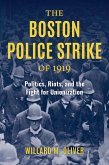
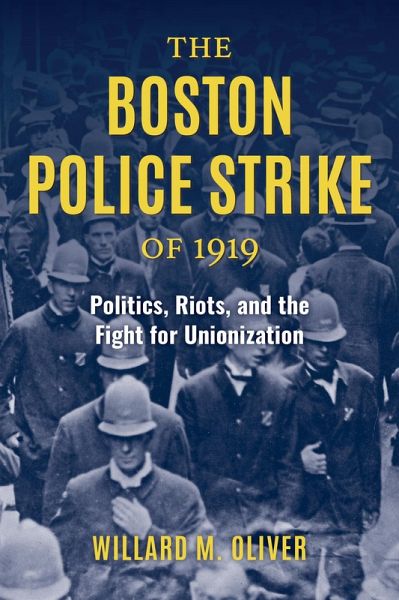
At 5:45 p.m. on September 9, 1919, Boston was effectively without a police force, leaving the city victim to four days of crime, looting, and violence. Ordered to disband their newly organized police union, the officers voted to walk off their posts in protest, leading to the greatest tragedy in American policing: the Boston Police Strike of 1919. This is a compelling account of the historical antecedents that led to the strike and its complex political and societal ramifications. Through meticulous research, Oliver explores the perspectives and motivations of all involved, from the police…mehr
At 5:45 p.m. on September 9, 1919, Boston was effectively without a police force, leaving the city victim to four days of crime, looting, and violence. Ordered to disband their newly organized police union, the officers voted to walk off their posts in protest, leading to the greatest tragedy in American policing: the Boston Police Strike of 1919. This is a compelling account of the historical antecedents that led to the strike and its complex political and societal ramifications. Through meticulous research, Oliver explores the perspectives and motivations of all involved, from the police officers attempting to unionize to the city's leaders trying to retain command and control of its patrolmen.
Die Herstellerinformationen sind derzeit nicht verfügbar.
Autorenporträt
Willard M. Oliver, PhD, is a professor in the College of Criminal Justice at Sam Houston State. His areas of expertise include policing (ex. Police stress, small-town and rural policing, community policing, Homeland Security & policing, etc.), public policy of crime & criminal justice, and the history of criminal justice. He is the author of several other books pertaining to the history of criminal justice (as well as other areas of criminal justice and policing), including The Birth of the FBI: Teddy Roosevelt, the Secret Service, and the Fight over America's Premier Law Enforcement Agency (Rowman & Littlefield, 2019), August Vollmer: The Father of American Policing (2017), A History of Crime and Criminal Justice in America 3rd ed. (2017), Killing Congress (Lexington, 2014), Introduction to Homeland Security (2014), Crime, History, and Hollywood (2013), and Killing the President (2010). Oliver is a retired major in the U.S. Army Reserves and a former police officer. He resides in Huntsville, Texas with his family.
Inhaltsangabe
Prologue: September 8-9, 1919 1 America's First Police Department 2 The Boston Police Department 3 Political Control of the BPD 4 The Great War's Impact on Boston 5 Boston's Leadership 6 Governor Calvin Coolidge 7 The Call for Unionization 8 The Road to Hell . . . 9 In the Absence of Police, September 9, 1919 10 The Boston Riots, September 10, 1919 11 Quelling the Violence, September 11, 1919 12 Coolidge Takes Charge, September 12, 1919 13 Firing and Hiring a Police Department, September 13, 1919 14. . . Is Paved with Good Intentions Epilogue: August 3, 1981 Afterword Bibliography Index About the Author
Es gelten unsere Allgemeinen Geschäftsbedingungen: www.buecher.de/agb
Impressum
www.buecher.de ist ein Internetauftritt der buecher.de internetstores GmbH
Geschäftsführung: Monica Sawhney | Roland Kölbl | Günter Hilger
Sitz der Gesellschaft: Batheyer Straße 115 - 117, 58099 Hagen
Postanschrift: Bürgermeister-Wegele-Str. 12, 86167 Augsburg
Amtsgericht Hagen HRB 13257
Steuernummer: 321/5800/1497
USt-IdNr: DE450055826