0,00 €
inkl. MwSt.
Sofort per Download lieferbar
0 °P sammeln

Andere Kunden interessierten sich auch für
") Tradition and Transformation in Christian Art (eBook, PDF)45,95 €
Tradition and Transformation in Christian Art (eBook, PDF)45,95 €") Imaging Pilgrimage (eBook, PDF)18,95 €
Imaging Pilgrimage (eBook, PDF)18,95 €") Medieval Women, Material Culture, and Power (eBook, PDF)0,00 €
Medieval Women, Material Culture, and Power (eBook, PDF)0,00 €") Visual Histories from Medieval Iberia (eBook, PDF)99,95 €
Visual Histories from Medieval Iberia (eBook, PDF)99,95 €") Donor Portraits in Byzantine Art (eBook, PDF)76,95 €
Donor Portraits in Byzantine Art (eBook, PDF)76,95 €") The Agency of Things in Medieval and Early Modern Art (eBook, PDF)0,00 €
The Agency of Things in Medieval and Early Modern Art (eBook, PDF)0,00 €") The Living Image in the Middle Ages and Beyond (eBook, PDF)45,95 €
The Living Image in the Middle Ages and Beyond (eBook, PDF)45,95 €



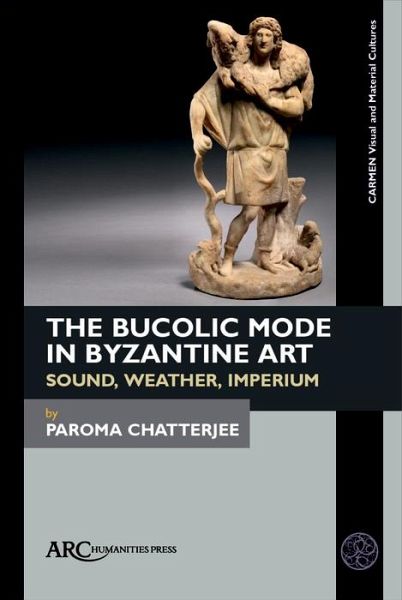
Bucolic imagery-of shepherds with flocks in idyllic surroundings-has barely been studied in Byzantine art history. These images elude our usual analytical categories of imperial, sacred, and secular art, and challenge our assumptions about visual narrative. This book demonstrates that a "bucolic mode" existed in Byzantium in diverse media, such as textiles, sculpture, mosaics, silver, and manuscripts. Through a close reading of a select group of images, this book argues that bucolic themes were deployed to reflect concerns about the salvific effects of sound, the vagaries of the weather, and the contingency of imperial rule at different moments in the Byzantine era.
Dieser Download kann aus rechtlichen Gründen nur mit Rechnungsadresse in A, B, BG, CY, CZ, D, DK, EW, E, FIN, F, GR, HR, H, IRL, I, LT, L, LR, M, NL, PL, P, R, S, SLO, SK ausgeliefert werden.