21,95 €
21,95 €
inkl. MwSt.
Sofort per Download lieferbar

11 °P sammeln
21,95 €
Als Download kaufen
21,95 €
inkl. MwSt.
Sofort per Download lieferbar
11 °P sammeln
Jetzt verschenken
Alle Infos zum eBook verschenken
21,95 €
inkl. MwSt.
Sofort per Download lieferbar
Alle Infos zum eBook verschenken
11 °P sammeln

Andere Kunden interessierten sich auch für
") The Center Holds (eBook, ePUB)12,85 €
The Center Holds (eBook, ePUB)12,85 €") Western Democracies and the New Extreme Right Challenge (eBook, ePUB)45,95 €
Western Democracies and the New Extreme Right Challenge (eBook, ePUB)45,95 €") China's Influence and the Center-periphery Tug of War in Hong Kong, Taiwan and Indo-Pacific (eBook, ePUB)41,95 €
China's Influence and the Center-periphery Tug of War in Hong Kong, Taiwan and Indo-Pacific (eBook, ePUB)41,95 €") The U.S. Intelligence Community (eBook, ePUB)57,95 €
The U.S. Intelligence Community (eBook, ePUB)57,95 €") Roads to Reconciliation: Conflict and Dialogue in the Twenty-first Century (eBook, ePUB)128,95 €
Roads to Reconciliation: Conflict and Dialogue in the Twenty-first Century (eBook, ePUB)128,95 €") Fifty Key Thinkers on Globalization (eBook, ePUB)31,95 €
Fifty Key Thinkers on Globalization (eBook, ePUB)31,95 €") The Resistible Corrosion of Europe's Center-Left After 2008 (eBook, ePUB)38,95 €
The Resistible Corrosion of Europe's Center-Left After 2008 (eBook, ePUB)38,95 €




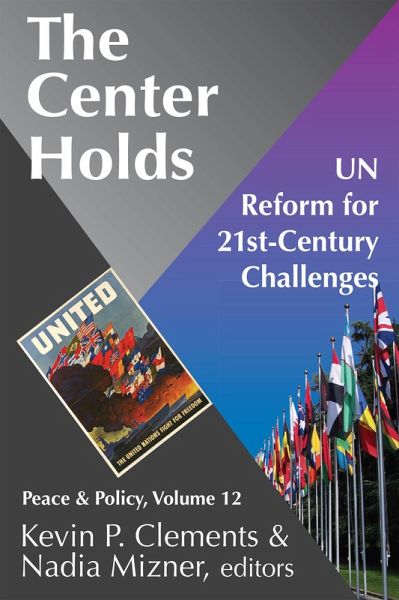
The United Nations remains a unique institutional hope for addressing and resolving the world's major environmental, developmental, and humanitarian problems. It representsglobal aspirations for a just and peaceful world by inspiring the political imagination of individuals and collectivities. But, because it is now viewed primarily as a "trade union" for expressing the national political interests of 192 state parties, as Clements and Mizner's volume of essaysdemonstrate the UN has succumbed to political cynicism and skepticism.
Only the UN can champion emerging international regimes, the rule of law, and global processes that generate structural stability, justice, and peace in the international system. Unlike some central security organs of the UN, specialized UN agencies have addressed these problems. With the exception of the wars in Afghanistan and Iraq, the UN and its affiliates have played an important role in ending violent, political conflict and in preventing further conflict. According to the Human Security Report (2005), the 80 percent decline in deadly conflicts since the early 1990s can be explained by the extraordinary upsurge of activity by the international community,which t has been directed towards conflict prevention and peace-making.
This work explores how the UN can establish global norms to reinforce adoctrine of internal and external political responsibility. How can the UN ensure that the interests of the peoples of the world receive equal attention as the interests of state parties? How does it deal with non-sovereign actors, not represented directly in the UN, who may command power and resources that are more significant than those available to nation states? How does it deal with state parties deemed ineffective, incapable, and illegitimate by their own citizens? How can the organization enhance its role with regional organizations? Finally, how will the UN ensure a positive and proactive role with respect to diverse globa
Only the UN can champion emerging international regimes, the rule of law, and global processes that generate structural stability, justice, and peace in the international system. Unlike some central security organs of the UN, specialized UN agencies have addressed these problems. With the exception of the wars in Afghanistan and Iraq, the UN and its affiliates have played an important role in ending violent, political conflict and in preventing further conflict. According to the Human Security Report (2005), the 80 percent decline in deadly conflicts since the early 1990s can be explained by the extraordinary upsurge of activity by the international community,which t has been directed towards conflict prevention and peace-making.
This work explores how the UN can establish global norms to reinforce adoctrine of internal and external political responsibility. How can the UN ensure that the interests of the peoples of the world receive equal attention as the interests of state parties? How does it deal with non-sovereign actors, not represented directly in the UN, who may command power and resources that are more significant than those available to nation states? How does it deal with state parties deemed ineffective, incapable, and illegitimate by their own citizens? How can the organization enhance its role with regional organizations? Finally, how will the UN ensure a positive and proactive role with respect to diverse globa
Dieser Download kann aus rechtlichen Gründen nur mit Rechnungsadresse in A, B, BG, CY, CZ, D, DK, EW, E, FIN, F, GR, HR, H, IRL, I, LT, L, LR, M, NL, PL, P, R, S, SLO, SK ausgeliefert werden.