8,99 €
8,99 €
inkl. MwSt.
Sofort per Download lieferbar

0 °P sammeln
8,99 €
Als Download kaufen
8,99 €
inkl. MwSt.
Sofort per Download lieferbar
0 °P sammeln
Jetzt verschenken
Alle Infos zum eBook verschenken
8,99 €
inkl. MwSt.
Sofort per Download lieferbar
Alle Infos zum eBook verschenken
0 °P sammeln

Andere Kunden interessierten sich auch für
") Le Siécle des Corleone (eBook, ePUB)8,99 €
Le Siécle des Corleone (eBook, ePUB)8,99 €") The Mafia (eBook, ePUB)12,99 €
The Mafia (eBook, ePUB)12,99 €") How to Recognize the Mafia Abroad (eBook, ePUB)16,95 €
How to Recognize the Mafia Abroad (eBook, ePUB)16,95 €") The Governance of Female Drug Users (eBook, ePUB)31,95 €
The Governance of Female Drug Users (eBook, ePUB)31,95 €") Mafia Wars in the History (eBook, ePUB)2,99 €
Mafia Wars in the History (eBook, ePUB)2,99 €") Gangs and Organized Crime (eBook, ePUB)76,95 €
Gangs and Organized Crime (eBook, ePUB)76,95 € (eBook, ePUB)") The Clinical Experience, Second edition (1997) (eBook, ePUB)33,95 €
The Clinical Experience, Second edition (1997) (eBook, ePUB)33,95 €





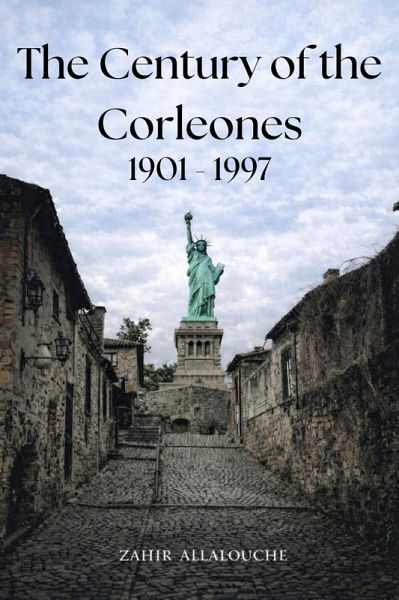
The Century of the Corleones is a journey through a hundred years of power, violence, and myth, told at the crossroads of history and fiction. The book traces the rise, transformation, and gradual decline of the mafia from rural Sicily at the dawn of the twentieth century to the late 1990s, while constantly holding up a distorted mirror: the fictional saga of the Corleone family imagined by Mario Puzo and brought to the screen by Francis Ford Coppola.
Each chapter moves back and forth between documented history and narrative storytelling. On one side, real figures, real trials, real bloodshed: landowners, bandits, politicians, magistrates, pentiti, and the slow, painful construction of the modern Italian and American states. On the other, Vito and Michael Corleone, fictional characters whose trajectories condense, dramatize, and sometimes exaggerate historical dynamics that were very real. The book never confuses the two, but it shows how closely they echo each other, and why cinema and reality became so deeply entangled in the public imagination.
From the olive groves of Sicily to the streets of New York, from Prohibition to the maxi-trials, the narrative explores how the mafia organized itself, professionalized violence, negotiated with power, and eventually learned to disappear into finance, politics, and global networks. It also examines how honor, family, loyalty, and silence were constructed as moral systems, both lived and staged, and how these codes justified domination as much as they masked fear.
The Century of the Corleones is not a glorification. It is a long, patient look at how myths are born, how they endure, and how they collapse. By placing historians, journalists, court records, and fictional scenes side by side, the book invites the reader to question what we think we know about the mafia, and why certain stories continue to fascinate long after the power behind them has faded.
In the end, this is a book about memory. About what survives when empires of violence lose their grip, and about how a fictional family came to symbolize a very real century of crime, compromise, and uneasy fascination on both sides of the Atlantic.
Each chapter moves back and forth between documented history and narrative storytelling. On one side, real figures, real trials, real bloodshed: landowners, bandits, politicians, magistrates, pentiti, and the slow, painful construction of the modern Italian and American states. On the other, Vito and Michael Corleone, fictional characters whose trajectories condense, dramatize, and sometimes exaggerate historical dynamics that were very real. The book never confuses the two, but it shows how closely they echo each other, and why cinema and reality became so deeply entangled in the public imagination.
From the olive groves of Sicily to the streets of New York, from Prohibition to the maxi-trials, the narrative explores how the mafia organized itself, professionalized violence, negotiated with power, and eventually learned to disappear into finance, politics, and global networks. It also examines how honor, family, loyalty, and silence were constructed as moral systems, both lived and staged, and how these codes justified domination as much as they masked fear.
The Century of the Corleones is not a glorification. It is a long, patient look at how myths are born, how they endure, and how they collapse. By placing historians, journalists, court records, and fictional scenes side by side, the book invites the reader to question what we think we know about the mafia, and why certain stories continue to fascinate long after the power behind them has faded.
In the end, this is a book about memory. About what survives when empires of violence lose their grip, and about how a fictional family came to symbolize a very real century of crime, compromise, and uneasy fascination on both sides of the Atlantic.
Dieser Download kann aus rechtlichen Gründen nur mit Rechnungsadresse in A, B, CY, CZ, D, DK, EW, E, FIN, F, GR, H, IRL, I, LT, L, LR, M, NL, PL, P, R, S, SLO, SK ausgeliefert werden.