64,95 €
64,95 €
inkl. MwSt.
Sofort per Download lieferbar

32 °P sammeln
64,95 €
Als Download kaufen
64,95 €
inkl. MwSt.
Sofort per Download lieferbar
32 °P sammeln
Jetzt verschenken
Alle Infos zum eBook verschenken
64,95 €
inkl. MwSt.
Sofort per Download lieferbar
Alle Infos zum eBook verschenken
32 °P sammeln

Andere Kunden interessierten sich auch für
") The Chapel and Burial Ground on St Ninian's Isle, Shetland: Excavations Past and Present: v. 32 (eBook, PDF)64,95 €
The Chapel and Burial Ground on St Ninian's Isle, Shetland: Excavations Past and Present: v. 32 (eBook, PDF)64,95 €") The Monuments of the Parish Church of St Peter-at-Leeds (eBook, ePUB)25,95 €
The Monuments of the Parish Church of St Peter-at-Leeds (eBook, ePUB)25,95 €") Bodies, Beings, and the Multiple Burial Rite of the Western Viking World (eBook, ePUB)42,95 €
Bodies, Beings, and the Multiple Burial Rite of the Western Viking World (eBook, ePUB)42,95 €") Excavations at the Austin Friary, Hull, Yorkshire, 1994 and 1999, Part 1 (eBook, ePUB)39,95 €
Excavations at the Austin Friary, Hull, Yorkshire, 1994 and 1999, Part 1 (eBook, ePUB)39,95 €") The Hirsel Excavations (eBook, ePUB)44,95 €
The Hirsel Excavations (eBook, ePUB)44,95 €") Burton Dassett Southend, Warwickshire (eBook, ePUB)36,95 €
Burton Dassett Southend, Warwickshire (eBook, ePUB)36,95 €") Excavations at Glasgow Cathedral 1988-1997 (eBook, ePUB)39,95 €
Excavations at Glasgow Cathedral 1988-1997 (eBook, ePUB)39,95 €


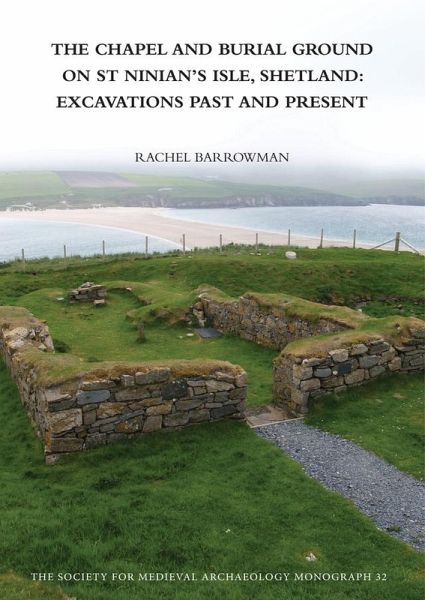
"This volume is the definitive account of the excavation which led to the discovery of the magnificent hoard of 28 pieces of Pictish silverware on St Ninian's Isle, Shetland in 1958. It includes a reassessment of the original archives and finds, including an ogham stone found on the site in 1876 and a fantastic collection of glass beads, as well as several new small-scale excavations on the site of the chapel and its burial ground. Taken together, this work reveals a long sequence of settlement beginning in the Iron Age. The first church was built on the site in the 8th century, and accompanied by a long cist cemetery with cross-incised stones and shrine sculpture. The church may have continued in use into the 9th or 10th centuries, and the recent work has confirmed that the famous hoard was buried into its floor. There was a degree of continuity between the pre-Christian and Christian burials, with evidence that the site was a special place for burial before the advent of Christianity. The report describes these burials in detail, ending the story sometime between the 11th and end of the 12th centuries, when an adult male who had died a violent death was moved to be buried on the site. Thereafter the site was inundated with wind-blown sand. A new chapel with an accompanying long cist cemetery was then built above the earlier church, and a chancel was added later. The associated graveyard continued in use until around 1840, long after the building was demolished."
Dieser Download kann aus rechtlichen Gründen nur mit Rechnungsadresse in A, B, BG, CY, CZ, D, DK, EW, E, FIN, F, GR, HR, H, IRL, I, LT, L, LR, M, NL, PL, P, R, S, SLO, SK ausgeliefert werden.