1,99 €
inkl. MwSt.
Sofort per Download lieferbar
0 °P sammeln

Andere Kunden interessierten sich auch für
") THE LIVES OF THE TWELVE CAESARS (eBook, ePUB)0,99 €
THE LIVES OF THE TWELVE CAESARS (eBook, ePUB)0,99 €") The Poetaster (eBook, ePUB)1,99 €
The Poetaster (eBook, ePUB)1,99 €") The Glory of the Trenches (eBook, ePUB)1,99 €
The Glory of the Trenches (eBook, ePUB)1,99 €") The Two Great Retreats of History (eBook, ePUB)1,99 €
The Two Great Retreats of History (eBook, ePUB)1,99 €") Secret Diplomatic History of The Eighteenth Century (eBook, ePUB)1,99 €
Secret Diplomatic History of The Eighteenth Century (eBook, ePUB)1,99 €") Kelly Miller's History of the World War for Human Rights (eBook, ePUB)1,99 €
Kelly Miller's History of the World War for Human Rights (eBook, ePUB)1,99 €") The History Of Rome (eBook, ePUB)0,99 €
The History Of Rome (eBook, ePUB)0,99 €






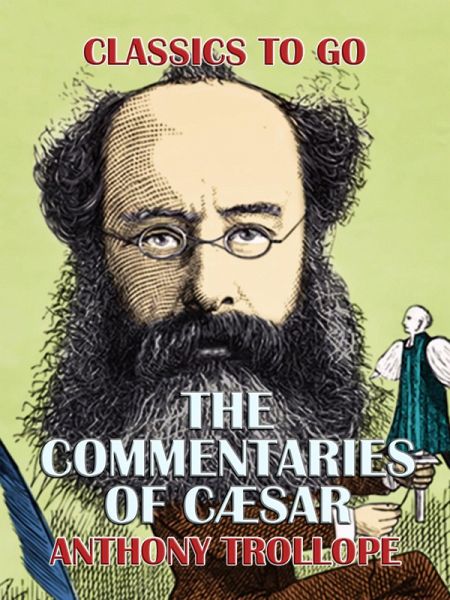
Excerpt: 'It may perhaps be fairly said that the Commentaries of Cæsar are the beginning of modern history. He wrote, indeed, nearly two thousand years ago; but he wrote, not of times then long past, but of things which were done under his own eyes, and of his own deeds. And he wrote of countries with which we are familiar,-of our Britain, for instance, which he twice invaded, of peoples not so far remote but that we can identify them with our neighbours and ourselves; and he so wrote as to make us feel that we are reading actual history, and not romance. The simplicity of the narratives which he has left is their chief characteristic, if not their greatest charm. We feel sure that the circumstances which he tells us did occur, and that they occurred very nearly as he tells them. He deals with those great movements in Europe from which have{2} sprung, and to which we can trace, the present political condition of the nations. Interested as the scholar, or the reader of general literature, may be in the great deeds of the heroes of Greece, and in the burning words of Greek orators, it is almost impossible for him to connect to any intimate and thoroughly-trusted link the fortunes of Athens, or Sparta, or Macedonia, with our own times and our own position. It is almost equally difficult to do so in regard to the events of Rome and the Roman power before the time of Cæsar. We cannot realise and bring home to ourselves the Punic Wars or the Social War, the Scipios and the Gracchi, or even the contest for power between Marius and Sulla, as we do the Gallic Wars and the invasion of Britain, by which the civilisation of Rome was first carried westwards, or the great civil wars,-the "Bellum Civile,"-by which was commenced a line of emperors continued almost down to our own days, and to which in some degree may be traced the origin and formation of almost every existing European nation. It is no doubt true that if we did but know the facts correctly, we could refer back every political and social condition of the present day to the remotest period of man's existence; but the interest fails us when the facts become doubtful, and when the mind begins to fear that history is mixed with romance. Herodotus is so mythic that what delight we have in his writings comes in a very slight degree from any desire on our part to form a continuous chain from the days of which he wrote down to our own. Between the marvels of Herodotus and the facts of Cæsar there is a great interval,{3} from which have come down to us the works of various noble historians; but with Cæsar it seems that that certainty commences which we would wish to regard as the distinguishing characteristic of modern history.'
Dieser Download kann aus rechtlichen Gründen nur mit Rechnungsadresse in A, B, BG, CY, CZ, D, DK, EW, E, FIN, F, GR, HR, H, IRL, I, LT, L, LR, M, NL, PL, P, R, S, SLO, SK ausgeliefert werden.