19,99 €
inkl. MwSt.
Sofort per Download lieferbar
0 °P sammeln

Andere Kunden interessierten sich auch für
") The accomplisht cook (eBook, ePUB)19,99 €
The accomplisht cook (eBook, ePUB)19,99 €") The Lady's Own Cookery Book, and New Dinner-Table Directory (eBook, ePUB)19,99 €
The Lady's Own Cookery Book, and New Dinner-Table Directory (eBook, ePUB)19,99 €") Armour's Monthly Cook Book, Volume 2, No. 12, October 1913 (eBook, ePUB)19,99 €
Armour's Monthly Cook Book, Volume 2, No. 12, October 1913 (eBook, ePUB)19,99 €") Cook book of tested receipes (eBook, ePUB)19,99 €
Cook book of tested receipes (eBook, ePUB)19,99 €") Flint Hills Cook Book (eBook, ePUB)19,99 €
Flint Hills Cook Book (eBook, ePUB)19,99 €") The Dinner Year-Book (eBook, ePUB)19,99 €
The Dinner Year-Book (eBook, ePUB)19,99 €") The Hotel St. Francis Cook Book (eBook, ePUB)19,99 €
The Hotel St. Francis Cook Book (eBook, ePUB)19,99 €
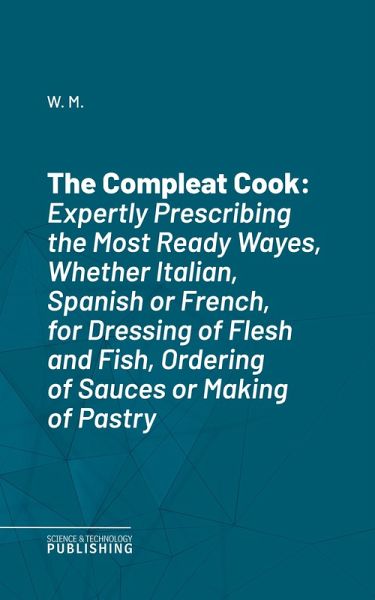
The Compleat Cook: Expertly Prescribing the Most Ready Wayes, Whether Italian, Spanish or French, for Dressing of Flesh and Fish, Ordering of Sauces or Making of Pastry is a fascinating culinary manual first published in 1658, offering a rare glimpse into the kitchens and dining habits of 17th-century England. This comprehensive cookbook gathers a wealth of recipes and techniques from across Europe, reflecting the cosmopolitan tastes of the English elite during the Restoration period. The book is meticulously organized, providing clear instructions for preparing a wide variety of dishes, from roasted meats and stews to elaborate fish preparations, savory pies, and delicate pastries. It also includes detailed guidance on crafting sauces, pickles, and preserves, as well as advice on carving and serving, making it an indispensable resource for both professional cooks and ambitious home chefs of its time. Drawing on Italian, Spanish, and French culinary traditions, The Compleat Cook introduces readers to exotic ingredients and sophisticated methods, such as the use of spices, herbs, and wine in cooking, and the art of balancing flavors and textures. The recipes range from simple everyday fare to extravagant banquet dishes, showcasing the diversity and richness of early modern European cuisine. In addition to practical instructions, the book offers insights into the social and cultural context of food, including the importance of presentation, the etiquette of the table, and the role of the cook in aristocratic households. With its blend of practical advice, historical detail, and gastronomic curiosity, The Compleat Cook remains a valuable document for food historians, culinary enthusiasts, and anyone interested in the evolution of cooking. Its pages reveal not only the tastes and techniques of a bygone era but also the enduring pleasures of good food, skillfully prepared and shared.
Dieser Download kann aus rechtlichen Gründen nur mit Rechnungsadresse in A, B, BG, CY, CZ, D, DK, EW, E, FIN, F, GR, HR, H, IRL, I, LT, L, LR, M, NL, PL, P, R, S, SLO, SK ausgeliefert werden.