Sie sind bereits eingeloggt. Klicken Sie auf 2. tolino select Abo, um fortzufahren.
Bitte loggen Sie sich zunächst in Ihr Kundenkonto ein oder registrieren Sie sich bei bücher.de, um das eBook-Abo tolino select nutzen zu können.
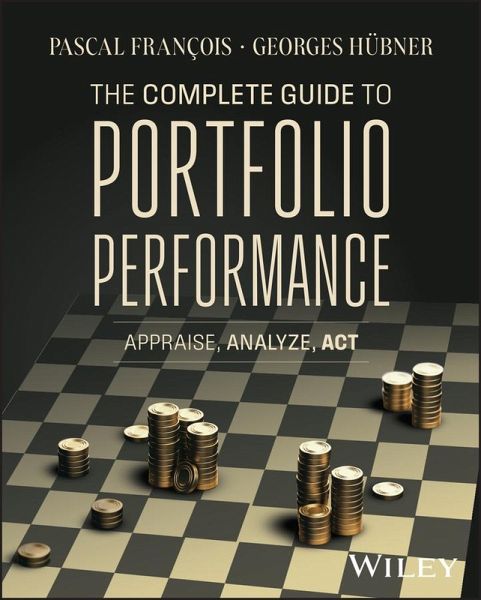
An intuitive and effective desk reference for performance measurement in asset and wealth management In The Complete Guide to Portfolio Performance: Appraise, Analyse, Act, a team of finance professors with extended practical experience deliver a hands-on desk reference for asset and wealth managers suitable for everyday use. Intuitively organized and full of concrete examples of the real-world implementation of the concepts discussed within, the book provides a comprehensive coverage of all important portfolio performance matters across 18 chapters of actionable and clearly described content.…mehr
An intuitive and effective desk reference for performance measurement in asset and wealth management In The Complete Guide to Portfolio Performance: Appraise, Analyse, Act, a team of finance professors with extended practical experience deliver a hands-on desk reference for asset and wealth managers suitable for everyday use. Intuitively organized and full of concrete examples of the real-world implementation of the concepts discussed within, the book provides a comprehensive coverage of all important portfolio performance matters across 18 chapters of actionable and clearly described content. The authors have provided relevant cross-referencing where appropriate, "Key Takeaways and Equations" sections at the end of each chapter, and pointers to additional resources for anyone interested in pursuing further research. You'll also find: * Discussions of more than a hundred classical and modern performance measures organized logically and with a focus on their applications * Strategies for selecting appropriate performance measures based on your situation as a manager or investor * Explanations of analytical techniques (statistical approaches, attribution, fund ratings...) enabling a comprehensive use of performance-related information * Applications of portfolio performance criteria in concrete investment decision-making processes * Highly actionable and logically organized material that's easy to find at a moment's notice * A full set of pedagogical powerpoint slides and excel worksheets with all data and formulas Perfect for investors, portfolio managers, advisors, analysts, and regulators, The Complete Guide to Portfolio Performance is also a must-read reference for students and practitioners of asset and wealth management, as well as those pursuing certification such as CFA, CIPM, CIIA, and CAIA.
Dieser Download kann aus rechtlichen Gründen nur mit Rechnungsadresse in D ausgeliefert werden.
Die Herstellerinformationen sind derzeit nicht verfügbar.
Autorenporträt
PASCAL FRANÇOIS is Professor of Finance at HEC Montréal. He is the founding director of the Canadian Derivatives Institute and a former co-editor of Finance, the academic journal of the French Finance Association. He holds a PhD from Sorbonne University and ESSEC.
GEORGES HÜBNER is Professor of Finance at HEC Liège (Liège University, Belgium). Georges serves as a non-executive director at Belfius Bank and Belfius Asset Management, as well as an expert member of the investment committee of the CERN pension fund (Geneva). He is also the founder of two fintech companies, Gambit Financial Solutions and Sopiad. He holds a PhD from INSEAD.
Inhaltsangabe
Preface xxvii Acknowledgements xxxi About the Website xxxiii Chapter 1 The Scope of Portfolio Performance 1 1.1 From Portfolio Management to Portfolio Performance 2 1.2 Rolling Out the Three Layers of Performance Evaluation 10 1.3 Returns, Risk, and Benchmarks 17 Key Takeaways and Equations 27 References 30 Part I Classical Performance Measurement 33 Chapter 2 Standard Portfolio Theory and the CAPM 35 2.1 The Portfolio Allocation Problem 37 2.2 The Market Portfolio and the Security Market Line 45 2.3 Implementing the CAPM 53 2.4 Multifactor Models 64 Key Takeaways and Equations 72 References 73 Chapter 3 Classical Portfolio Performance Measures 77 3.1 Peer Group Comparisons 80 3.2 The Sharpe Ratio 87 3.3 The Treynor Ratio, Jensen's Alpha, and the Modified Jensen's Alpha 100 3.4 The Information Ratio 114 Key Takeaways and Equations 126 References 129 Chapter 4 Selecting a Classical Performance Measure 131 4.1 Risk and Measurement Dimensions 134 4.2 Choosing a Measure for the Investor: The Normative Approach 140 4.3 Choosing a Measure for the Investor: The Positive Approach 154 4.4 Choosing a Measure for the Manager 167 Key Takeaways and Equations 177 References 180 Chapter 5 Pitfalls and Dangers with the Classical Performance Measures 183 5.1 Issues with the Standard Portfolio Theory Framework 185 5.2 Issues with the Capital Asset Pricing Model 197 5.3 Issues with the Sample 210 5.4 Issues with the Regressions 223 5.5 Issues with the Interpretations 233 Key Takeaways and Equations 247 References 250 Part II Developments in Performance Measurement 253 Chapter 6 The Classical Performance Measures Revisited 255 6.1 Refinements of the Sharpe Ratio 258 6.2 Alterations of the Sharpe Ratio 276 6.3 Alternative Versions of the other Classical Performance Measures 297 6.4 Classical Performance Measures as Risk-Adjusted Returns 305 Key Takeaways and Equations 318 References 321 Chapter 7 Performance Measurement in Multifactor Models 325 7.1 Types of Linear Multifactor Models 327 7.2 The Multifactor Alpha and the Multifactor Modified Alpha 345 7.3 Other Classical Performance Measures Adapted to Multifactor Models 357 7.4 Measuring Performance in Special Cases of Multifactor Models 364 Key Takeaways and Equations 373 References 376 Chapter 8 Performance Measurement with Market Timing 381 8.1 Piecewise-linear Regression Approach 385 8.2 Polynomial Regression Approach 400 8.3 Return-based Dynamic Exposures Approach 414 8.4 Holding-based Dynamic Exposures Approach 424 8.5 A Roadmap for Market Timing Performance Appraisal 434 Key Takeaways and Equations 440 References 443 Chapter 9 Preference-based Performance for the Standard Investor 447 9.1 The Structure of the Rational Investor's Preferences 450 9.2 Preference-based Performance in the Standard Portfolio Theory 456 9.3 Performance Measurement with Standard Utility functions 468 Key Takeaways and Equations 481 References 484 Chapter 10 Preference-based Performance for the Behavioral Investor 487 10.1 The Structure of the Behavioral Investor's Preferences 489 10.2 Performance Measurement with Behavioral Utility 494 10.3 Performance as Ratios of Gains Over Losses 504 10.4 Mental Accounting and Portfolio Performance 519 Key Takeaways and Equations 534 References 537 Part III Analyzing and Monitoring Performance 541 Chapter 11 Navigating the Maze of Portfolio Performance 543 11.1 The Spectrum of Performance Measurement 544 11.2 Ariadne's String Taxonomy 573 11.3 Analytical Sorting Approaches 581 11.4 Statistical Sorting Approaches 593 11.5 Dashboard 603 Key Takeaways and Equations 607 References 610 Chapter 12 Performance Design for Specific Asset Classes 613 12.1 Fixed-Income Portfolio Returns 615 12.2 Performance Framework for Fixed-Income Portfolios 622 12.3 Illiquid Alternative Investment Portfolio Returns 635 12.4 Performance Framework for Hedge Funds 643 12.5 Performance Framework for Private Equity 650 Key Takeaways and Equations 663 References 666 Chapter 13 The Granular Analysis of Performance 671 13.1 The Fundamentals of Performance Decomposition 678 13.2 Attributing Performance 686 13.3 Decomposing Risk-adjusted Performance Ratios 700 Key Takeaways and Equations 714 References 718 Chapter 14 Performance Attribution Methods 719 14.1 Attribution Analysis for a Single Period 724 14.2 Multiperiod Attribution Analysis 744 14.3 Extending the Scope of Attribution Analysis 752 14.4 Statistical Performance Attribution 774 Key Takeaways and Equations 785 References 789 Part IV Using Performance for Decision-making 791 Chapter 15 Disclosing and Verifying Portfolio Performance 793 15.1 The Global Investment Performance Standards 794 15.2 Communicating Fund Performance Effectively 802 15.3 Communicating Personal Portfolio Performance Effectively 813 15.4 Fund Ratings and Portfolio Analytics 818 Key Takeaways and Equations 829 References 831 Chapter 16 Applications of Performance in Investment Decisions 835 16.1 Using Performance to Determine the Investment Universe 837 16.2 Using Performance for Portfolio Strategy Design 847 16.3 Using Performance to Serve Investor Needs 867 16.4 Reconciling ESG Investments and Performance 886 Key Takeaways and Equations 901 References 905 Chapter 17 Performance and Predictability 907 17.1 What does Predictability Encompass? 910 17.2 Absolute Persistence 925 17.3 Relative Persistence with Recursive Portfolios 944 17.4 Relative Persistence with Matched Rankings 961 Key Takeaways and Equations 972 References 975 Chapter 18 Agency Issues and Illusion of Performance 979 18.1 The Standard Agency Framework 980 18.2 How to Mitigate Agency Conflicts? 986 18.3 Performance Measurement and Agency Issues 998 18.4 Designing a Normative Performance Measure 1013 18.5 The Role of Luck in Performance Measurement 1023 Key Takeaways and Equations 1029 References 1031 Index 1037
Preface xxvii Acknowledgements xxxi About the Website xxxiii Chapter 1 The Scope of Portfolio Performance 1 1.1 From Portfolio Management to Portfolio Performance 2 1.2 Rolling Out the Three Layers of Performance Evaluation 10 1.3 Returns, Risk, and Benchmarks 17 Key Takeaways and Equations 27 References 30 Part I Classical Performance Measurement 33 Chapter 2 Standard Portfolio Theory and the CAPM 35 2.1 The Portfolio Allocation Problem 37 2.2 The Market Portfolio and the Security Market Line 45 2.3 Implementing the CAPM 53 2.4 Multifactor Models 64 Key Takeaways and Equations 72 References 73 Chapter 3 Classical Portfolio Performance Measures 77 3.1 Peer Group Comparisons 80 3.2 The Sharpe Ratio 87 3.3 The Treynor Ratio, Jensen's Alpha, and the Modified Jensen's Alpha 100 3.4 The Information Ratio 114 Key Takeaways and Equations 126 References 129 Chapter 4 Selecting a Classical Performance Measure 131 4.1 Risk and Measurement Dimensions 134 4.2 Choosing a Measure for the Investor: The Normative Approach 140 4.3 Choosing a Measure for the Investor: The Positive Approach 154 4.4 Choosing a Measure for the Manager 167 Key Takeaways and Equations 177 References 180 Chapter 5 Pitfalls and Dangers with the Classical Performance Measures 183 5.1 Issues with the Standard Portfolio Theory Framework 185 5.2 Issues with the Capital Asset Pricing Model 197 5.3 Issues with the Sample 210 5.4 Issues with the Regressions 223 5.5 Issues with the Interpretations 233 Key Takeaways and Equations 247 References 250 Part II Developments in Performance Measurement 253 Chapter 6 The Classical Performance Measures Revisited 255 6.1 Refinements of the Sharpe Ratio 258 6.2 Alterations of the Sharpe Ratio 276 6.3 Alternative Versions of the other Classical Performance Measures 297 6.4 Classical Performance Measures as Risk-Adjusted Returns 305 Key Takeaways and Equations 318 References 321 Chapter 7 Performance Measurement in Multifactor Models 325 7.1 Types of Linear Multifactor Models 327 7.2 The Multifactor Alpha and the Multifactor Modified Alpha 345 7.3 Other Classical Performance Measures Adapted to Multifactor Models 357 7.4 Measuring Performance in Special Cases of Multifactor Models 364 Key Takeaways and Equations 373 References 376 Chapter 8 Performance Measurement with Market Timing 381 8.1 Piecewise-linear Regression Approach 385 8.2 Polynomial Regression Approach 400 8.3 Return-based Dynamic Exposures Approach 414 8.4 Holding-based Dynamic Exposures Approach 424 8.5 A Roadmap for Market Timing Performance Appraisal 434 Key Takeaways and Equations 440 References 443 Chapter 9 Preference-based Performance for the Standard Investor 447 9.1 The Structure of the Rational Investor's Preferences 450 9.2 Preference-based Performance in the Standard Portfolio Theory 456 9.3 Performance Measurement with Standard Utility functions 468 Key Takeaways and Equations 481 References 484 Chapter 10 Preference-based Performance for the Behavioral Investor 487 10.1 The Structure of the Behavioral Investor's Preferences 489 10.2 Performance Measurement with Behavioral Utility 494 10.3 Performance as Ratios of Gains Over Losses 504 10.4 Mental Accounting and Portfolio Performance 519 Key Takeaways and Equations 534 References 537 Part III Analyzing and Monitoring Performance 541 Chapter 11 Navigating the Maze of Portfolio Performance 543 11.1 The Spectrum of Performance Measurement 544 11.2 Ariadne's String Taxonomy 573 11.3 Analytical Sorting Approaches 581 11.4 Statistical Sorting Approaches 593 11.5 Dashboard 603 Key Takeaways and Equations 607 References 610 Chapter 12 Performance Design for Specific Asset Classes 613 12.1 Fixed-Income Portfolio Returns 615 12.2 Performance Framework for Fixed-Income Portfolios 622 12.3 Illiquid Alternative Investment Portfolio Returns 635 12.4 Performance Framework for Hedge Funds 643 12.5 Performance Framework for Private Equity 650 Key Takeaways and Equations 663 References 666 Chapter 13 The Granular Analysis of Performance 671 13.1 The Fundamentals of Performance Decomposition 678 13.2 Attributing Performance 686 13.3 Decomposing Risk-adjusted Performance Ratios 700 Key Takeaways and Equations 714 References 718 Chapter 14 Performance Attribution Methods 719 14.1 Attribution Analysis for a Single Period 724 14.2 Multiperiod Attribution Analysis 744 14.3 Extending the Scope of Attribution Analysis 752 14.4 Statistical Performance Attribution 774 Key Takeaways and Equations 785 References 789 Part IV Using Performance for Decision-making 791 Chapter 15 Disclosing and Verifying Portfolio Performance 793 15.1 The Global Investment Performance Standards 794 15.2 Communicating Fund Performance Effectively 802 15.3 Communicating Personal Portfolio Performance Effectively 813 15.4 Fund Ratings and Portfolio Analytics 818 Key Takeaways and Equations 829 References 831 Chapter 16 Applications of Performance in Investment Decisions 835 16.1 Using Performance to Determine the Investment Universe 837 16.2 Using Performance for Portfolio Strategy Design 847 16.3 Using Performance to Serve Investor Needs 867 16.4 Reconciling ESG Investments and Performance 886 Key Takeaways and Equations 901 References 905 Chapter 17 Performance and Predictability 907 17.1 What does Predictability Encompass? 910 17.2 Absolute Persistence 925 17.3 Relative Persistence with Recursive Portfolios 944 17.4 Relative Persistence with Matched Rankings 961 Key Takeaways and Equations 972 References 975 Chapter 18 Agency Issues and Illusion of Performance 979 18.1 The Standard Agency Framework 980 18.2 How to Mitigate Agency Conflicts? 986 18.3 Performance Measurement and Agency Issues 998 18.4 Designing a Normative Performance Measure 1013 18.5 The Role of Luck in Performance Measurement 1023 Key Takeaways and Equations 1029 References 1031 Index 1037
Es gelten unsere Allgemeinen Geschäftsbedingungen: www.buecher.de/agb
Impressum
www.buecher.de ist ein Internetauftritt der buecher.de internetstores GmbH
Geschäftsführung: Monica Sawhney | Roland Kölbl | Günter Hilger
Sitz der Gesellschaft: Batheyer Straße 115 - 117, 58099 Hagen
Postanschrift: Bürgermeister-Wegele-Str. 12, 86167 Augsburg
Amtsgericht Hagen HRB 13257
Steuernummer: 321/5800/1497
USt-IdNr: DE450055826