1,99 €
1,99 €
inkl. MwSt.
Sofort per Download lieferbar

0 °P sammeln
1,99 €
Als Download kaufen
1,99 €
inkl. MwSt.
Sofort per Download lieferbar
0 °P sammeln
Jetzt verschenken
Alle Infos zum eBook verschenken
1,99 €
inkl. MwSt.
Sofort per Download lieferbar
Alle Infos zum eBook verschenken
0 °P sammeln

Andere Kunden interessierten sich auch für
") The Correspondence of George Sand and Gustave Flaubert (eBook, ePUB)0,49 €
The Correspondence of George Sand and Gustave Flaubert (eBook, ePUB)0,49 €") The Personal Correspondence of George Sand & Gustave Flaubert (eBook, ePUB)1,99 €
The Personal Correspondence of George Sand & Gustave Flaubert (eBook, ePUB)1,99 €") Personal Correspondence Between Gustave Flaubert & George Sand (eBook, ePUB)1,99 €
Personal Correspondence Between Gustave Flaubert & George Sand (eBook, ePUB)1,99 €") The George Sand-Gustave Flaubert Letters (eBook, ePUB)0,99 €
The George Sand-Gustave Flaubert Letters (eBook, ePUB)0,99 €") Gustave Flaubert: Briefe an George Sand (eBook, ePUB)1,99 €
Gustave Flaubert: Briefe an George Sand (eBook, ePUB)1,99 €") George Sand and Gustave Flaubert: Collected Letters (eBook, ePUB)1,99 €
George Sand and Gustave Flaubert: Collected Letters (eBook, ePUB)1,99 €") George Sand and Gustave Flaubert: Collected Letters (eBook, ePUB)2,99 €
George Sand and Gustave Flaubert: Collected Letters (eBook, ePUB)2,99 €





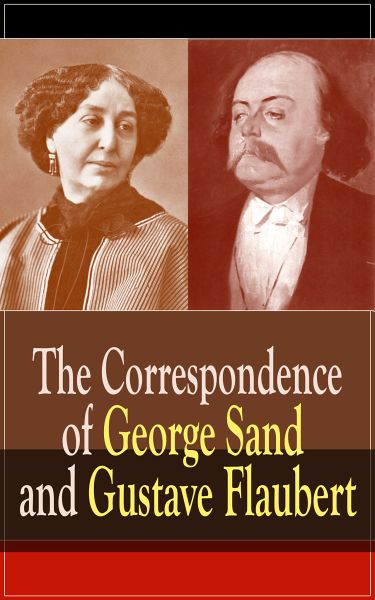
This carefully crafted ebook: "The Correspondence of George Sand and Gustave Flaubert" is formatted for your eReader with a functional and detailed table of contents. Gustave Flaubert (1821-1880) was an influential French writer who was perhaps the leading exponent of literary realism of his country. He is known especially for his first published novel, Madame Bovary, for his Correspondence, and for his scrupulous devotion to his style and aesthetics. The celebrated short story writer Maupassant was a protégé of Flaubert. Amantine-Lucile-Aurore Dupin (1804-1876), best known by her pseudonym George Sand, was a French novelist and memoirist. She is equally well known for her much publicized romantic affairs with a number of artists, including the composer and pianist Frédéric Chopin and the writer Alfred de Musset. She corresponded with Gustave Flaubert. Despite their obvious differences in temperament and aesthetic preference, they eventually became close friends. Excerpt: "You worry me when you tell me that your book will blame the patriots for everything that goes wrong. Is that really so? and then the victims! it is quite enough to be undone by one's own fault without having one's own foolishness thrown in one's teeth. Have pity! There are so many fine spirits among them just the same! Christianity has been a fad and I confess that in every age it is a lure when one sees only the tender side of it; it wins the heart. One has to consider the evil it does in order to get rid of it...."
Dieser Download kann aus rechtlichen Gründen nur mit Rechnungsadresse in A, B, BG, CY, CZ, D, DK, EW, FIN, F, GR, H, IRL, I, LT, L, LR, M, NL, PL, P, R, S, SLO, SK ausgeliefert werden.