45,95 €
45,95 €
inkl. MwSt.
Sofort per Download lieferbar

23 °P sammeln
45,95 €
Als Download kaufen
45,95 €
inkl. MwSt.
Sofort per Download lieferbar
23 °P sammeln
Jetzt verschenken
Alle Infos zum eBook verschenken
45,95 €
inkl. MwSt.
Sofort per Download lieferbar
Alle Infos zum eBook verschenken
23 °P sammeln

Andere Kunden interessierten sich auch für
") Africa and International Criminal Justice (eBook, ePUB)41,95 €
Africa and International Criminal Justice (eBook, ePUB)41,95 €") The Courts of Genocide (eBook, PDF)45,95 €
The Courts of Genocide (eBook, PDF)45,95 €") Britain's Hidden Role in the Rwandan Genocide (eBook, ePUB)51,95 €
Britain's Hidden Role in the Rwandan Genocide (eBook, ePUB)51,95 €") The Protection of Cultural Heritage During Armed Conflict (eBook, ePUB)22,95 €
The Protection of Cultural Heritage During Armed Conflict (eBook, ePUB)22,95 €") The Concept of Genocide in International Criminal Law (eBook, ePUB)41,95 €
The Concept of Genocide in International Criminal Law (eBook, ePUB)41,95 €") Transitional Justice, Corporate Accountability and Socio-Economic Rights (eBook, ePUB)43,95 €
Transitional Justice, Corporate Accountability and Socio-Economic Rights (eBook, ePUB)43,95 €") Classifying Genocide in International Law (eBook, ePUB)39,95 €
Classifying Genocide in International Law (eBook, ePUB)39,95 €
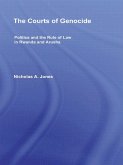


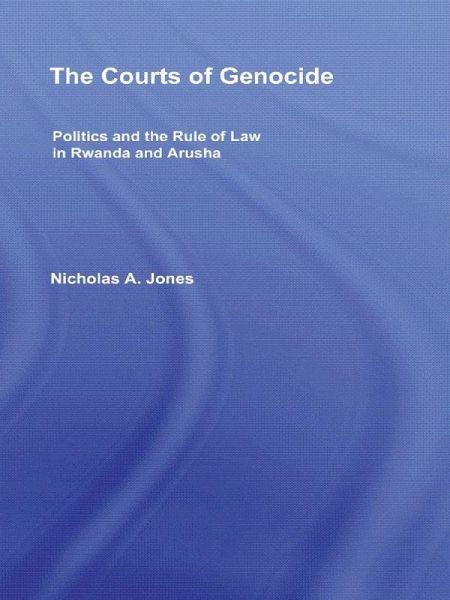
The Courts of Genocide focuses on the judicial response to the genocide in Rwanda in order to address the search for justice following mass atrocities. The central concern of the book is how the politics of justice can get in the way of its administration. Considering both the ICTR (International Criminal tribunal for Rwanda), and all of the politics surrounding its work, and the Rwandan approach (the Gacaca courts and the national judiciary) and the politics that surround it, The Courts of Genocide addresses the relationship between these three 'courts' which, whilst oriented by similar concerns, stand in stark opposition to each other. In this respect, the book addresses a series of questions, including: What aspects of the Rwandan genocide itself played a role in directing the judicial response that has been adopted? On what basis did the government of Rwanda decide to address the genocide in a legalistic manner? Around what goals has each judicial response been organized? What are the specific procedures and processes of this response? And, finally, what challenges does its multifaceted character create for those involved in its operation, well as for Rwandan society? Addressing conceptual issues of restorative and retributive justice, liberal legalism and cosmopolitan law, The Courts of Genocide constitutes a substantially grounded reflection upon the problem of 'doing justice' after genocide.
Dieser Download kann aus rechtlichen Gründen nur mit Rechnungsadresse in A, B, BG, CY, CZ, D, DK, EW, E, FIN, F, GR, HR, H, IRL, I, LT, L, LR, M, NL, PL, P, R, S, SLO, SK ausgeliefert werden.