
28,95 €
inkl. MwSt.
Sofort per Download lieferbar
14 °P sammeln

Andere Kunden interessierten sich auch für
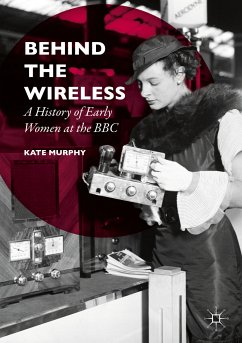
") Behind the Wireless (eBook, PDF)24,95 €
Behind the Wireless (eBook, PDF)24,95 €") 50 Schlüsselideen Physik (eBook, PDF)16,99 €
50 Schlüsselideen Physik (eBook, PDF)16,99 €") Die Mechanisierung des Weltbildes (eBook, PDF)59,99 €
Die Mechanisierung des Weltbildes (eBook, PDF)59,99 €") Smart Robots (eBook, PDF)160,95 €
Smart Robots (eBook, PDF)160,95 €") The Nuclear Lion (eBook, PDF)40,95 €
The Nuclear Lion (eBook, PDF)40,95 €") Einstein's Dream (eBook, PDF)40,95 €
Einstein's Dream (eBook, PDF)40,95 €") The Square Root of 2 (eBook, PDF)28,95 €
The Square Root of 2 (eBook, PDF)28,95 €
Offers well-tested advice, having been used by research engineers and scientists at many national labs and universities for over twenty years
Uses scores of interesting examples to teach the principles of scientific writing
Fun to read and conversational, focusing on the stylistic traits that distinguish the best scientific writing
Has a popular accompanying website which contains many supporting materials for readers of the book and teachers using as a course text
Uses scores of interesting examples to teach the principles of scientific writing
Fun to read and conversational, focusing on the stylistic traits that distinguish the best scientific writing
Has a popular accompanying website which contains many supporting materials for readers of the book and teachers using as a course text
Dieser Download kann aus rechtlichen Gründen nur mit Rechnungsadresse in A, B, BG, CY, CZ, D, DK, EW, E, FIN, F, GR, HR, H, IRL, I, LT, L, LR, M, NL, PL, P, R, S, SLO, SK ausgeliefert werden.
"Alley gives thorough explanations and color-coded examples about what constitutes a problem and how to fix it, and visual indicators help readers discern the severity of issues being critical, distracting, or cosmetic. The Craft of Scientific Writing is a book that can be valuable to practicing writers who want to work toward more effective, clear scientific writing for a variety of audiences." (Diane Martinez, Technical Communication, Vol. 65 (4), November, 2018)
"The author discusses the many challenges and distinctions in scientific writing, and the effects that good or bad writing can have on one's career. ... Using real-world writing examples and a host of graphics and figures, the author effectively demonstrates what works, what doesn't, and why. ... This easy-to-digest guide will be useful for engineers, scientists, and anyone interested in writing for a science-minded audience, or about science-related topics." (S. Markgren, Choice, Vol. 56 (03), November, 2018)
"The author discusses the many challenges and distinctions in scientific writing, and the effects that good or bad writing can have on one's career. ... Using real-world writing examples and a host of graphics and figures, the author effectively demonstrates what works, what doesn't, and why. ... This easy-to-digest guide will be useful for engineers, scientists, and anyone interested in writing for a science-minded audience, or about science-related topics." (S. Markgren, Choice, Vol. 56 (03), November, 2018)