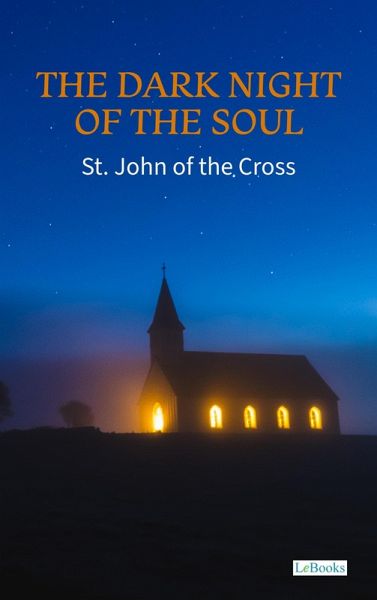
1,90 €
1,90 €
inkl. MwSt.
Sofort per Download lieferbar

0 °P sammeln
1,90 €
Als Download kaufen
1,90 €
inkl. MwSt.
Sofort per Download lieferbar
0 °P sammeln
Jetzt verschenken
Alle Infos zum eBook verschenken
1,90 €
inkl. MwSt.
Sofort per Download lieferbar
Alle Infos zum eBook verschenken
0 °P sammeln

Andere Kunden interessierten sich auch für
") Ascent of Mount Carmel - St. John of the Cross (eBook, ePUB)1,90 €
Ascent of Mount Carmel - St. John of the Cross (eBook, ePUB)1,90 €") The Dark Night of the Soul (eBook, ePUB)6,99 €
The Dark Night of the Soul (eBook, ePUB)6,99 €") Dark Night of The Soul (eBook, ePUB)2,99 €
Dark Night of The Soul (eBook, ePUB)2,99 €") Chilling True Singapore Ghost Stories & Hauntingly Eerie Tales to Tell in the Dark Night (eBook, ePUB)7,99 €
Chilling True Singapore Ghost Stories & Hauntingly Eerie Tales to Tell in the Dark Night (eBook, ePUB)7,99 €") Chilling True Singapore Ghost Stories & Hauntingly Eerie Tales to Tell in the Dark Night Spirit of the Glass Collection (eBook, ePUB)11,33 €
Chilling True Singapore Ghost Stories & Hauntingly Eerie Tales to Tell in the Dark Night Spirit of the Glass Collection (eBook, ePUB)11,33 €") It Was a Dark and Creepy Night (eBook, ePUB)13,95 €
It Was a Dark and Creepy Night (eBook, ePUB)13,95 €") The Supernatural Mysteries of Dr. John Silence (eBook, ePUB)0,49 €
The Supernatural Mysteries of Dr. John Silence (eBook, ePUB)0,49 €

The Dark Night of the Soul is one of the most profound and influential works of Christian mysticism, written by St. John of the Cross in the late 16th century. Structured as both a poem and a detailed commentary, the work explores the spiritual journey of the soul as it moves from the darkness of purification toward the radiant union with God. The "dark night" represents not only suffering or desolation but a transformative process through which the soul is stripped of attachments, pride, and illusions, allowing it to encounter divine love in its purest form. The poem begins with the soul departing in secret, guided by love, into a night illuminated only by the inner light of faith. This night symbolizes both the renunciation of worldly desires and the spiritual trials that prepare the soul for union with God. St. John divides the process into two main stages: the night of the senses, in which the soul detaches from material and emotional pleasures, and the night of the spirit, a deeper purification that affects intellect, memory, and will. Only by passing through these stages of emptiness and surrender can the soul be fully united with the divine presence. In his commentary, St. John emphasizes that this "dark night" is not a punishment but an act of divine mercy. God removes all false lights so that the soul may be guided solely by faith and love. The journey is painful because it dismantles the ego, but it leads to a higher form of freedom and serenity. The final stage of the work describes the spiritual marriage, where the soul and God are joined in a bond of perfect love and mutual indwelling-a mystical union beyond words, where the self ceases to seek and simply is in God. John of the Cross (1542-1591) was a Carmelite friar, poet, and one of the most influential mystics in Christian history. A key figure in the reform of the Carmelite Order alongside Teresa of Ávila , he combined rigorous theological insight with lyrical language of extraordinary depth. His works - including Dark Night of the Soul and Living Flame of Love - continue to shape spiritual thought worldwide, offering a timeless vision of the soul's journey to divine union.
Dieser Download kann aus rechtlichen Gründen nur mit Rechnungsadresse in A, B, BG, CY, CZ, D, DK, EW, E, FIN, F, GR, H, IRL, I, LT, L, LR, M, NL, PL, P, R, S, SLO, SK ausgeliefert werden.