31,95 €
31,95 €
inkl. MwSt.
Sofort per Download lieferbar

16 °P sammeln
31,95 €
Als Download kaufen
31,95 €
inkl. MwSt.
Sofort per Download lieferbar
16 °P sammeln
Jetzt verschenken
Alle Infos zum eBook verschenken
31,95 €
inkl. MwSt.
Sofort per Download lieferbar
Alle Infos zum eBook verschenken
16 °P sammeln

Andere Kunden interessierten sich auch für
") The Desire and Passion for a Child (eBook, ePUB)31,95 €
The Desire and Passion for a Child (eBook, ePUB)31,95 €") Pregnancy, Assisted Reproduction, and Psychoanalysis (eBook, PDF)31,95 €
Pregnancy, Assisted Reproduction, and Psychoanalysis (eBook, PDF)31,95 €") Fratriarchy (eBook, PDF)22,95 €
Fratriarchy (eBook, PDF)22,95 €") When Theories Touch (eBook, PDF)64,95 €
When Theories Touch (eBook, PDF)64,95 €") Intersectionality and Group Analysis (eBook, PDF)31,95 €
Intersectionality and Group Analysis (eBook, PDF)31,95 €") The Clinical Paradigms of Donald Winnicott and Wilfred Bion (eBook, PDF)31,95 €
The Clinical Paradigms of Donald Winnicott and Wilfred Bion (eBook, PDF)31,95 €") Femininity, Desire and Sublimation in Psychoanalysis (eBook, PDF)32,95 €
Femininity, Desire and Sublimation in Psychoanalysis (eBook, PDF)32,95 €

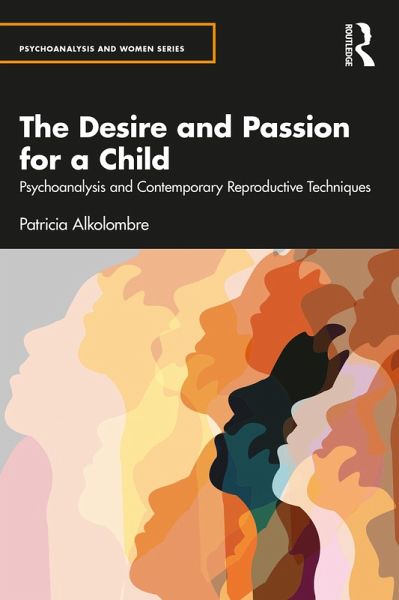
In this book, Patricia Alkolombre explores the desire for a child from a contemporary psychoanalytic perspective, and covers the questions raised in the face of new resources offered by reproductive medicine.
This volume reviews traditional psychoanalytic conceptualisations from the perspective of gender theories and analyses theoretical hegemonies related to the desire and passion for a child. Alkolombre discusses how the 'passion to have a child' is a key aspect of motherhood, characterised by emotional intensity, persistence, and self-sacrificial aspects.
The book is divided into three sections: Part One deals with the desire and passion to have a child, while Part Two focuses on the impact of reproductive techniques, as well as the ever-changing role of parenthood in the modern day. Throughout these fascinating chapters, clinical vignettes of both individual and couple analyses span topics such as mourning, the use of reproductive technology, the anonymity of gamete donors, enigmatic infertility, surrogacy, and abortion from an interdisciplinary perspective. The historical and cultural contexts of infertility are reviewed from a psychoanalytic angle in Part Three with the view of transcending the former androcentric perspective that has deeply influenced the maternal ideal and expectations of men. Alkolombre also proposes a new analysis of the Oedipus myth.
This book is vital reading for psychoanalysts, mental health professionals, teachers and students interested in contemporary parenting, motherhood, and infertility, as well as the theoretical analysis of the desire for a child.
This volume reviews traditional psychoanalytic conceptualisations from the perspective of gender theories and analyses theoretical hegemonies related to the desire and passion for a child. Alkolombre discusses how the 'passion to have a child' is a key aspect of motherhood, characterised by emotional intensity, persistence, and self-sacrificial aspects.
The book is divided into three sections: Part One deals with the desire and passion to have a child, while Part Two focuses on the impact of reproductive techniques, as well as the ever-changing role of parenthood in the modern day. Throughout these fascinating chapters, clinical vignettes of both individual and couple analyses span topics such as mourning, the use of reproductive technology, the anonymity of gamete donors, enigmatic infertility, surrogacy, and abortion from an interdisciplinary perspective. The historical and cultural contexts of infertility are reviewed from a psychoanalytic angle in Part Three with the view of transcending the former androcentric perspective that has deeply influenced the maternal ideal and expectations of men. Alkolombre also proposes a new analysis of the Oedipus myth.
This book is vital reading for psychoanalysts, mental health professionals, teachers and students interested in contemporary parenting, motherhood, and infertility, as well as the theoretical analysis of the desire for a child.
Dieser Download kann aus rechtlichen Gründen nur mit Rechnungsadresse in A, B, BG, CY, CZ, D, DK, EW, E, FIN, F, GR, HR, H, IRL, I, LT, L, LR, M, NL, PL, P, R, S, SLO, SK ausgeliefert werden.
'In The Desire and The Passion for a Child, Patricia Alkolombre offers a deep dive into the implications of emerging reproductive technology for our understanding of a potential parent's relationship to sexuality, the procreative body, and a child's origin story. She portrays the necessity of mourning female and male infertility, a lost pregnancy, and altered experiences of self and intimate other. This is an important book for the psychoanalytic clinician who enters the contemporary biopsychosocial terrain where desire turns to passion. While new technology supports new family constellations, it also risks the creation of a child at any cost.'
Harriet Wolfe, M.D., President, International Psychoanalytical Association
'In this excellent book, Patricia Alkolombre offers us a contemporary psychoanalytic approach to current parenting. Clinical, theoretical, and ethical problems of assisted fertilization circulate throughout the text also grasping on the meanings of sterility in women and men. Key issues such as mourning, abortion, bodies, donation of gametes and surrogate maternity are focused framed in a biotechnological offer in vertiginous development. In this complex journey the author differentiates the desire for a child from thepassion for a child, the latter as a search for narcissistic gratification that leads some women to resort without limit to assisted fertilization. This volume will enrich readers,whether psychoanalysts or not, interested in this crucial topic.'
Leticia Glocer Fiorini M.D., Chair of Sexual and Gender Diversity Studies Committee, International Psychoanalytic Association IPA
Harriet Wolfe, M.D., President, International Psychoanalytical Association
'In this excellent book, Patricia Alkolombre offers us a contemporary psychoanalytic approach to current parenting. Clinical, theoretical, and ethical problems of assisted fertilization circulate throughout the text also grasping on the meanings of sterility in women and men. Key issues such as mourning, abortion, bodies, donation of gametes and surrogate maternity are focused framed in a biotechnological offer in vertiginous development. In this complex journey the author differentiates the desire for a child from thepassion for a child, the latter as a search for narcissistic gratification that leads some women to resort without limit to assisted fertilization. This volume will enrich readers,whether psychoanalysts or not, interested in this crucial topic.'
Leticia Glocer Fiorini M.D., Chair of Sexual and Gender Diversity Studies Committee, International Psychoanalytic Association IPA