0,00 €
0,00 €
inkl. MwSt.
Sofort per Download lieferbar

0 °P sammeln
0,00 €
Als Download kaufen
0,00 €
inkl. MwSt.
Sofort per Download lieferbar
0 °P sammeln
Jetzt verschenken
Alle Infos zum eBook verschenken
0,00 €
inkl. MwSt.
Sofort per Download lieferbar
Alle Infos zum eBook verschenken
0 °P sammeln

Andere Kunden interessierten sich auch für
") The Chimpanzees of Rubondo Island (eBook, ePUB)39,95 €
The Chimpanzees of Rubondo Island (eBook, ePUB)39,95 €") The Dialectical Primatologist (eBook, PDF)0,00 €
The Dialectical Primatologist (eBook, PDF)0,00 €") Indigenous Perspectives on Sacred Natural Sites (eBook, ePUB)49,95 €
Indigenous Perspectives on Sacred Natural Sites (eBook, ePUB)49,95 €") The Promise of Contemporary Primatology (eBook, ePUB)38,95 €
The Promise of Contemporary Primatology (eBook, ePUB)38,95 €") Managing the Return of the Wild (eBook, ePUB)42,95 €
Managing the Return of the Wild (eBook, ePUB)42,95 €") Habitat, Economy and Society in the Central Africa Rain Forest (eBook, ePUB)34,95 €
Habitat, Economy and Society in the Central Africa Rain Forest (eBook, ePUB)34,95 €") Forests as Fuel (eBook, ePUB)25,95 €
Forests as Fuel (eBook, ePUB)25,95 €





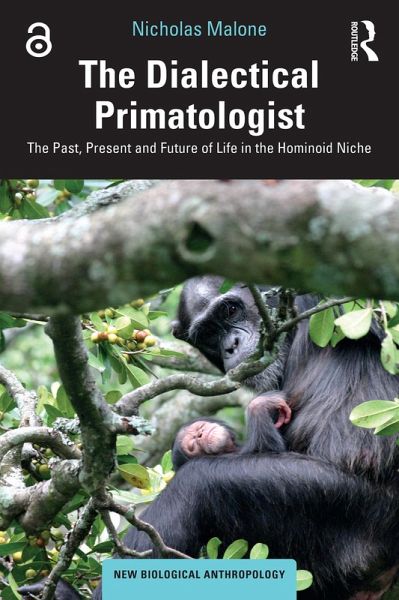
The Dialectical Primatologist identifies the essential parameters vital for the continued coexistence of hominoids (apes and humans), synthesising primate research and conservation in order to develop culturally compelling conservation strategies required for the facilitation of hominoid coexistence.
As unsustainable human activities threaten many primate species with extinction, effective conservation strategies for endangered primates will depend upon our understanding of behavioural response to human-modified habitats. This is especially true for the apes, who are arguably our most powerful connection to the natural world. Recognising the inseparability of the natural and the social, the dialectical approach in this book highlights the heterogeneity and complexity of ecological relationships. Malone stresses that ape conservation requires a synthesis of nature and culture that recognises their inseparability in ecological relationships that are both biophysically and socially formed, and seeks to identify the pathways that lead to either hominoid coexistence or, alternatively, extinction.
This book will be of keen interest to academics in biological anthropology, primatology, environmental anthropology, conservation and human-animal studies.
The Open Access version of this book, available at http://www.taylorfrancis.com, has been made available under a Creative Commons Attribution-Non Commercial-No Derivatives (CC-BY-NC-ND) 4.0 license.
As unsustainable human activities threaten many primate species with extinction, effective conservation strategies for endangered primates will depend upon our understanding of behavioural response to human-modified habitats. This is especially true for the apes, who are arguably our most powerful connection to the natural world. Recognising the inseparability of the natural and the social, the dialectical approach in this book highlights the heterogeneity and complexity of ecological relationships. Malone stresses that ape conservation requires a synthesis of nature and culture that recognises their inseparability in ecological relationships that are both biophysically and socially formed, and seeks to identify the pathways that lead to either hominoid coexistence or, alternatively, extinction.
This book will be of keen interest to academics in biological anthropology, primatology, environmental anthropology, conservation and human-animal studies.
The Open Access version of this book, available at http://www.taylorfrancis.com, has been made available under a Creative Commons Attribution-Non Commercial-No Derivatives (CC-BY-NC-ND) 4.0 license.
Dieser Download kann aus rechtlichen Gründen nur mit Rechnungsadresse in A, B, BG, CY, CZ, D, DK, EW, E, FIN, F, GR, HR, H, IRL, I, LT, L, LR, M, NL, PL, P, R, S, SLO, SK ausgeliefert werden.