36,99 €
inkl. MwSt.
Sofort per Download lieferbar
0 °P sammeln

Andere Kunden interessierten sich auch für
") The Blackwell Guide to the Philosophy of Religion (eBook, PDF)39,99 €
The Blackwell Guide to the Philosophy of Religion (eBook, PDF)39,99 €") God and the Between (eBook, PDF)44,99 €
God and the Between (eBook, PDF)44,99 €") Atheism and Theism (eBook, PDF)113,99 €
Atheism and Theism (eBook, PDF)113,99 €") The Blackwell Companion to The Problem of Evil (eBook, PDF)183,99 €
The Blackwell Companion to The Problem of Evil (eBook, PDF)183,99 €") The Blackwell Companion to Science and Christianity (eBook, PDF)40,99 €
The Blackwell Companion to Science and Christianity (eBook, PDF)40,99 €") Between Naturalism and Religion (eBook, PDF)26,99 €
Between Naturalism and Religion (eBook, PDF)26,99 €") Habermas and Religion (eBook, PDF)24,99 €
Habermas and Religion (eBook, PDF)24,99 €


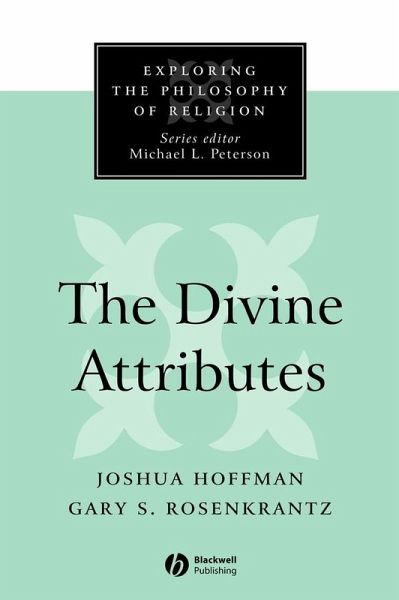
The Divine Attributesis an engaging analysis of the God of Judaism, Christianity, and Islam from the perspective of rational theology. Das E-Book The Divine Attributes wird angeboten von Wiley-Blackwell und wurde mit folgenden Begriffen kategorisiert: judaism; analysis; divine; engaging; attributes; god; theology; perspective; rational; ambitious; rationally; study; ideas; historical; idea; maximally; qualities; great; core; divine attributes; discussions; fundamental; divine power
Dieser Download kann aus rechtlichen Gründen nur mit Rechnungsadresse in D ausgeliefert werden.
"Intellectually rigorous, yet written with great clarity, this bookenables the reader to understand the attributes; omnipotence,omniscience, perfect goodness, eternality, etc. - that makeup the dominant idea of God in Western civilization. Highlyrecommended!" William L. Rowe, Purdue University
"This is a masterly exercise in rational theology by two leadingmetaphysicians. Their rigorous approach and skilful application ofrecent developments in analytical metaphysics make this book atonce authoritative, lucid, and compelling. As well as being anextremely valuable resource for students and teachers of philosophyand theology, it advances contemporary debate about the properunderstanding of God's nature in important and interesting newways." E. J. Lowe, University of Durham
"This book is excellent: thoughtful, rigorous, and systematic.In addition to being a penetrating and sophisticated work, it isalso highly readable." John Fischer, University of California atRiverside
"This is a masterly exercise in rational theology by two leadingmetaphysicians. Their rigorous approach and skilful application ofrecent developments in analytical metaphysics make this book atonce authoritative, lucid, and compelling. As well as being anextremely valuable resource for students and teachers of philosophyand theology, it advances contemporary debate about the properunderstanding of God's nature in important and interesting newways." E. J. Lowe, University of Durham
"This book is excellent: thoughtful, rigorous, and systematic.In addition to being a penetrating and sophisticated work, it isalso highly readable." John Fischer, University of California atRiverside