38,95 €
inkl. MwSt.
Sofort per Download lieferbar
19 °P sammeln

Andere Kunden interessierten sich auch für
") Film Comedy and the American Dream (eBook, PDF)41,95 €
Film Comedy and the American Dream (eBook, PDF)41,95 €") Lady Bird (eBook, PDF)21,95 €
Lady Bird (eBook, PDF)21,95 €") All that Hollywood Allows (eBook, PDF)24,95 €
All that Hollywood Allows (eBook, PDF)24,95 €") Dream Lovers (eBook, PDF)92,95 €
Dream Lovers (eBook, PDF)92,95 €") Roberto Busa, S. J., and the Emergence of Humanities Computing (eBook, PDF)38,95 €
Roberto Busa, S. J., and the Emergence of Humanities Computing (eBook, PDF)38,95 €") Media Globalization and the Discovery Channel Networks (eBook, PDF)46,95 €
Media Globalization and the Discovery Channel Networks (eBook, PDF)46,95 €") Desperately Seeking the Audience (eBook, PDF)40,95 €
Desperately Seeking the Audience (eBook, PDF)40,95 €





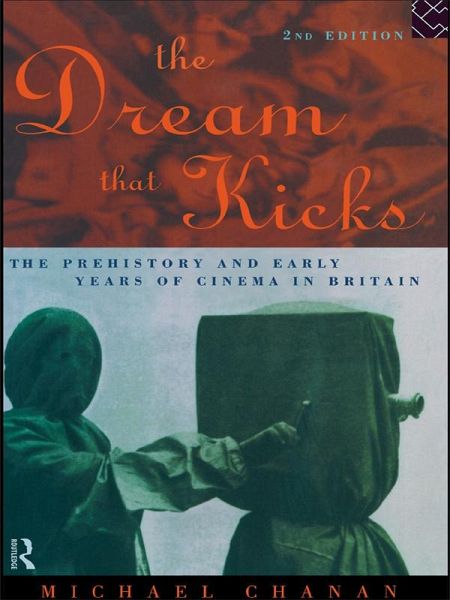
The Dream the Kicks is a classic account of the prehistory and early years of cinema in Britain. In this new paperback edition, which has been thoroughly revised to take into account recent scholarship of early cinema, Michael Chanan provides a fasciniating account of the rich and hitherto hidden history of the origins of film.
Chanan demonstrates that the theory of `the persistence of vision', which led to the invention of moving pictures, has been superceded by modern scientific findings. In its place, he puts forward a theory of invention as a type of bricolage, and shows that cinematography was a product of the forces of nineteenth century capitalism. He discusses the wealth of influences, both popular and bourgeois, on the culture of early cinema, including diorama, the magic lantern, itinerant entertainers and music hall. He looks at the relationship between film and photography, and considers the nascent film business, the ways in which early cinema was received by its audiences and the developing aesthetics of cinema in its first fifteen years.
Chanan demonstrates that the theory of `the persistence of vision', which led to the invention of moving pictures, has been superceded by modern scientific findings. In its place, he puts forward a theory of invention as a type of bricolage, and shows that cinematography was a product of the forces of nineteenth century capitalism. He discusses the wealth of influences, both popular and bourgeois, on the culture of early cinema, including diorama, the magic lantern, itinerant entertainers and music hall. He looks at the relationship between film and photography, and considers the nascent film business, the ways in which early cinema was received by its audiences and the developing aesthetics of cinema in its first fifteen years.
Dieser Download kann aus rechtlichen Gründen nur mit Rechnungsadresse in A, B, BG, CY, CZ, D, DK, EW, E, FIN, F, GR, HR, H, IRL, I, LT, L, LR, M, NL, PL, P, R, S, SLO, SK ausgeliefert werden.