Sie sind bereits eingeloggt. Klicken Sie auf 2. tolino select Abo, um fortzufahren.
Bitte loggen Sie sich zunächst in Ihr Kundenkonto ein oder registrieren Sie sich bei bücher.de, um das eBook-Abo tolino select nutzen zu können.
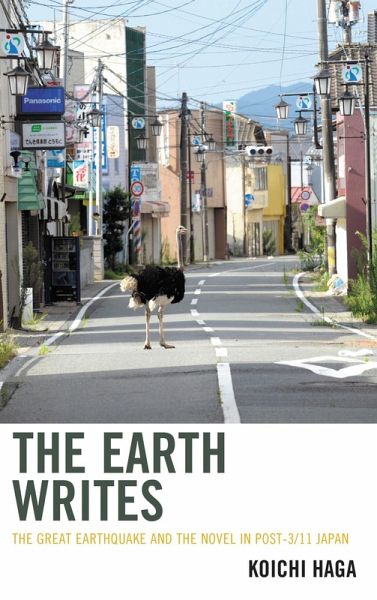
This book extensively analyzes the literary works of fiction that draw on the Great East Japan Earthquake and Tsunami that occurred on March 11, 2011. This disaster inspired literally hundreds of fictional works in Japan from the time of the events through 2017. This response represents a unique and perhaps unprecedented cultural phenomenon in the world. Since a variety of writers in different genres, and even amateurs, have written and published books inspired by their experiences of the disaster, it is extremely difficult to cover the entire body of Japanese "post-3.11 literature". Because…mehr
This book extensively analyzes the literary works of fiction that draw on the Great East Japan Earthquake and Tsunami that occurred on March 11, 2011. This disaster inspired literally hundreds of fictional works in Japan from the time of the events through 2017. This response represents a unique and perhaps unprecedented cultural phenomenon in the world. Since a variety of writers in different genres, and even amateurs, have written and published books inspired by their experiences of the disaster, it is extremely difficult to cover the entire body of Japanese "post-3.11 literature". Because of the breadth of this literary response, there is a scarcity of research on the subject available. This book offers the first comprehensive review of Japan's recent post-disaster literary production to the English audience.
Die Herstellerinformationen sind derzeit nicht verfügbar.
Autorenporträt
Koichi Haga is associate professor of Japanese and Comparative Literature at Josai International University in Japan.
Inhaltsangabe
Acknowledgments Introduction: Overview of Post 3.11 Cultural Production Part I:The Immediate Impact of the 3.11 Disaster on the Writers' Consciousness Chapter One. Ecological Time-Space Emerging from the Encounter with the 3.11 Earthquake and Tsunami: The first phase of Post 3.11 literary production Chapter Two. Fissures Opened in Literary Ground: The Great East Japan Earthquake and Kenzaburo Oe's In Late Style Chapter Three. Animal Agencies in Post-3.11 Literature Part II: Acceleration of the Writers' Ecological Consciousness Chapter Four. Remembrance of Postcolonial Conditions?The Earthquake's Disclosure of Uncommon Ground: Tohoku Area as the Other Within Chapter Five. Dystopian Novels Flourish in the Post-3.11 Period Chapter Six. The Emergence of a Planetary Sense Through Geographic Catastrophe Conclusion Bibliography Index About the Author
Es gelten unsere Allgemeinen Geschäftsbedingungen: www.buecher.de/agb
Impressum
www.buecher.de ist ein Internetauftritt der buecher.de internetstores GmbH
Geschäftsführung: Monica Sawhney | Roland Kölbl | Günter Hilger
Sitz der Gesellschaft: Batheyer Straße 115 - 117, 58099 Hagen
Postanschrift: Bürgermeister-Wegele-Str. 12, 86167 Augsburg
Amtsgericht Hagen HRB 13257
Steuernummer: 321/5800/1497
USt-IdNr: DE450055826