
15,99 €
15,99 €
inkl. MwSt.
Sofort per Download lieferbar

0 °P sammeln
15,99 €
Als Download kaufen
15,99 €
inkl. MwSt.
Sofort per Download lieferbar
0 °P sammeln
Jetzt verschenken
Alle Infos zum eBook verschenken
15,99 €
inkl. MwSt.
Sofort per Download lieferbar
Alle Infos zum eBook verschenken
0 °P sammeln

Andere Kunden interessierten sich auch für
") Suburban Lifestyle and the American Dream in 'Dinner with Friends' by Norman Jewison (eBook, PDF)13,99 €
Suburban Lifestyle and the American Dream in 'Dinner with Friends' by Norman Jewison (eBook, PDF)13,99 € The Calm of Mountains. Serenity, Rebirth, and the Struggle Between Good and Evil in W.H. Auden's "Herman Melville" (eBook, PDF)6,99 €
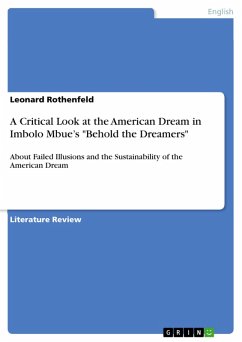
 A Critical Look at the American Dream in Imbolo Mbue's "Behold the Dreamers" (eBook, PDF)3,99 €
 The Uncanny and the Fantastic in H. P. Lovecrafts "Pickman's Model" (eBook, PDF)13,99 €
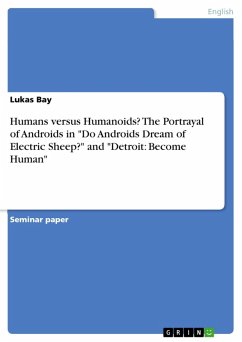
 Humans versus Humanoids? The Portrayal of Androids in "Do Androids Dream of Electric Sheep?" and "Detroit: Become Human" (eBook, PDF)13,99 €
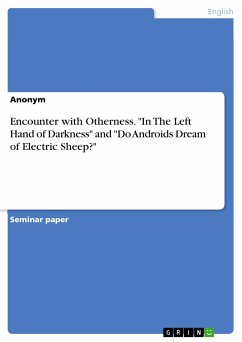
 Encounter with Otherness. "In The Left Hand of Darkness" and "Do Androids Dream of Electric Sheep?" (eBook, PDF)13,99 €
") Trends und Thematiken zeitgenössischer amerikanischer Romane (eBook, PDF)5,99 €
Trends und Thematiken zeitgenössischer amerikanischer Romane (eBook, PDF)5,99 €




Bachelor Thesis from the year 2023 in the subject American Studies - Miscellaneous, grade: 1.0, Johannes Gutenberg University Mainz, language: English, abstract: This work explores how Indigenous literature, particularly "The Marrow Thieves" by Métis author Cherie Dimaline, responds to environmental destruction and climate change. Set in a dystopian near-future Canada devastated by ecological collapse, the novel follows a group of Indigenous characters fleeing from settlers who harvest their bone marrow, believed to be the cure for a mysterious illness that prevents non-Indigenous people from dreaming. The novel critiques ongoing colonial violence and its connection to environmental exploitation, highlighting how Indigenous communities are disproportionately affected by both. Through its characters and story, "The Marrow Thieves" shows the resilience of Indigenous peoples and the importance of traditional knowledge in surviving ecological crises. It challenges dominant ideas of development and progress, instead emphasizing the deep, interdependent relationship between humans and the natural world. This analysis uses eco-criticism and postcolonial theory to explore how Dimaline's novel exposes the roots of environmental collapse in colonial history and calls for a rethinking of our relationship with the environment, one guided by Indigenous perspectives and values.
Dieser Download kann aus rechtlichen Gründen nur mit Rechnungsadresse in A, B, BG, CY, CZ, D, DK, EW, E, FIN, F, GR, HR, H, IRL, I, LT, L, LR, M, NL, PL, P, R, S, SLO, SK ausgeliefert werden.