0,99 €
inkl. MwSt.
Sofort per Download lieferbar

payback
0 °P sammeln
  • Format: ePub

"I have waited for you for three hundred years." When a young man inherits a grand, ancient house from a distant relative, he discovers a striking portrait of a beautiful woman, encased in a magnificent, intricately carved ebony frame. Drawn to her haunting gaze, he soon realizes that the woman in the painting is more than mere oil and pigment. She is a soul from the past, bound by a dark pact and a love that refuses to stay buried. As the boundary between the present and the Elizabethan era begins to dissolve, he must decide if he is willing to sacrifice his reality for a phantom bride. A…mehr

  • Geräte: eReader
  • ohne Kopierschutz
  • eBook Hilfe
  • Größe: 0.25MB
  • FamilySharing(5)
Produktbeschreibung
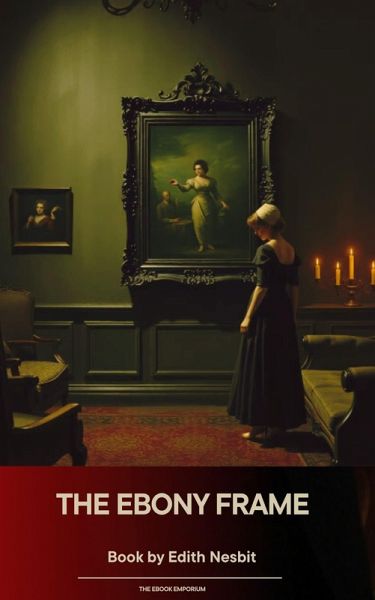
"I have waited for you for three hundred years." When a young man inherits a grand, ancient house from a distant relative, he discovers a striking portrait of a beautiful woman, encased in a magnificent, intricately carved ebony frame. Drawn to her haunting gaze, he soon realizes that the woman in the painting is more than mere oil and pigment. She is a soul from the past, bound by a dark pact and a love that refuses to stay buried. As the boundary between the present and the Elizabethan era begins to dissolve, he must decide if he is willing to sacrifice his reality for a phantom bride. A Masterpiece of Atmospheric Horror: Before she became a pioneer of children's fantasy, Edith Nesbit was a master of the "shilling shocker." The Ebony Frame is a quintessential example of the Fin de Siècle ghost story, blending the elegance of Victorian prose with a visceral sense of dread. It explores the dangerous allure of nostalgia and the terrifying possibility that our ancestors' lives are never truly finished. The Curse of the Unliving: Nesbit expertly weaves elements of the occult and the "femme fatale" archetype into this taut narrative. The ebony frame itself acts as a portal, a physical manifestation of the barrier between life and death. As the protagonist is pulled deeper into the lady's spell, the reader is left to wonder: is this a romantic reunion of soulmates, or a predatory haunting designed to steal a living soul? True love never dies-it waits. Purchase "The Ebony Frame" today and step into a world of spectral romance.

Dieser Download kann aus rechtlichen Gründen nur mit Rechnungsadresse in A, B, BG, CY, CZ, D, DK, EW, E, FIN, F, GR, H, IRL, I, LT, L, LR, M, NL, PL, P, R, S, SLO, SK ausgeliefert werden.

Autorenporträt
Edith Nesbit (married name Edith Bland; 15 August 1858 4 May 1924) was an English author and poet; she published her books for children under the name of E. Nesbit.She wrote or collaborated on over 60 books of fiction for children, several of which have been adapted for film and television. She was also a political activist and co-founded the Fabian Society, a socialist organisation later connected to the Labour Party.Edith Nesbit was born in Kennington, Surrey, the daughter of agricultural chemist and schoolmaster John Collis Nesbit. The death of her father when she was four and the continuing ill health of her sister meant that Nesbit had a transitory childhood, her family moving across Europe in search of healthy climates only to return to England for financial reasons. Nesbit therefore spent her childhood attaining an education from whatever sources were availablelocal grammars, the occasional boarding school but mainly through reading.At 17 her family finally settled in London and aged 19, Nesbit met Hubert Bland, a political activist and writer. They became lovers and when Nesbit found she was pregnant they became engaged, marrying in April 1880. After this scandalous (for Victorian society) beginning, the marriage would be an unconventional one. Initially, the couple lived separatelyNesbit with her family and Bland with his mother and her live-in companion Maggie Doran.Initially, Edith Nesbit books were novels meant for adults, including The Prophet's Mantle (1885) and The Marden Mystery (1896) about the early days of the socialist movement. Written under the pen name of her third child 'Fabian Bland', these books were not successful. Nesbit generated an income for the family by lecturing around the country on socialism and through her journalism (she was editor of the Fabian Society's journal, Today).In 1899 she had published The Adventures of the Treasure Seekers to great acclaim.
