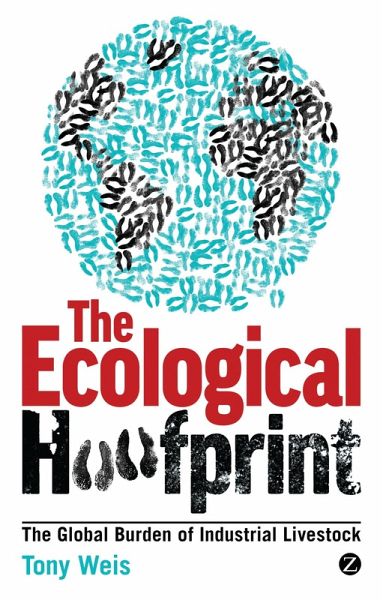
16,95 €
inkl. MwSt.
Sofort per Download lieferbar
8 °P sammeln

Andere Kunden interessierten sich auch für
") The Ecological Hoofprint (eBook, ePUB)16,95 €
The Ecological Hoofprint (eBook, ePUB)16,95 €") Beyond the Profits System (eBook, PDF)18,95 €
Beyond the Profits System (eBook, PDF)18,95 €") Business, Politics, and the State in Africa (eBook, PDF)20,95 €
Business, Politics, and the State in Africa (eBook, PDF)20,95 €") Trade, Growth and Inequality in the Era of Globalization (eBook, PDF)45,95 €
Trade, Growth and Inequality in the Era of Globalization (eBook, PDF)45,95 €") Membership Based Organizations of the Poor (eBook, PDF)15,95 €
Membership Based Organizations of the Poor (eBook, PDF)15,95 €") Overcoming Inequality in Latin America (eBook, PDF)51,95 €
Overcoming Inequality in Latin America (eBook, PDF)51,95 €") Homes at Work (eBook, PDF)39,95 €
Homes at Work (eBook, PDF)39,95 €

The exploding global consumption of meat is implicated in momentous but greatly underappreciated problems, and industrial livestock production is the driving force behind soaring demand.
Following his previous ground-breaking book The Global Food Economy, Tony Weis explains clearly why the growth and industrialization of livestock production is a central part of the accelerating biophysical contradictions of industrial capitalist agriculture.
The Ecological Hoofprint provides a rigorous and eye-opening way of understanding what this system means for the health of the planet, how it contributes to worsening human inequality, and how it constitutes a profound but invisible aspect of the violence of everyday life.
Following his previous ground-breaking book The Global Food Economy, Tony Weis explains clearly why the growth and industrialization of livestock production is a central part of the accelerating biophysical contradictions of industrial capitalist agriculture.
The Ecological Hoofprint provides a rigorous and eye-opening way of understanding what this system means for the health of the planet, how it contributes to worsening human inequality, and how it constitutes a profound but invisible aspect of the violence of everyday life.