Sie sind bereits eingeloggt. Klicken Sie auf 2. tolino select Abo, um fortzufahren.
Bitte loggen Sie sich zunächst in Ihr Kundenkonto ein oder registrieren Sie sich bei bücher.de, um das eBook-Abo tolino select nutzen zu können.
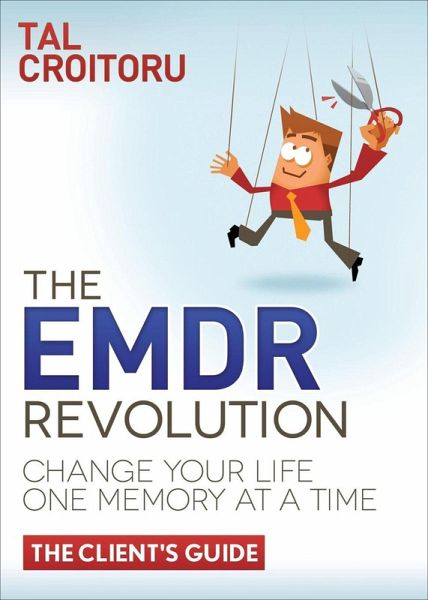
From a certified EDMR consultant and therapist, a guide to understanding EDMR, an alternative therapy for trauma recovery and personal growth. There are only three evidence-based therapies for trauma: prolonged-exposure therapy (PE), Eye Movement Desensitization and Reprocessing (EMDR), and cognitive behavior therapy (CBT). EMDR was found to help in fewer sessions and does not require homework between sessions, making it the fastest evidence-based therapy there is. It is the classic treatment for veterans and those suffering the effects of traumatic events such as hurricanes and other forms of…mehr
From a certified EDMR consultant and therapist, a guide to understanding EDMR, an alternative therapy for trauma recovery and personal growth. There are only three evidence-based therapies for trauma: prolonged-exposure therapy (PE), Eye Movement Desensitization and Reprocessing (EMDR), and cognitive behavior therapy (CBT). EMDR was found to help in fewer sessions and does not require homework between sessions, making it the fastest evidence-based therapy there is. It is the classic treatment for veterans and those suffering the effects of traumatic events such as hurricanes and other forms of devastation. EMDR is a great supplement for personal-development. After recognizing your limiting beliefs, with EMDR you can reprocess them so you don't need to keep fighting them, and you can free all your energy towards the future. We are mistakenly told that there is nothing we can do to change the past, so we need to ignore it and concentrate on the present. But this is not true. The past "hunts" us via our memories. With EMDR we can change the way our past is stored in our brain-and thus the way we are influenced by it-allowing us to change our life one memory at a time. Inside The EMDR Revolutionyou will discover the important information you need when feeling distressed or inhibited, as a way to select the appropriate help.
Die Herstellerinformationen sind derzeit nicht verfügbar.
Autorenporträt
Tal Croitoru, M.S.W, M.B.A., is a certified EMDR consultant and therapist and CEO of EMDR Experts Israel, a chain of EMDR clinics throughout Israel. She is also CEO of EMDR Experts International for psycho-education resources about EMDR and premium EMDR therapy online. She is a doctoral researcher and external lecturer for social work at University of Haifa.
Inhaltsangabe
Introduction Foreword—Or “How in God’s Name did I not hear of this before?” Chapter 1: What is EMDR, and how does it differ from the psychological treatment methods that predate it? For whom is the treatment appropriate? For what ages is EMDR appropriate? Summary: In which kinds of situations is EMDR useful? How is it that EMDR can be used to treat so many types of problems? CHAPTER 2: How does EMDR work? EMDR Protocol — ?What happens in the treatment room Where do the memories we work on come from? Side effects Limitations Chapter 3: Letting go of the past Problems masquerading as other problems Breakups and divorce Brick by brick — a memory feeding other memories Dead end Aiming low Awareness is overrated More unfortunate connections Solutions and “solutions” Postpartum depression Driving anxiety, flying anxiety and other anxieties Sexual performance anxiety Tantrums/Fits of rage Post-traumatic reaction to extreme events When the therapy is not working Chapter 4: Moving Forward — EMDR for improving achievements Removing internal psychological obstacles Procrastination Improving performance to attain peak achievements Personal growth Chapter 5: Demonstration of EMDR analysis of a specific field: Fear of public speaking What happens to our bodies in real time during anxiety? First aid for fear of public speaking What psychological treatments offered for fear of public speaking in the past and what they can offer today CHAPTER 6: Additional information on EMDR The battle over EMDR My philosophy and worldview as a therapist Inspired by EMDR inventor Dr. Francine Shapiro: ?How awareness advances scientific achievement About the author Acknowledgments Appendices: A: When should one go to therapy and how can it help? B: Seven common (and costly) myths about psychotherapy C: Criteria for choosing psychological treatment D: Recommended criteria for selecting an EMDR therapist E: First aid in case of emergency F: How to know if one is receiving a successful therapy? G: Common positive and negative beliefs Personal message from the author
Es gelten unsere Allgemeinen Geschäftsbedingungen: www.buecher.de/agb
Impressum
www.buecher.de ist ein Internetauftritt der buecher.de internetstores GmbH
Geschäftsführung: Monica Sawhney | Roland Kölbl | Günter Hilger
Sitz der Gesellschaft: Batheyer Straße 115 - 117, 58099 Hagen
Postanschrift: Bürgermeister-Wegele-Str. 12, 86167 Augsburg
Amtsgericht Hagen HRB 13257
Steuernummer: 321/5800/1497
USt-IdNr: DE450055826