42,95 €
42,95 €
inkl. MwSt.
Sofort per Download lieferbar

21 °P sammeln
42,95 €
Als Download kaufen
42,95 €
inkl. MwSt.
Sofort per Download lieferbar
21 °P sammeln
Jetzt verschenken
Alle Infos zum eBook verschenken
42,95 €
inkl. MwSt.
Sofort per Download lieferbar
Alle Infos zum eBook verschenken
21 °P sammeln

Andere Kunden interessierten sich auch für
") The Emergence of the Nobility in East Central Europe between the Eighth and Thirteenth Centuries (eBook, PDF)42,95 €
The Emergence of the Nobility in East Central Europe between the Eighth and Thirteenth Centuries (eBook, PDF)42,95 €") European Women's Letter-writing from the 11th to the 20th Centuries (eBook, ePUB)0,00 €
European Women's Letter-writing from the 11th to the 20th Centuries (eBook, ePUB)0,00 €") Paganism, Christianity, Lords and Peasants in the Iberian Early Middle Ages, 4th to 8th Centuries (eBook, ePUB)42,95 €
Paganism, Christianity, Lords and Peasants in the Iberian Early Middle Ages, 4th to 8th Centuries (eBook, ePUB)42,95 €") Europe in the Fourteenth and Fifteenth Centuries (eBook, ePUB)52,95 €
Europe in the Fourteenth and Fifteenth Centuries (eBook, ePUB)52,95 € (eBook, ePUB)") The Hypotyposis of the Monastery of the Theotokos Evergetis, Constantinople (11th-12th Centuries) (eBook, ePUB)52,95 €
The Hypotyposis of the Monastery of the Theotokos Evergetis, Constantinople (11th-12th Centuries) (eBook, ePUB)52,95 €") The Emergence of León-Castile c.1065-1500 (eBook, ePUB)38,95 €
The Emergence of León-Castile c.1065-1500 (eBook, ePUB)38,95 €") Byzantium and the Emergence of Muslim-Turkish Anatolia, ca. 1040-1130 (eBook, ePUB)42,95 €
Byzantium and the Emergence of Muslim-Turkish Anatolia, ca. 1040-1130 (eBook, ePUB)42,95 €





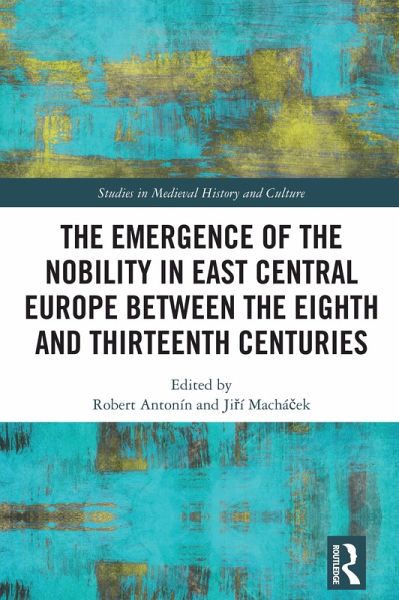
The Emergence of the Nobility in East Central Europe between the Eighth and Thirteenth Centuries explores the formation and evolution of medieval elites in the frontier and peripheral regions of the Frankish/East Frankish Empire and East Central Europe between the eighth and thirteenth centuries. It addresses the dynamics of elite emergence during a transformative era marked by the interaction of established centres and developing borderlands. By focusing on regions such as Saxony, Poland, the Baltic, Bavaria, Carinthia, the Czech lands, Great Moravia, Hungary, and Croatia, the book offers a geographically broad perspective on the mechanisms of power and social hierarchy in early and high medieval Europe.
This book presents the results of comparative research into how elite status was constructed and legitimised, investigating whether this occurred through centralised imposition or organic processes of alliance-building, gift exchange and negotiation. It draws on Pierre Bourdieu's Theory of Practice to analyse the economic, cultural, social and symbolic capital that defined elite status. The volume also considers the influences of indigenous development versus cultural transfer in shaping elite identities and practices. Each contribution offers a case study or regional focus, collectively illustrating both shared patterns and local specificities in elite transformation across centuries.
Targeted at scholars and students of medieval archaeology and history, this interdisciplinary work is equally relevant to researchers interested in social structures, cultural exchange and political power in premodern Europe. Its synthesis of theory, comparative methodology and empirical data makes it a valuable resource for both academic study and future research on elite formation in medieval frontier societies.
This book presents the results of comparative research into how elite status was constructed and legitimised, investigating whether this occurred through centralised imposition or organic processes of alliance-building, gift exchange and negotiation. It draws on Pierre Bourdieu's Theory of Practice to analyse the economic, cultural, social and symbolic capital that defined elite status. The volume also considers the influences of indigenous development versus cultural transfer in shaping elite identities and practices. Each contribution offers a case study or regional focus, collectively illustrating both shared patterns and local specificities in elite transformation across centuries.
Targeted at scholars and students of medieval archaeology and history, this interdisciplinary work is equally relevant to researchers interested in social structures, cultural exchange and political power in premodern Europe. Its synthesis of theory, comparative methodology and empirical data makes it a valuable resource for both academic study and future research on elite formation in medieval frontier societies.
Dieser Download kann aus rechtlichen Gründen nur mit Rechnungsadresse in A, B, BG, CY, CZ, D, DK, EW, E, FIN, F, GR, HR, H, IRL, I, LT, L, LR, M, NL, PL, P, R, S, SLO, SK ausgeliefert werden.