Sie sind bereits eingeloggt. Klicken Sie auf 2. tolino select Abo, um fortzufahren.
Bitte loggen Sie sich zunächst in Ihr Kundenkonto ein oder registrieren Sie sich bei bücher.de, um das eBook-Abo tolino select nutzen zu können.
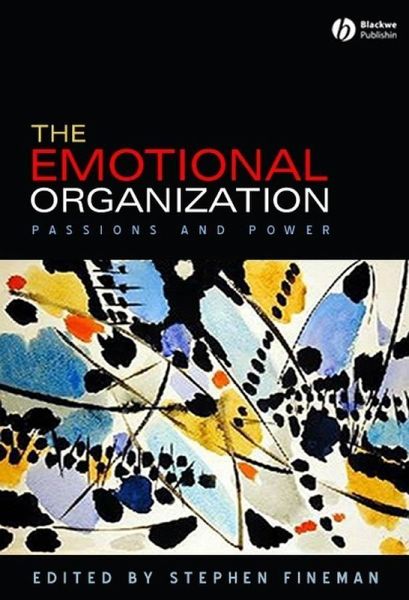
This landmark collection is exclusively devoted to demonstrating/mapping (what is understood today about the power and structural effects of emotion and identity in organizations. Essays at the leading edge of research reveal the influence of workplace cultures, power, and institutional expectations, while also exploring the negative impacts of emotion management in the workplace. * * Brings together an international group of cutting-edge researchers to write critically about emotion in different organizational and cultural settings * Includes research on policy, change, management and…mehr
This landmark collection is exclusively devoted to demonstrating/mapping (what is understood today about the power and structural effects of emotion and identity in organizations. Essays at the leading edge of research reveal the influence of workplace cultures, power, and institutional expectations, while also exploring the negative impacts of emotion management in the workplace. * * Brings together an international group of cutting-edge researchers to write critically about emotion in different organizational and cultural settings * Includes research on policy, change, management and professional practice * Exposes the influence of workplace cultures, power and institutional expectations on emotion * Reveals the darker and oppressive features of emotion management in organizations * Applies recent critical organizational theory to emotion.
Dieser Download kann aus rechtlichen Gründen nur mit Rechnungsadresse in D ausgeliefert werden.
Die Herstellerinformationen sind derzeit nicht verfügbar.
Autorenporträt
Stephen Fineman is a senior professor of Organizational Behavior at the University of Bath's School of Management. Recognized as the first to be published in the field of emotion in organizations, Fineman has been writing on the topic for over 12 years. His works include two successful editions of Emotion in Organizations, key chapters in The Handbook of Organization Studies, and a critique on emotion research in Academy of Management Review.
Inhaltsangabe
List of Contributors. 1. Introducing the Emotional Organization: Stephen Fineman (University of Bath). Part I: Emotional Arenas. The Hospital. 2. Me, Morphine and Humanity: Experiencing the Emotional Community on Ward 8: Sharon Bolton (The University of Strathclyde). The Prison. 3.Power, Paradox, Social Support and Prestige: A Critical Approach to Addressing Correctional Officer Burnout: Sarah Tracy (Arizona State University). Crisis Work. 4. Rape Work: Emotional Dilemmas in Work with Victims: Patricia Yancey Martin, Douglas Schrock, Margaret Leaf and Carmen Von Rohr (Florida State University). The Recreation Centre. 5. In the Gym: Peer Pressure and Emotion Management Among Co-Workers: Mary Haman and Linda Putman (Texas A&M University). The Job Centre. 6. Abuse, Violence and Fear on the Front Line: Implications for the Rise of the Enchanting Myth of Customer Sovereignty: Marek Korczynski (Loughborough University) and Victoria Bishop (The University of Manchester). The Call Centre. 7. Enactments of Class and Nationality in Transnational Call Centres: Kiran Mirchandani (University of Toronto). Web Work. 8. The Gendering of Emotions and Perceived Work Time: Chicks and Geeks at I.com: Nicole L. Kangas and Debra E. Meyerson (Stanford University). Homeworking. 9. Managing the Boundaries of Telework: Gill Musson (Sheffield University) and Katy Marsh (Newcastle University Business School). Consultancy. 10. Management Consultancy and Humour in Action and Context: Andrew Sturdy (The University of Warwick), Timothy Clark (Durham University, Robin Fincham (Stirling University) and Karen Handley(Oxford Brookes University). Part II: Shifting Identities. 11. Becoming a Successful Corporate Character and the Role of Emotion Management: Caroline Hatcher (Queensland University of Technology). 12. Gender and the Emotion Politics of Emotional Intelligence: Stephanie A. Shields (Pennsylvania State University) and Leah R. Warner (Pennsylvania State University). 13. Feeling Out of Place? Towards the Transnationalizations of Emotions: Jeff Hearn (Swedish School of Economics and Business Administration). 14. It's All Too Beautiful: Emotion and Organization in the Esthetic Economy: Philip Hancock (The University of Warwick) and Melissa Tyler (Loughborough University). Epilogue: Stephen Fineman (University of Bath). Index
Rezensionen
"Finally, a book that brings together emotion, power and identity:Steve Fineman has gathered a fine group of researchers and somefascinating studies to provide us with invaluable new insightsabout what it means to work in the emotional organization."Cynthia Hardy, University of Melbourne
"This fresh, innovative collection of essays offers the reader awondrous range of voices - among them an assistant directorfor hospitality on a cruise ship, an intake worker at a rape crisiscenter, a call center trainer coaching trainees to "soundright," and a job center employee managing the frustration ofdespairing job seekers. All these and more provide take-off pointsfor some of the most exciting forays into basic theory of emotionI've seen in a long while. This is a great collection."Arlie Russell Hochschild, Berkeley University
"The study of emotion work has become a fertile area of theoryand research concerning work and identity in modern society. Thisimportant volume adds significantly to this field by providing newtheoretical and empirical insights that will add greatly to thisalready lively field.It will be essential reading for socialscientists with an interest in the nature of the contemporaryworkplace." Alan Bryman, University of Leicester
Es gelten unsere Allgemeinen Geschäftsbedingungen: www.buecher.de/agb
Impressum
www.buecher.de ist ein Internetauftritt der buecher.de internetstores GmbH
Geschäftsführung: Monica Sawhney | Roland Kölbl | Günter Hilger
Sitz der Gesellschaft: Batheyer Straße 115 - 117, 58099 Hagen
Postanschrift: Bürgermeister-Wegele-Str. 12, 86167 Augsburg
Amtsgericht Hagen HRB 13257
Steuernummer: 321/5800/1497
USt-IdNr: DE450055826