69,95 €
69,95 €
inkl. MwSt.
Sofort per Download lieferbar

35 °P sammeln
69,95 €
Als Download kaufen
69,95 €
inkl. MwSt.
Sofort per Download lieferbar
35 °P sammeln
Jetzt verschenken
Alle Infos zum eBook verschenken
69,95 €
inkl. MwSt.
Sofort per Download lieferbar
Alle Infos zum eBook verschenken
35 °P sammeln

Andere Kunden interessierten sich auch für
") The End of Driving (eBook, ePUB)79,95 €
The End of Driving (eBook, ePUB)79,95 €") The Sharing Economy and the Relevance for Transport (eBook, ePUB)122,95 €
The Sharing Economy and the Relevance for Transport (eBook, ePUB)122,95 €") Population Loss: The Role of Transportation and Other Issues (eBook, ePUB)122,95 €
Population Loss: The Role of Transportation and Other Issues (eBook, ePUB)122,95 €") The Evolving Impacts of ICT on Activities and Travel Behavior (eBook, ePUB)122,95 €
The Evolving Impacts of ICT on Activities and Travel Behavior (eBook, ePUB)122,95 €") Electric Vehicles for Smart Cities (eBook, ePUB)79,95 €
Electric Vehicles for Smart Cities (eBook, ePUB)79,95 €") The Beijing Convention on the Judicial Sales of Ships (eBook, ePUB)196,95 €
The Beijing Convention on the Judicial Sales of Ships (eBook, ePUB)196,95 €") The Law and Practice of Maritime Liens (eBook, ePUB)226,95 €
The Law and Practice of Maritime Liens (eBook, ePUB)226,95 €





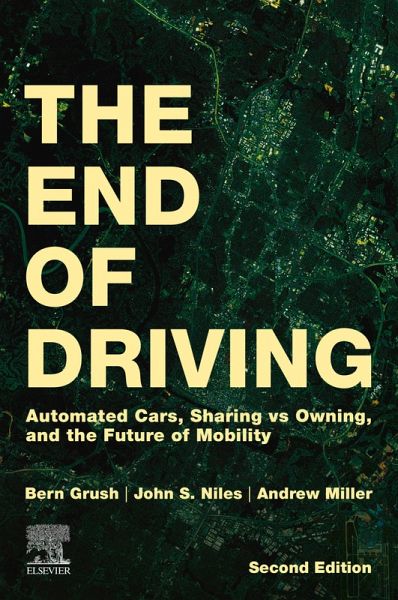
The End of Driving: Automated Cars, Sharing vs Owning, and the Future of Mobility, second edition, examines the complex intersection of vehicle automation, public policy, and social change. It analyzes two competing models for the deployment of driving automation-privately owned, automated, or highly automated vehicles versus on-demand driverless vehicles (robotaxis)-and argues that while robotaxis could offer superior urban mobility, achieving this outcome requires deliberate policy choices. Drawing from early deployments through 2025, this book explores how automated vehicles could advance public interests, including social equity, environmental sustainability, and urban liveability; but only with thoughtful system design and implementation.This thoroughly updated second edition examines the psychological factors influencing transportation choices that will make private vehicle ownership persist; explores the challenges of roads where human drivers and self-driving vehicles will operate simultaneously; and proposes innovative approaches like flexible on-demand transit and targeted financial incentives to encourage shared mobility. This book introduces new concepts, like zero-car-ownership communities, and changes to urban design centered on access to automated transportation.Instead of forecasting specific timelines for automated-driving milestones, this book engages in 'backcasting', identifying how to achieve a desirable future. The End of Driving: Automated Cars, Sharing vs Owning, and the Future of Mobility makes a compelling case that while private vehicle ownership is likely to remain dominant, a transportation system with greater shared mobility is still possible and preferable. Achieving it, however, will require strategic policy interventions to overcome deeply ingrained behavioral patterns and market forces that favor ownership. - Offers a workable public transit solution design melding the traditional "acquire-and-operate" mode with the absorption of new technology - Provides a step-by-step discussion of digital systems designs and effective regulation-by-data approaches needed for a new urban mobility - Learning aids include case study scenarios, chapter objectives and discussion questions, sidebars, a glossary, and updated exercises for student readers at the end of every chapter - New to the second edition: entirely new chapters on Beyond Personal Mobility (including packages and cargo) and the Path to Zero-Car-Ownership, plus new coverage of the complementary role of fixed route surface modes, urban air mobility, the demise of first-generation slow speed vehicle automation, and more
Dieser Download kann aus rechtlichen Gründen nur mit Rechnungsadresse in A, B, BG, CY, CZ, D, DK, EW, E, FIN, F, GR, HR, H, IRL, I, LT, L, LR, M, NL, PL, P, R, S, SLO, SK ausgeliefert werden.