44,99 €
inkl. MwSt.
Sofort per Download lieferbar
0 °P sammeln

Andere Kunden interessierten sich auch für
") The Trial of the Witnesses (eBook, PDF)98,99 €
The Trial of the Witnesses (eBook, PDF)98,99 €") The Blackwell Companion to Modern Theology (eBook, PDF)46,99 €
The Blackwell Companion to Modern Theology (eBook, PDF)46,99 €") The Blackwell Companion to Postmodern Theology (eBook, PDF)174,99 €
The Blackwell Companion to Postmodern Theology (eBook, PDF)174,99 €") The Blackwell Companion to Protestantism (eBook, PDF)46,99 €
The Blackwell Companion to Protestantism (eBook, PDF)46,99 €") The Blackwell Companion to Religious Ethics (eBook, PDF)48,99 €
The Blackwell Companion to Religious Ethics (eBook, PDF)48,99 €") Reclaiming Narrative for Public Theology (eBook, PDF)25,95 €
Reclaiming Narrative for Public Theology (eBook, PDF)25,95 €") Religious Diversity in Southeast Asia and the Pacific (eBook, PDF)72,95 €
Religious Diversity in Southeast Asia and the Pacific (eBook, PDF)72,95 €

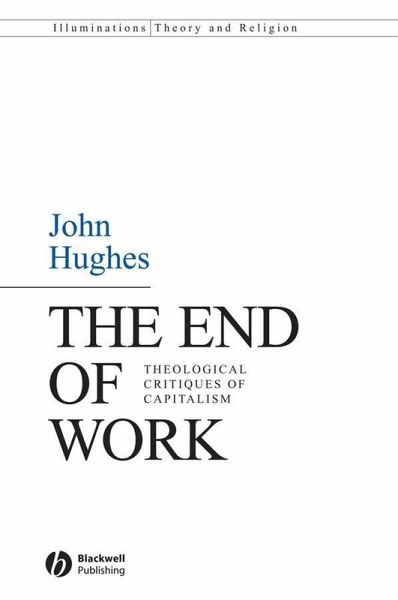
Surveys twentieth century theologies of work, contrasting differing approaches to consider the "problem of labor" from a theological perspective.
- Aimed at theologians concerned with how Christianity might engage in social criticism, as well those who are interested in the connection between Marxist and Christian traditions
- Explores debates about labor under capitalism and considers the relationship between divine and human work
- Through a thorough reading of Weber's Protestant Work Ethic, argues that the triumph of the "spirit of utility" is crucial to understanding modern notions of work
- Draws on the work of various twentieth century Catholic thinkers, including Josef Pieper, Jacques Maritain, Eric Gill, and David Jones
- Published in the new and prestigious Illuminations series.
Dieser Download kann aus rechtlichen Gründen nur mit Rechnungsadresse in D ausgeliefert werden.
"Adam was expelled from the garden of Eden to till the ground inthe sweat of his face, so the bible says, leaving us with centuriesof theological argument about how to relate the reality for so manypeople of work as toil, drudgery and effectively a curse, to theequally familiar experience of work as creative achievement andpersonal fulfilment. Post-Christian we may now be in Britain, yetin a society still reeling from de-industrialization, withunemployment endemic in certain quarters, with leisure activitiesexpanding vastly, and so on, there is a rich and complex Christiantradition of thinking about the nature of work which John Hughesputs back on the agenda in this provocative book." Fergus Kerr,University of Oxford
"John Hughes has written not about work but about the 'end' ofwork. But this is the most far-reaching question imaginable inpractical reason. To what end do we exert ourselves at all? What dowe hope to achieve? Through a tour of reading in nineteenth andtwentieth century thinkers that is as subtle and sympathetic as itis diverse and adventurous he has shown us how the ancient strugglebetween the fine and the useful has been played out dramatically inthe post-industrial West, and holds the key to a great deal that wethink of as modernity. Here is an exciting new voice contributingto the interpretation of our moral predicaments. I cannot imagineanyone putting Hughes' book down without having learnedsomething important." Oliver O'Donovan, University ofEdinburgh
"Its strength lies in its illuminating discussions of a fairlywide range of writers."
Times Higher Education Supplement
"John Hughes has written not about work but about the 'end' ofwork. But this is the most far-reaching question imaginable inpractical reason. To what end do we exert ourselves at all? What dowe hope to achieve? Through a tour of reading in nineteenth andtwentieth century thinkers that is as subtle and sympathetic as itis diverse and adventurous he has shown us how the ancient strugglebetween the fine and the useful has been played out dramatically inthe post-industrial West, and holds the key to a great deal that wethink of as modernity. Here is an exciting new voice contributingto the interpretation of our moral predicaments. I cannot imagineanyone putting Hughes' book down without having learnedsomething important." Oliver O'Donovan, University ofEdinburgh
"Its strength lies in its illuminating discussions of a fairlywide range of writers."
Times Higher Education Supplement