32,99 €
inkl. MwSt.
Sofort per Download lieferbar
0 °P sammeln

Andere Kunden interessierten sich auch für
") A Companion to the English Novel (eBook, ePUB)36,99 €
A Companion to the English Novel (eBook, ePUB)36,99 €") Glossing the Psalms (eBook, ePUB)97,95 €
Glossing the Psalms (eBook, ePUB)97,95 €") A Concise Companion to Contemporary British and Irish Drama (eBook, ePUB)30,99 €
A Concise Companion to Contemporary British and Irish Drama (eBook, ePUB)30,99 €") Memories of the Classical Underworld in Irish and Caribbean Literature (eBook, ePUB)80,95 €
Memories of the Classical Underworld in Irish and Caribbean Literature (eBook, ePUB)80,95 €") Flesh and Word (eBook, ePUB)108,95 €
Flesh and Word (eBook, ePUB)108,95 €") Narrative Polyphonie (eBook, ePUB)139,95 €
Narrative Polyphonie (eBook, ePUB)139,95 €") The Lawyer in Dickens (eBook, ePUB)87,95 €
The Lawyer in Dickens (eBook, ePUB)87,95 €
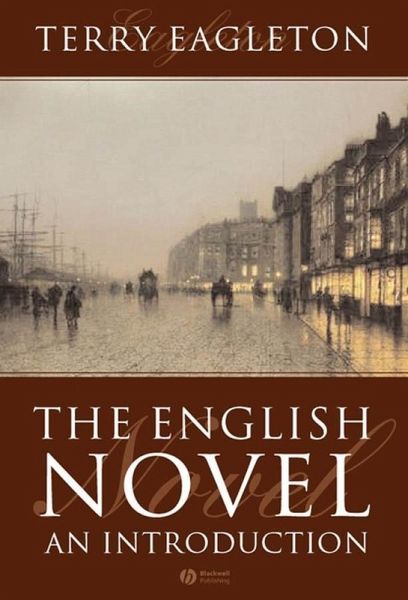
Written by one of the world's leading literary theorists, this book provides a wide-ranging, accessible and humorous introduction to the English novel from Daniel Defoe to the present day. * * Covers the works of major authors, including Daniel Defoe, Henry Fielding, Samuel Richardson, Laurence Sterne, Walter Scott, Jane Austen, the Brontës, Charles Dickens, George Eliot, Thomas Hardy, Henry James, Joseph Conrad, Virginia Woolf, D.H. Lawrence and James Joyce. * Distils the essentials of the theory of the novel. * Follows the model of Eagleton's hugely popular Literary Theory: An Introduction (Second Edition, 1996).
Dieser Download kann aus rechtlichen Gründen nur mit Rechnungsadresse in D ausgeliefert werden.
"Eagleton's presentation of the history of the novel is admirablyclear and almost entirely free of the disfiguring jargon so reliedupon by theorists and bamboozlers."
The Irish Independentà
"Eagleton, almost alone among academic literary critics of hisgeneration, has never been afraid of asking big questions about bigthings. In The English Novel: An Introduction he takes aimat a very large target indeed. Being Eagleton (the mostarticulately and discriminately ideological critic of our time) hedoes, of course, do much more than merely 'introduce'. He makessense of the English novel."
John Sutherland, Lord Northcliffe Professor of Modern EnglishLiterature, UCL
The Irish Independentà
"Eagleton, almost alone among academic literary critics of hisgeneration, has never been afraid of asking big questions about bigthings. In The English Novel: An Introduction he takes aimat a very large target indeed. Being Eagleton (the mostarticulately and discriminately ideological critic of our time) hedoes, of course, do much more than merely 'introduce'. He makessense of the English novel."
John Sutherland, Lord Northcliffe Professor of Modern EnglishLiterature, UCL